Contents
The main dates of rowing at the Olympic Games
Formerly used for transportation, rowing has evolved a lot before becoming an Olympic sport. Here is an overview of the key moments of his Olympic journey.
The beginnings of the Olympic Games
In 1896, the aircraft was planned but cancelled due to bad weather, and in 1900 it took off in Paris, marking the beginning of an Olympic adventure rich in history.
The evolution and inclusion of women
In 1976 in Montreal, women's events were introduced, marking a major step forward in achieving gender equality in this sport. Since then, women have been actively involved, adding diversity and inclusiveness.
Paralympic rowing in the Olympics
In 2008 in Beijing, the addition of the Paralympics shows the IOC's commitment to make sport accessible to all. Paralympic events have enriched the humanistic value of this sport.
The different rowing events at the Olympics
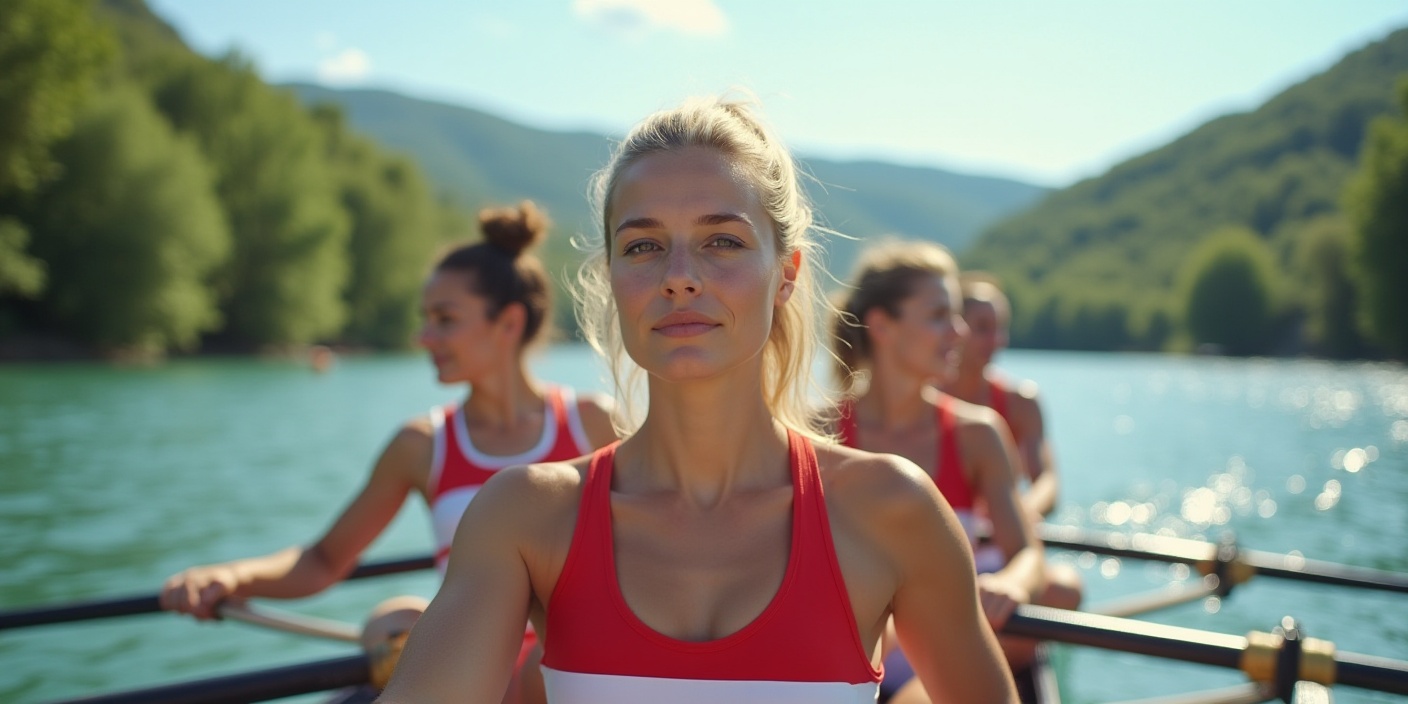
Lthe Olympic Games offers a variety of tests according to categories. Here is a detailed overview of the various competitions for men and women.
Male and female tests
Since 1900, the events have diversified with distinct categories for men and women, encouraging participation and balanced competition. We find the skiff, the eight with barber, and other events in point and couple.
Introduction of light weight categories
These categories appeared in 1996, allowing lighter athletes to compete fairly. For example, LM2x (double men light weight) and LW2x (double women light weight), which are very popular for their equity.
The diversity of tests and boats
The types of boats are varied: skiff, two couple, four couple, eight with barrier, etc. Each boat has its technical and strategic specificities, offering a unique interest in each test.
The most successful athletes in Olympic rowing history
Here is a tribute to the rowers who have marked Olympic history with their exceptional performances.
The most medal-winning athletes
For example, here is a list of rowers who won the most Olympic medals:
| Name | Country | Gold Medals | Silver Medals | Bronze Medals | Total |
|---|---|---|---|---|---|
| Elisabeta Lipă | Romania | 5 | 2 | 1 | 8 |
| Steve Redgrave | United Kingdom | 5 | 0 | 1 | 6 |
| Georgeta Damian | Romania | 5 | 0 | 1 | 6 |
Comparison of medallists by country
The following is a summary table of medals by nation for an overview of the distribution of Olympic successes:
| Nation | Or. | Money | Bronze | Total |
|---|---|---|---|---|
| United States | 33 | 32 | 25 | 90 |
| United Kingdom | 31 | 23 | 14 | 68 |
| Germany | 22 | 19 | 14 | 55 |
Focus on iconic athletes
Let's talk about legends like Steve Redgrave (United Kingdom), who won gold medals in five consecutive Olympic Games, and Elisabeta Lipă (Romania), famous for his five gold medals. Their determination and achievements are highly inspiring.
Technical innovations in rowing at the Olympics
The evolution of row equipment and techniques has a huge impact on performance at the Olympics. Let us explore these technological advances.
Evolution of vessels
From wood materials to modern carbon fibers, boats have evolved enormously. These changes lightened the boats while increasing their resistance, thus boosting the performance of rowers.
Train techniques and training
The rowing techniques have improved thanks to new training methods based on sport science. Athletes have rigorous fitness programs to improve their effectiveness and endurance.
Computers and digital equipment
Technology has become a must to improve performance. Video analytics, performance sensors and biometric applications provide valuable data to coaches and athletes.
The challenges and challenges of Olympic rowing
Olympic rower faces several controversies and challenges. Review doping issues, tight competitions and difficult conditions.
Doping problems
Doping remains a major problem in the Olympic rowing industry. Notable cases include that of Andris Reinholds in 2000 and Olena Olefirenko in 2004. Strict measures are in place to combat this fraud and preserve the integrity of sport.
Weather and competition
Weather is an unpredictable challenge, greatly influencing athletes' performance. For example, at the Olympics of 1896, the rowing events were cancelled because of the weather. External competitions remain at the mercy of these whims.
In 2021, enthusiasm for rowing was also illustrated in the hall with Aviron Indoor : 20 Medals for France in 2021, stressing the versatility of French athletes.
Close competition and tensions
The rivalries in the Olympic row are often intense. Memorable competitions, such as the one between the United Kingdom and New Zealand in 2012, have marked the minds with their suspense and the quality of performance.
Frequently asked questions about the Olympic rowing boat
Answers to frequently asked questions to clarify the essential points of Olympic rowing.
Explanations of categories and technical terms
Terms « skiff » (boat for one person) and « two of torque » (Boat for two rowers each with two rowers), as well as the light weight categories (LM2x for men, LW2x for women), are essential to understand the nuances of Olympic rowing.
How are rowers qualified at the Olympics?
Qualifications are subject to strict regattas and criteria set by the International Federation of Aviron Societies (FISA). The World Championships also offer a direct qualification route.
Performance maintenance and preparation
Olympic athletes follow intensive training regimes, combining specialized physical exercises, adequate nutrition and mental strategies to stay at the top of their form.
Testimonials of Olympic rowers
The athletes' stories and experiences bring a human and inspiring dimension to our understanding of rowing at the Olympics.
Famous rowing tales
Testimonials by famous athletes such as Steve Redgrave and Silken Laumann reveal their motivations and challenges. Their resilience and passion for rowing are a source of inspiration.
The impact of Olympic rowing on their lives
How has it changed their lives and careers? Their stories show that the values of sport go far beyond competition, deeply influencing their well-being and personal development.
Training and daily routine
The typical day of an Olympic rower includes intensive training, rigorous mental preparation and careful time management to optimize every aspect of their performance.
Updated on 21 March 2026