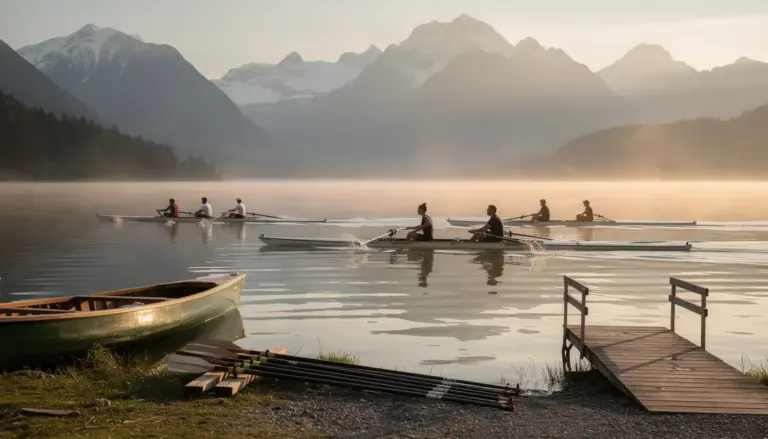
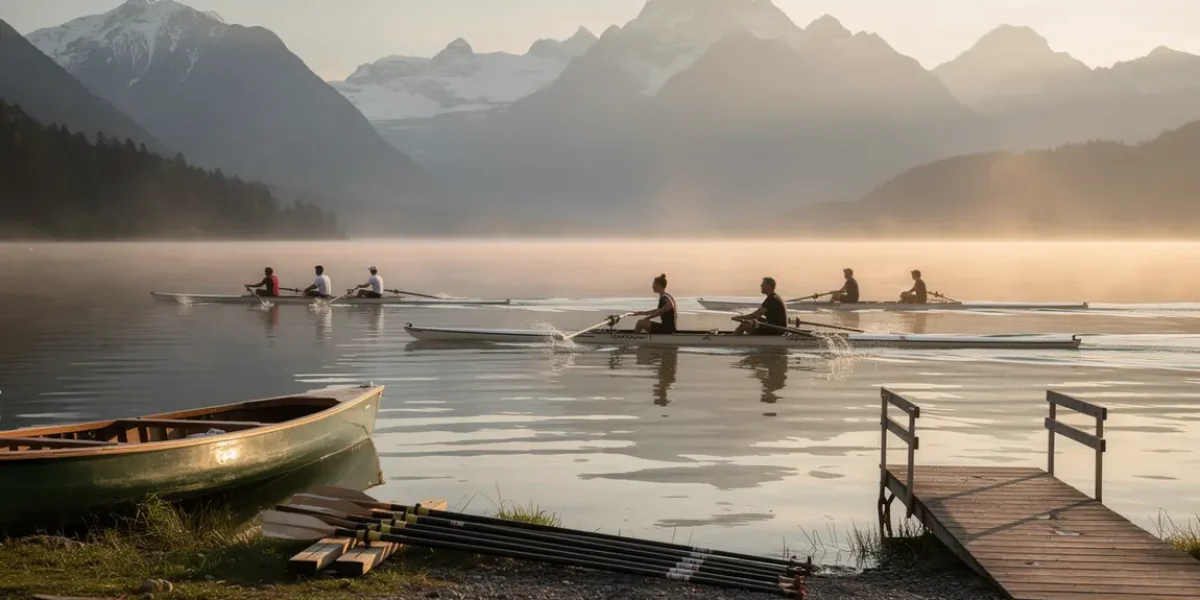
A rowing boat attracts more and more practitioners in the Rhône-Alpes, whether it is a first experience on regional water plans or a collective club project. The desire to progress, to better understand key actions and to equip in a sustainable way brings together a local community united by the taste of effort and attachment to the territory. This article offers a reliable benchmark for those who wish to start or better structure their practice, from posture to basic techniques, without neglecting neither safety nor user-friendliness.
Contents
Understanding the basics of rowing
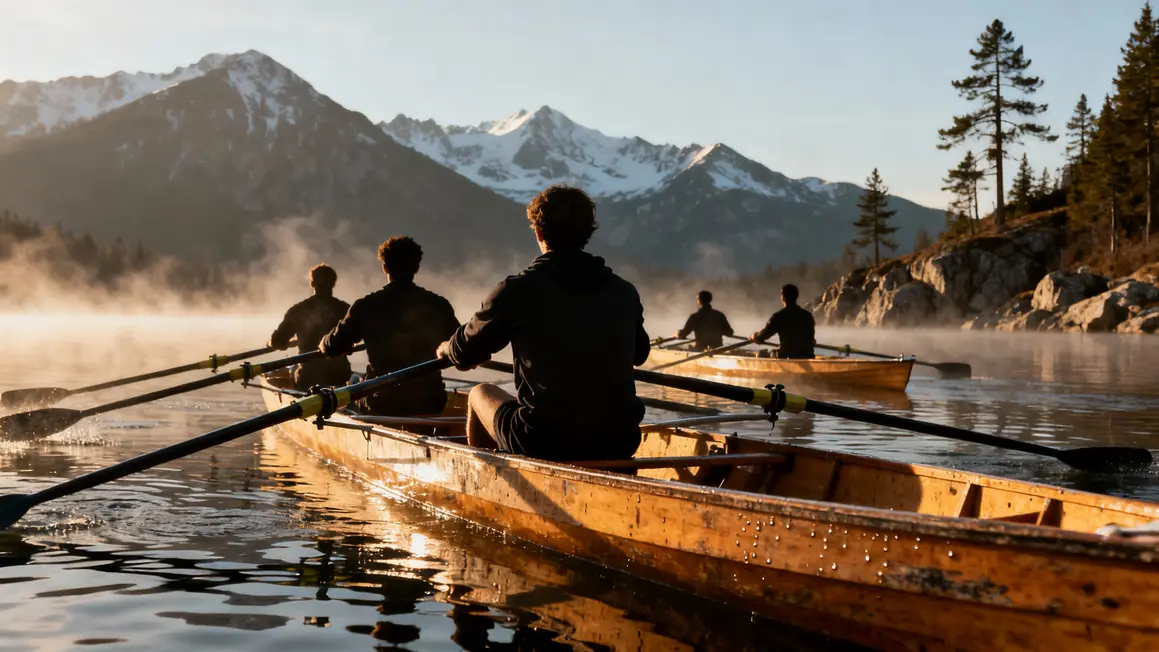
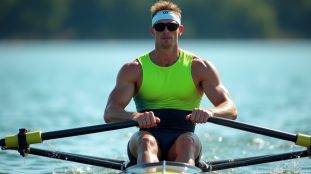
In the Rhône-Alpes region, it is an activity where rigour, precision and coordination are at the heart of the training of all profiles. The discipline mobilizes the whole body: the legs provide the major power, the back directs the gesture, the arms ensure the finish. The often overlooked point concerns the distribution of forces: propulsion begins mainly with the push of the legs, creating a dynamic that the trunk and arms end. This muscle organization contributes to endurance, joint protection and general balance.
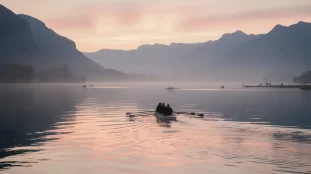
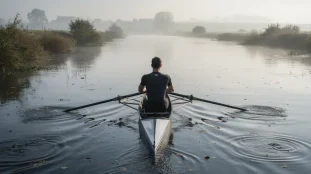
The region enjoys an exceptional natural environment – from Lake Aiguebelette to the Saône – which offers a playground conducive to the development of clubs and the organisation of regattas. Beginners enjoy the morning outings on calm water as well as the collective atmosphere during local events. The social aspect, greatly valued in clubs, promotes the progression through group emulation and the transmission of advice among practitioners of all ages.
The offer of boats varies: skiff for solo, double for pairs, four and eight for team coordination each form having its educational advantages. Local structures frequently introduce new entrants through the use of large and stable boats and then accompany them to faster models as technical and confidence progress.
Team to progress
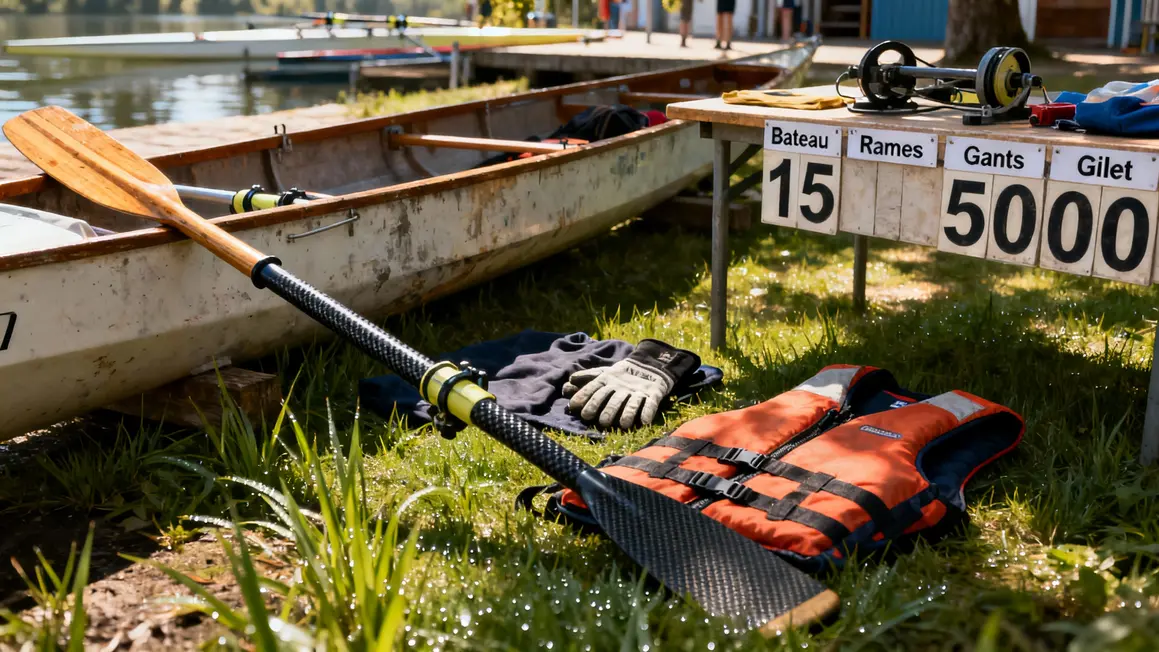
Choosing your equipment requires taking into account the level, comfort and access to the club's equipment. A composite skiff is suitable for a seasoned solo while a larger model will better serve early learning. The choice of rowing also plays: wood offers robustness and natural water return, carbon promotes lightness and maneuverability for intensive sessions. Privileged to start thinner blade trainsets to facilitate the control of the gesture.
Ensures the maintenance of the rolling seat whose fluidity conditions the transmission of power. The suitable anti-slip handles and gloves will prevent the bulbs, as will a soft grip during movement. To navigate safely, the wearing of a suitable vest is highly recommended on exposed areas, without hindering movement.
| Equipment | Use | Benefits | Estimated price (€) |
|---|---|---|---|
| Skiff boat | Beginner to confirmed | Manability, individual learning | 2000 – 5000 |
| Carbon Rams | Intermediate practitioner | Lightness, precision of gesture | 300 – 600 |
| Anti-bulb gloves | Beginner to regular | Comfort, prevention of common injuries | 15 – 50 |
| Light life jacket | Beginner to confirmed | Security, ease of movement | 50 – 200 |
Think about rinsing your equipment after each exit and inspecting attachments and trainsets to ensure their longevity. To equip, it is also to adopt the right reflexes in a club, especially during days of high attendance or collective initiations.
Position and organization of gestures
The posture directly influences the pleasure of rowing and progression: well placed legs, stable back slightly inclined forward without forcing relaxed shoulders. The hands, loosened and positioned with the thumbs under the handle, steer the row without cracking or excessive tension on the wrists, providing a smoother and safer experience.
The feet, properly strapped without constraint, effectively transmit power during movement. Always start the leg propulsion; The back takes over, then the arms finish the job. This coordination helps to avoid muscle pain or overload, frequent in the first sessions if too much is requested. Performing slow-paced sessions helps each rower internalize this progression and set technical benchmarks.
Key phases of the rowing coup
The construction of the movement is based on four phases: catch (entering the water), drive (propulsion), finish (water outlet), recovery (return to the starting position).
- Catch: vertical pallets, back slightly inclined forward, tibias on the axis, clear movements to place the row in the water without splashing.
- Drive: power first carried by the legs, relayed from the back and then from the arms to transmit energy to the back of the vessel.
- Finish: precise output of pallets, wrist rotation to prepare the return and limit resistance in the air.
- Recovery: sequence of chain hands-tronc-legs, maintaining stability and rhythm to prepare the new water intake.
Using a rowing ergometer in the room or observing the gesture under the eye of a coach (or via mirror) accelerates the correction of automations.
Breathing and rhythm: two levers for progress
Raming without difficulty passes through a breath consistent with the gesture. Inhale during the « Catch », exhale gently during propulsion. Each person then adapts rhythm and blows according to their level: first approach around 24 to 32 strokes per minute, while in regatta or intensive training, the experienced frequently reach 36 to 40 strokes. The important thing is to maintain continuity in progress rather than seeking the maximum rate at each session. Practice lengthening the expiration to better sequence and avoid premature shortness of breath, especially on split sessions.
Further: coordination and team strategy
In the confirmed rowers, synchronization becomes a daily issue, especially as a collective. Alignment with the pace imposed by the swimmaster and communicating his sensations allows to refine cohesion and performance. Adjust power and technique according to the objective: rapid speed and explosive thrust for a sprint, longer amplitude and marked recovery for an endurance exit, fine steering during a turn on winding runs.
| Objective | Strategy | Technical |
|---|---|---|
| River craft are lighter and faster but less stable. In comparison, seagoing vessels are heavier and stable, designed to cope with difficult maritime conditions. | High speed, leg power, progressive climb | Optimal coordination |
| Endure | Amplitude of the gesture, controlled recovery | Distance precision |
| Transfers | Adapted supports, lateral synchronization | Anticipation and flexibility |
Structure your workouts
A progression program is based on three to five sessions a week, alternating technical work on water or ergometer, cardio and targeted muscle building. The training starts with short and frequent sessions, then gradually integrate intervals and volume with experience. The important thing remains the accompaniment: each passage from one type of boat to another is done under supervision to ensure safety and anchor automatisms.
| Day | Beginner | Intermediate | Advanced |
|---|---|---|---|
| Monday | Exit on water (45 min) | Technical session (60-75 min) | Long endurance (+90 min) |
| Wednesday | Moderate Ergometer 5×3 min | 6×500 m intervals | High rate (8×3 min) |
| Friday | Global strengthening (30 min) | Targeted muscles (45 min) | Explosivity and sheathing (60 min) |
| Sunday | Soft exit (60 min) | Tactical exit (80 min) | Competitive simulation (90-120 min) |
The alternation of water/ergometer allows the transfer of technical knowledge and the adaptation of effort. Recovery breaks and attention to hydration condition the lasting progression.
Pre-session preparation: security and organization
A good warm-up mobilizes legs, back, shoulders and wrists to prevent tension. Always checks fasteners and equipment, adapts the foot straps and becomes aware of the weather conditions – in Rhône-Alpes, the winds change quickly. Some exchanges between teammates, position verification and a clear objective sharpen the session.
To start in the best conditions, discover the d during your trips on the water.
To improve your performance and master technical gestures, explore solutions and explanations on row support.
In addition to improving your technique, discover the physical and mental health benefits of rowing for a fulfilling and balanced practice.
Staying listening to his feelings limits the risk of injury: an discomfort, even mild, or discomfort should be taken seriously. Take the time to talk to the club or consult a referent about a technical or physical doubt strengthens your progress.
FAQ: common mistakes and practical tricks
- Back rounded: Think about hiring the trunk and maintaining a straight head-to-bassin line. Adjust the footbar if necessary to avoid being too compact.
- Hand bulbs: Released grip, alternation of suitable gloves or ribbon, adjustment of the handle to limit stresses.
- Arm-leg coordination: Tents a slow execution on ergometer, legs first, then trunk, then arms. Seek the return of the coach to correct the gesture.
- First competition: Stay focused on your training pace, dialogue with your partners, and promote clean technique.
- Canoe/viron difference: In rowing, back rowing with fixed avirons, while in canoeing, paddle and position change everything (face to direction, free paddle).
Integration into the regional rowing industry in Rhône-Alpes
Local clubs, often driving open initiatives and solidarity projects, offer test sessions, collective workshops and accessible events. Making contact with a regional structure, investing on an ad hoc basis in a regatta or event, or simply exchanging with experienced rowers, allows us to anchor in associative dynamics.
Participate in the life of the club – regular volunteering, organizing events, monitoring young people – gives meaning to practice and promotes the sharing of experiences. Many emphasize the richness of the ties woven along the water and the usefulness of intergenerational support.
To go further, do not hesitate to visit the website of the French Federation ofviron or to follow the initiatives carried by the regional community via local networks and media. These sources provide reliable benchmarks for training, timing and access to accompanying devices for new rowers.
Mastering the fundamentals – posture, equipment, safety, collective training – opens the way to a practice that is both fulfilling and lasting. Everyone can progress at their own pace, find their place in a club and enrich their experience in the Rhône-Alpes community.
What practices or tricks have you chosen to start rowing in the region? Share your feedback on your experience with your club or comment. If this content has been helpful to you, think about spreading it around you to support local rowing! What topics do you want to see addressed? The word is yours under this article or through our networks.
Updated on 21 March 2026