Understanding the number of rowing boats for each type of boat makes it possible to steer efficiently when choosing a boat or a first training. This guide details the main configurations practiced in Rhône-Alpes, from skiff to eight, with the experience gained on the water bodies of regional clubs.
Contents
Categories of rowing vessels and their configurations
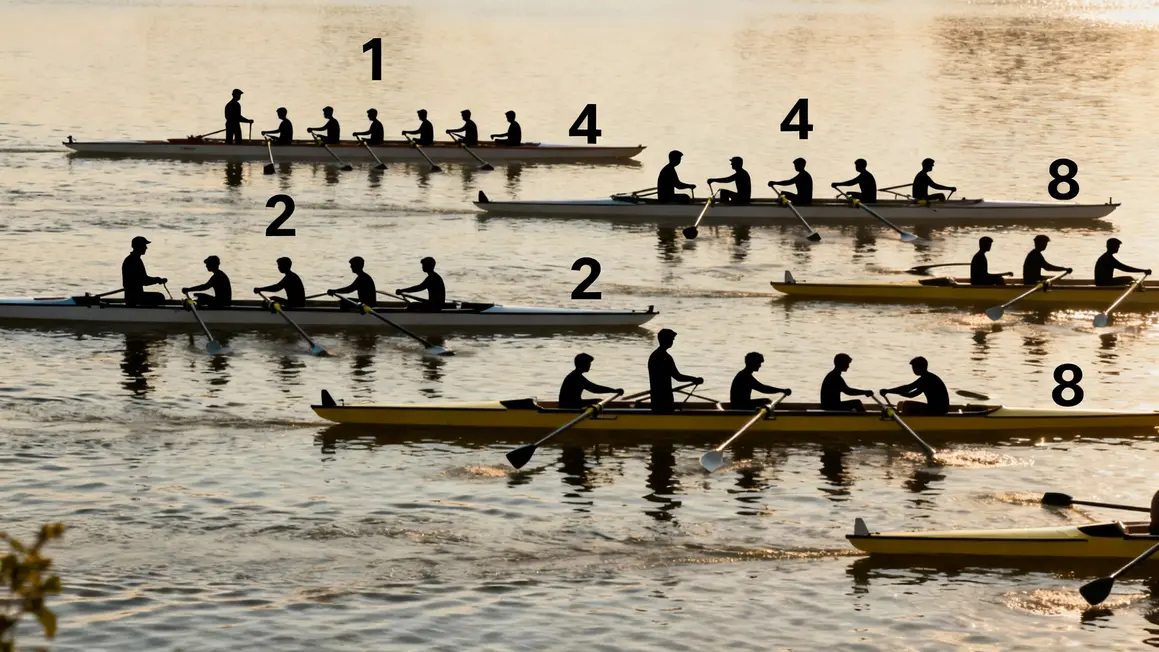
The rowing vessels differ according to their rowing capacity, the type of rowing vessel (couple or tip) and the presence of a rowing vessel. These parameters influence the use of the boat – competitive or leisure – and the train dynamics. The following are the main categories used in the region:
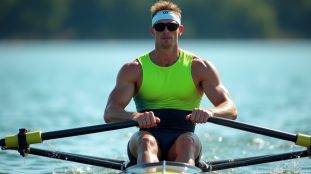
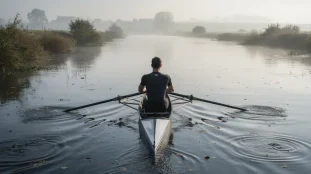
- Skiff (1X) : one person, each with two oars (rame in couple). Ideal for working balance or training alone.
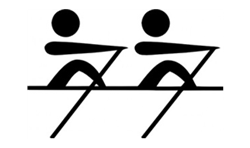
- Double (2X) Two rowers, each with two oars (couple). Appreciated for two-way coordination.
- Two without (2-) : two rowers, one row each (point). Current for competitive crews.
- Four without (4-) and 4X : four rowers, point or couple depending on the variant, with or without barber. Technical configuration that requires good synchronization.
- Yolette (4Y+) : four rowers and a barber, usually in point. Stable boat suitable for groups and initiation sessions.
- Eight (8+) - eight rowers and a barber. Embarkation emblematic of competitions, symbol of collective power.
| Type of vessel | Number of rowers | Type of row | With barber | Uses | Approximate length | Average weight |
|---|---|---|---|---|---|---|
| Skiff (1X) | 1 | Couple | The recommended age to begin river rowing is 10-12 years, while for sea rowing it is preferable to start from 12-15 years old due to additional safety and navigation requirements. | Solo, competition | 8-10 m | 12-15 kg |
| Double (2X) | 2 | Couple | The recommended age to begin river rowing is 10-12 years, while for sea rowing it is preferable to start from 12-15 years old due to additional safety and navigation requirements. | Sharing, regatta | 10-12 m | 25-35 kg |
| Two without (2-) | 2 | Point | The recommended age to begin river rowing is 10-12 years, while for sea rowing it is preferable to start from 12-15 years old due to additional safety and navigation requirements. | Competition | 10-12 m | 25-35 kg |
| Four without (4-) | 4 | Point | The recommended age to begin river rowing is 10-12 years, while for sea rowing it is preferable to start from 12-15 years old due to additional safety and navigation requirements. | Competition | 12-14 m | 50-95 kg |
| Yolette (4Y+) | 4 | Point | Leisure, initiation | 12-14 m | 60-100 kg | |
| Eight (8+) | 8 | Point | Team, competition | 16-19 m | 90-120 kg |
To be retained : There are four rowers and one rower, while eight rowers are still under the direction of a rower. The choice between couple and point shape the spirit of the crew and approach discipline.
Organization and role of rowers and barbers
Each position on board affects overall coordination. In couple, each rower manages two oars and a symmetrical balance ; in point, each rower operates a single row, requiring a precise organization of effort. The « swimming » (ramer located at the back) imposes the rhythm, a task valued in the region for its rigor and its effect on the slide.
- In experienced crews, such as the eight of the Lyon clubs, coordination is worked on water but also on land (simulators, synchronised training).
- The barter, often responsible for collective initiations in the Rhône-Alpes region, deals with both safety and trajectory, using oral controls and the rudder under its feet. The feedback from leaders confirms that a teacher can grow a group quickly.
The collective dynamics are learnt during guided outings and training workshops offered in regional clubs, such as in Miribel or during interclub sessions in Isère. Communication in the race remains paramount, with each adjustment instantly affecting the speed of the boat.
Focus on a rowing boat: the skiff
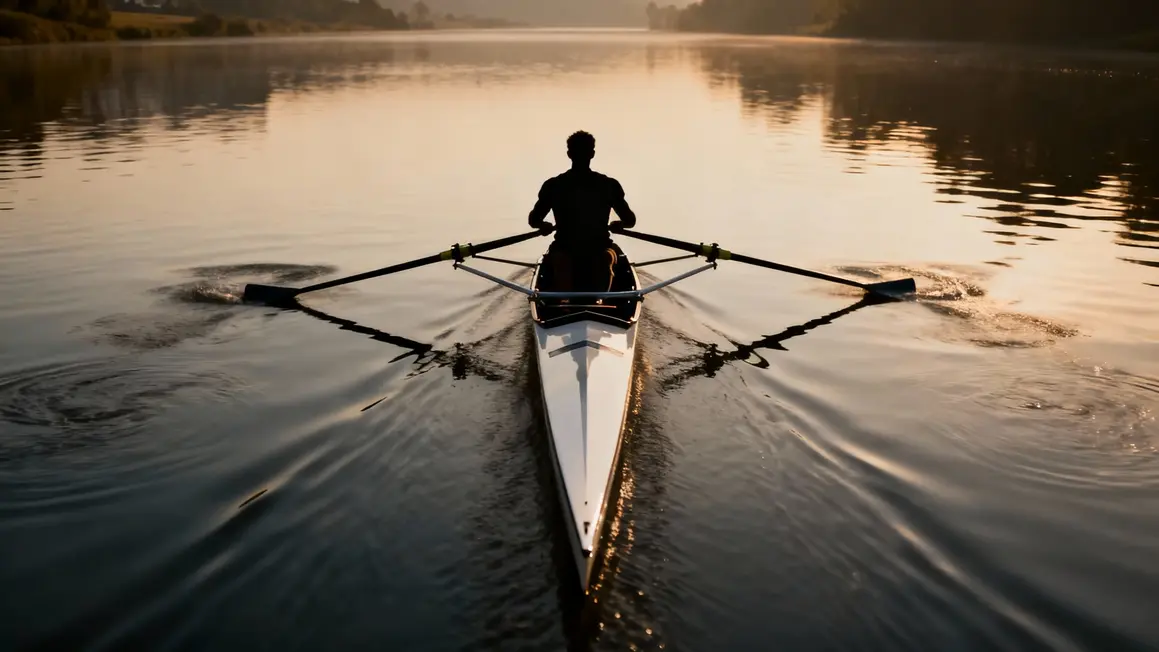
The skiff Condenses the technical requirement of rowing. Alone on board, the rower must manage balance, accuracy and adaptation to water conditions. Regional practitioners indicate that progress in skiff, especially for technical development, helps to feel the slide better and correct the slightest gaps live. Clubs often recommend starting on a large and stable model before switching to thinner boats.
- Skiff training is appreciated for the autonomy it offers, even if the vigilance remains to face the wind on the lakes of the Rhone or during current changes.
- Skiff practice also makes it possible to effectively prepare individual regattas identified each season by the regional federation.
The iconic competition boat: the eight
Symbol of coordination and collective strength, the eight (8+) draws attention to regional and national finals. Its specificity: always one barber and eight rowers, each with a pointed oar. Its impressive size and its relative stability require extensive collective training, both on water and on ergometer. The experience of the clubs shows that the eight often galvanizes the young sections thanks to the team spirit that it develops, strengthening the motivation and the taste of the collective.
Boating boats for beginners and leisure
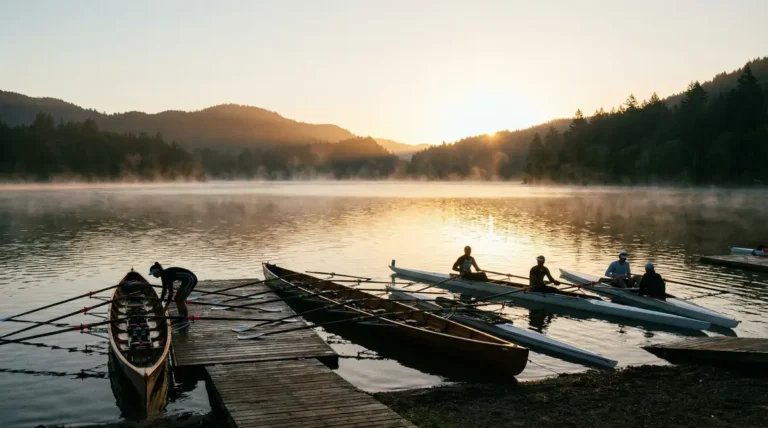
The Initiation vessel par excellence remains the yolette. Wide, robust, it accepts common gesture errors during the first sessions. It also allows the discovery of the role of barber, essential in group learning. Clubs in the region favour these boats during open doors or family internships. The yollette evolves according to size or environment: some are suitable for hiking or hosting mixed age groups.
Choose your configuration according to your objectives
A relevant choice depends on:
- From the level of practitioners (beginner, confirmed, competitor),
- Environment (lake, river, regulated water),
- From the will to go out alone or in a group,
- Equipment and slots offered by each club.
| Objective | Type of boat | Main characteristics | Recommended environment |
|---|---|---|---|
| Leisure | Yolette, Yole Aboville | Stability, capacity | Quiet lake or river |
| Competition | Skiff, 8+ | Lightness, precision | Approved basin |
| Development | 2X, skiff | Technique, finesse | Small water bodies, narrow rivers |
| Discovery | Yolette, mixed yoles | Guidance, security | Lake or surveillance area |
Safety instructions and maintenance
Before each exit, verification of the equipment (tolets, foot hold, avirons) and adjustment according to the level of the group. Wearing the vest is systematic for young people and recommended for all rowers during self-sustaining sessions. The clubs of the Rhône also ensure the training « Return », useful to learn how to recover to water in case of desalination. Hygiene after each session, especially after rain or floods, is one of the reflexes to adopt, especially in times of increased health risk.
Evolution and history of rowing boats
The constant improvement of materials and hull designs has transformed the practice: from strict wood to fiberglass and then carbon. The pioneer clubs of the region, some created from the end of the XIXe century, have seen passing the diversity of models. Today, the variety ranges from heavy yolets for initiation to ultralight skiffs for competitions. This evolution is the result of federal requirements and the expectations of the region's terrain, while keeping a place for traditional rendezvous (historical regattas, festive hikes, etc.).
Glossary of essential terms
- Couple : each rower has two oars.
- Point : each rower has one row.
- Swimming : the rowing machine that gives the rhythm.
- Barrer responsible for management and cadence.
- Skin : flat end of l ́aviron in contact with water.
- Skiff : technical and demanding single-seater boat.
Frequently asked questions about the types of rowing boats
- How many rowers per boat? It depends: one skiff, two double or two without, four in four without, four in pairs, eight in 8+.
- Difference between couple and tip? Couple: two oars per rower; tip: one. Choice impacts coordination.
- What boat to start with? Prioritise the yollette in a group session, or the initiation skiff if one wishes to row alone.
- Why board a barter? For safety, especially in initiation or eight, and for managing the collective strategy in competition.
- What's the point? Increased lightness and autonomy, but requires strong experience in navigation and coordination.
To go further, find the routes and contacts of the regional clubs on the page « Clubs Rhône-Alpes » and the updated calendar on « Competition calendar ».
From family to competition eight, each rowing boat adapts to a sports or community project, contributing to the unique dynamism of the local clubs.
- What types of boats do you prefer for your local outings?
- A feedback experience to share? Comment or pass on your testimony to the editor via our contact page.
- If this article has answered your questions, share it with other rowers in your club or on networks to support the regional rowing community.
What other aspects do you want to deepen? Suggested topics or shared resources welcome in comment. For more technical information: French Federation of Aviron and World Rowing.
Article written by Marie F., regular practice of rowing in club for more than 15 years, member of the editorial committee of Aviron Rhône-Alpes. Last updated : June 2024
Updated on 14 January 2026