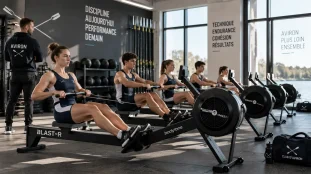


Do you practice rowing in the Rhône-Alpes and think about how best to integrate bodybuilding into your routine? This sheet brings together the concrete keys to structure effective training, limit fatigue and progress on a sustainable basis, regardless of your level or the size of your club. Feedback from experience, paintings and advice from the field: everything it takes to build a solid program, without losing in theory.
Contents
The benefits of laviron for muscle building
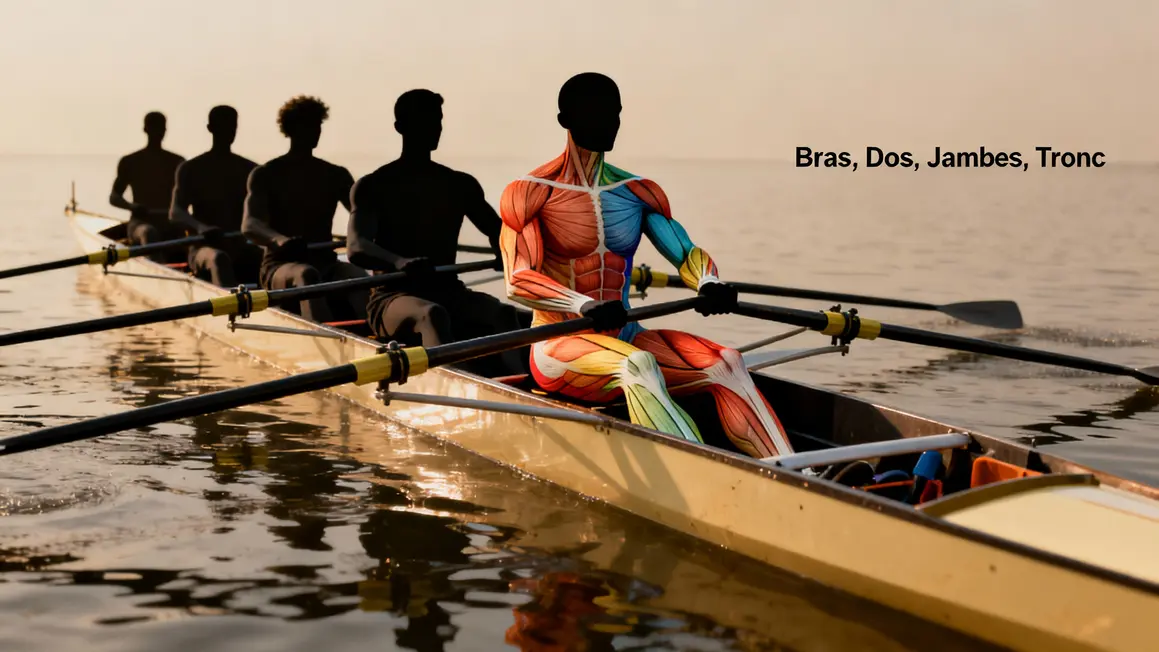
All major muscle groups are solicited in a synchronised manner: arms, legs and trunk work together at each rowing stroke, creating a balanced development.
The arms – biceps, triceps and forearms – work for traction and stability, developing grip strength and gesture control. Back muscles – large backs, trapezes, rhomboids – generate power and improve posture, thereby limiting the risk of injury. In legs, quadriceps, ischio-legs and buttocks are particularly mobilized during the push, promoting endurance and joint protection. Finally, the trunk muscles (abdominal and lumbar) provide sheathing, coordination and force transmission.
| Muscular groups | Party of the Solicitation | Additional examples |
|---|---|---|
| Biceps, triceps, forearm | Traction of arms | Drawing, elastic bands |
| Large backs, trapezes, rhomboids | Back draw | Lifting of soil, rolling |
| Quadriceps, ischio-legs, buttocks | Leg push | Squats, leg press |
| Abdominal, lumbar muscles | Stabilization/gaining | Boards, trunk rotations |
How to integrate strength training into your d
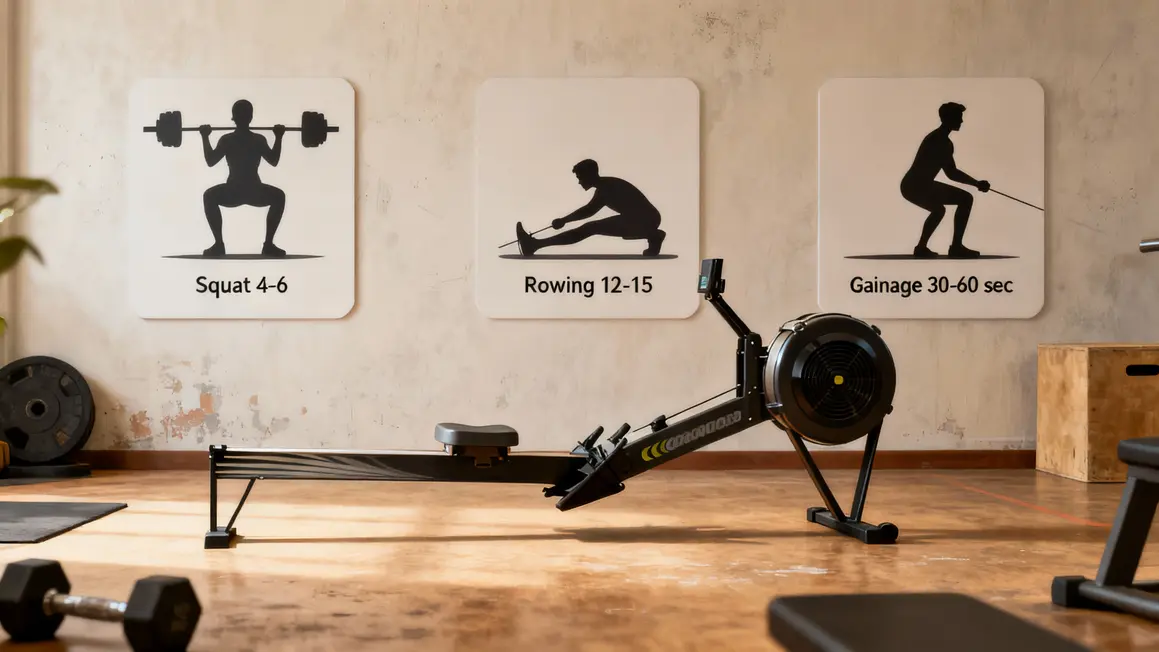
Strengthening its practice requires targeted exercises. The squats develop the power of the legs, the earth lift strengthens the back and hips, and sheathing supports posture on long races. For each exercise, adjust the number of repetitions, series and load to the objective pursued:
- Force 4-6 heavy repetitions, long recovery.
- Endure : 12-15 repetitions, moderate loads, shorter breaks.
- Power : 6-8 explosive repeats on medium to heavy load.
| Year | Objective | Repetitions | Series | Rest |
|---|---|---|---|---|
| Squat | Force | 4-6 | 4 | 2-3 minutes |
| Lifted from earth | Power | 6-8 | 3 | 1.5-2 min |
| Rowing (drawing) | Endure | 12-15 | 3 | 30-60 sec |
| Coating board | Stability | Maintenance 30-60 sec | 3 | 1 min |
The ideal is to pair two strength sessions a week with your rowing trips, alternating: strength/power on one side, endurance/gaining on the other. This ensures an evolution without overloading the body.
Periodicate to progress without exhausting
Structure the season into progressive cycles helps maximize progress while avoiding excessive fatigue. The first cycle develops strength with heavy and slow work. The intermediate cycle targets endurance and coordination, getting closer to the drivron movements. In closing, the phase « power » combines explosiveness and speed of gesture.
| Phase | Day 1 | Day 2 | Day 3 |
|---|---|---|---|
| Force | Heavy squat + sheathing | Lifted from earth + drawing | Rest or light session |
| Specific | Draw pulley + rower | Mobility + dynamic sheath | Combination of short effort |
| Power | Spilled squats | HIT rower | Rapid techniques |
Respecting the order of cycles and adapting the duration according to local level and calendar promotes a secure adaptation, with lasting results for the rowing machine as well as for the rowing machine.
Cardio and weight management: aviron
The majority of the body's muscles are solicited by the lavoron, but it is also remarkable for its cardiovascular benefits and its ability to promote fat loss. Regular practice increases the VO2 max, improves daily energy and maintains metabolic health. Split training (short and intense effort) is particularly effective in burning more calories, both during the session and at rest.
- Choose two weekly split sessions if the goal is weight loss.
- Complete with targeted reinforcement on postural muscles to avoid imbalances.
By combining stability, strength and cardio effort, rowers manage to combine pleasure with visible results on overall fitness. The benefits also include glycemic regulation and the prevention of chronic diseases, a fact well documented by the French Federation of Aviron and the Ministry of Sports.
Mental benefits and personal balance
Beyond physical progression, rowing and bodybuilding provide a real psychological healing. Many local practitioners testify that the rowing session – on the water or in the room – offers a space to release pressure and clarify ideas. Both sports promote the release of endorphins, reduce tensions and facilitate concentration. Club sessions also create positive dynamics, a collective engine widely emphasized in the region.
Musculation and rowing, alternating or combined within the same week, develop valuable resilience: better stress management, feeling of accomplishment with each progression and ability to structure its efforts over time.
In order to make sustainable progress in the row, it is essential to know how to choose the right rowing club to start and structure a balanced training.
To maximize your performance, discover how to eat 150 g of protein per day: a practical guide for d'aviron athletes in Rhône-Alpes and adapt your diet to your training goals.
To better understand the physical and mental health benefits of rowingIt is essential to consider its positive impact on muscle strength and endurance.
Build a balanced routine according to level
Structure its program taking into account the reality of the terrain allows us to move forward at its own pace, without discouraging or risking injury. Here are some simple tags according to your profile:
| Level | Frequency (sessions/week) | Standard content | Average duration (min) |
|---|---|---|---|
| Beginner | 2-3 | Aviron exits, body weight exercises | 30-45 |
| Intermediate | 4 | Row splits, polyarticular exercises | 45-60 |
| Advanced | 5+ | Intensive intervals, heavy reinforcement | 60+ |
A suitable diet (1.6 to 2.2 g protein/kg), sufficient omega-3 intake (fish, nuts) and good hydration facilitate recovery and performance. Make sure to adjust the efforts according to the season of the regattas or the goals of the clubs to keep in line with the local dynamics.
Frequent errors and injury prevention
- Neglected posture : promotes pain, regular control and recommended corrections.
- Poorly dosed loads : too fast progression or excessive weight, increases the risk of injury.
- Forgot heating : Multiplies the risk of tearing, take 10 to 15 minutes to activate the joints.
- Impaired equipment : rowing seat, straps, height of devices to check often.
- Signs ignored Repeated pain, persistent fatigue, need to schedule rest and consult the club doctor if necessary.
| Frequent error | Consequences | Solution |
|---|---|---|
| Inadequate posture | Back/neck pain | Aligned position, flat back |
| Load too heavy | Joint injury | Adapted and progressive weights |
| Neglected heating | Risk of injury | 10-15 min light exercise |
| Improperly adjusted equipment | Persistent imbalances | Regular equipment adjustments |
| Warning signs ignored | Aggravation or fatigue | Rest, medical follow-up as required |
FAQ row training and strength training
- Is it suitable for beginners? Yes, most clubs welcome new practitioners all year round, with supervised sessions and accessible material.
- Can we practice every day? No, rest is a key lever for progress: alternate intense sessions and recovery days.
- How to avoid overtraining? Monitor signs (fatigue, pain, loss of shape) and adjust the intensity of effort. Clubs often offer individual advice.
- What equipment should be preferred? Reliable rowing machine (Concept2 popular in club), weather-suited clothing, and gloves/foams for strength training if necessary.
- How to optimize calories burned? Variate intensity, combine split and endurance, engage all muscle chains in each session.
By mastering the chain between rowing and weight building, each Rhône-Alpes rower can progress at its own pace, strengthen its technical support and gain autonomy in the management of its training. What routines have worked in your club? How do you adapt your sessions between quiet periods and weeks of local events? Your feedback is valuable: share your practices and tips in the comments below!If this article has been helpful to you, don't hesitate to send it to your teammates or at the next club meeting. The strength of the community is also the concrete sharing of the methods that work.Additional resources are available from the Fédération Française d'Aviron or from the publications of the Ministry of Sports for the health-performance aspects.When did your last major progress or discovery of a new exercise in the club start? Let us know to enrich the section!
Marie F., a specialist writer, former competitor and club animation manager in Isère.
Last Updated: June 2024
Updated on 21 March 2026