When I remember my first moments on the water, I remain marked by how Iaviron creates unexpected links and offers a unique balance between well-being, Technical and conviviality. Here, whether we come to progress or just breathe, each one finds his rhythm, without judgment and without barrier. What really matters? The shared pleasure, this freedom to move forward in its own way – some also tell that a simple smile exchanged on the pontoon is enough to weld a band for the season!
Contents
What is rowing? Immediate immersion in a sport with multiple faces
It's not just a rowing trip on a quiet water: it's a complete sport, full of history, open to all, which combines technicality, team spirit and joy of gesture. Whether it's about performance, leisure or self-overtaking, everyone finds themselves there – on the river, in the room with indoor rowing, or even at sea according to desires (and sometimes according to weather!).
To locate: in 2024, more 181 rowers are dismissed from the Vichy club, and the French Federation of Aviron has several thousand members from all walks of life: minor young people, adult leisure, or even para-viron. Most importantly, the essence of this sport is gliding, collective and well-being: the doors are wide open, with distances adapted to each age – for example, 1,000 m for the younger and older ones. 2000 m for seniors, as a federal trainer points out.
Summary of key points
- ✅ It combines well-being, technique and user-friendliness without judgment.
- ✅ Sport accessible at all ages and levels, river, sea or room.
- ✅ The Fédération Française d'Aviron is a federation of several thousand different licensees.
Origins and evolution of practice
Modern rowing took shape at the end of the XVIIIe But this discipline has been imposed worldwide thanks to its accessibility as well as its federative strength. Today, there are different currents: river rowing (the most practiced), sea rowing, para rowing (designed for people with disabilities) and indoor rowing (on rowing in the room). Each of these variants pleases for its singularities, but all share the same ingredients: a coordinated movement, the sensation of gliding, and this small adrenaline when the boat runs from dawn... Or sometimes in cold weather, for the more reckless – it even seems that one sips coffee more readily after a chilly exit.
It can be seen regularly that the rowing system brings together all ages and templates, from novice to confirmed. Every time you go out, you rub as much with technique as with values: solidarity, patience, respect for the environment... Coaches point out that the pleasure of rowing is born mainly by the strength of perseverance – the progression is done step by step (or rather, the stroke of rowing after rowing).
A lexicon to tame (promise, it's not so witchy!)
A skiff represents a light solo boat (14 kg minimum), while a « 8 » staged eight rowers and one barrier: two examples of the jargon of initiates. Don't worry, however, each club takes the time to decode the terms: sliding bench, torque row, ergometer, and many other secrets. Sometimes a beginner still confuses the shovel and pulls it off after the first session... But everyone gets there quickly, sometimes with the help of small stories borrowed from the elders.
Good to know
I recommend that you do not hesitate to ask for explanations about the material and vocabulary: clubs often take the time to clarify the jargon in order to facilitate your integration.
Why choose rowing? An inclusive health, social and mental asset
The rowing gives the opportunity to move differently, to rediscover your body through the shared effort – or, when the envy is ready, solo: some even wonder to be passionate about the sensation of slipping. Many take the step for physical fitness and remain, seduced by the camaraderie and freedom inherent in this sport. A physical preparer often reports hearing: « Why didn't you try earlier? ».
Proven and complete physical benefits
Ramer mobilizes near 85% of muscle mass in one gesture, without shock to the joints. On this point, few disciplines match its versatility: back, legs, abdominals (and sometimes smile at the end of the session!). During training timeon average between 400 and 600 calories Depending on the intensity – something to enjoy the picnic by the water... or the snack of the changing room.
- ✅ Fluid gesture that limits the risk of injury, ideal to start or recover an activity
- ✅ Cardio and fortified muscles, all over the body and gradually
- ✅ Conditions perfectly adapted for recovery after stopping or during mild rehabilitation
Note – recognised « Sport Health » by the Ministry of Sports since 2015, rowing is included in the recommendations of many physiotherapists and physical activity professionals. Moreover, some clubs organise specific sessions with trained speakers.
Balance, inclusion and teamwork
The rower goes far beyond physical gain: he shapes mental balance, working on effort management, patience, and self-help. In skiff, discipline sharpens self-confidence. In crew, it is impossible to excel without real synchronization and constant attention to others – this is where strong friendships arise, as confirmed by several boat captains. I crossed more than once rowers who, after a morning composing an improvised crew, found themselves organizing other outings outside the club.
Mixity is also one of the great assets: teenagers, adults, beginners or confirmed, experienced sportsmen or amateurs, all rowing together without distinction. For people with disabilities, the para-viron offers suitable accommodation, both in leisure and in competition. It even happens regularly that a valid rower and a Handisport rower share the same boat during festive events.
Shipping for all: modalities, accessibility and free organization
Far from an image reserved for an elite, rowing opens from 10-11 years and up to an advanced age: rowers over 77 are commonly crossed, proof that there is not really a limit age to begin with. Federation, clubs, local authorities... all agree to make discovery and practice easy to access, safe and truly inclusive for all profiles.
Practice methods: river, sea, indoor, paraviron
Do you hesitate on the formula? You can start on the river, taste the pleasures of the sea or simmer in the hall (the inland rowing is also the coast in cities such as Lyon, Paris or Grenoble). Specificities differ, but each approach has its strengths:
- ✅ River rowing: promotes technical progress and smooth discovery on a calm, sometimes Olympic, plane (as in Vichy: 2000 m6 corridors)
- ✅ Seaviron: promises intense sensations, adventure and confrontation with elements
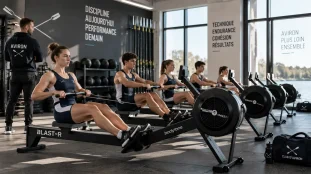
- ✅ Indoor rowing: rower/ergometer, to train all year round regardless of conditions
- ✅ Para-rowing: multiple adaptations for rowers with disabilities, specific equipment and personalized accompaniment
In concrete terms, most clubs offer a practical choice of leisure or competitions, and welcome many newcomers each year thanks to formulas « discovery » accessible (generally 30-50 € the season to start). A coach recently explained that many prolong the experience after this first trial, surprised by the ease of integration.
Clubs, groups, pedagogy and security
From one region to another, most French clubs count 70 to 200 licensees (e.g. 181 in Vichy for the 2024/2025 season): there are college students, adult recreation and masters (Veteran category). The supervision, provided by graduate coaches, is organised around adapted sessions and maintenance material, with FFA or specific label. During the discovery, open houses, internships and trial sessions welcome new rowers each year in a friendly way (sometimes an animator shares an anecdote to undress the most reserved ones).
Better information: security remains a priority. Wearing the vest for young people, systematic monitoring during the sessions, controlled equipment and emergency action training are part of the practice. It can be assumed that even the most cautious end up surprising to taste the pleasure of the boat, including a smile, after their first exit.
Material & running a first session: simple, reassuring, efficient
First rowing? That's good news, no need to think about buying a brand new skiff at its beginnings. All the equipment is provided by the clubs: the famous combinations (or simply a comfortable outfit), the trains, the adapted boat, and always this personalized accompaniment that defuses possible apprehensions – a workshop manager recently confided that the shaking hands of the beginning quickly turn into pride.
Equipment available to practitioners
The basic equipment – boat, row(s), vest(s), adapted shoes – is fully lent to start. Only the licence or contribution is expected (most often between 60 and 180 € by season), the price varies according to age and the options chosen: room access, free slots, etc. In competition, some clubs also offer rental or sale of used equipment. But rest assured, no one will ask you to invest until discipline is well tamed!
A talking landmark? A skiff barely weighs 14 kg (lighter than a classic bike) and everything is easily stored on site. Maintenance, often managed by benevolent leaders, alleviates the mental burden on a daily basis. Does everyone have to be handy? Absolutely not!
First steps on the water: typical trip of an open session
In the majority of clubs, the initiation session is organized in groups of 4 to 6 people: rapid security briefing, introduction of the gesture, and then guided water. We learn to position ourselves in the canoe, to manipulate the row... and above all, to release the pressure – because stability comes much faster than we think. Former beginners evoke their astonishment after 1 h at 1h30 d'test: « We already row our first ‘kilometres' without even realizing! »
- ✅ Security presentation and contact with basic equipment
- ✅ Dry heating (ergometer, the famous « rowing machine » club house)
- ✅ Real watering and step-by-step gestures
- ✅ Feedback user-friendly experience around a café or in the collective space
Contact and register: the right reflexes to take action
Do you feel the urge to come? It is relatively simple: France has more 450 row clubs, located both in preserved natural areas and in the heart of quiet cities. Registration is done online or on paper form: in a few minutes, the tour is played, especially during the days discovered in September and spring. A former club president recently recalled that the best time to meet the teams is often the fall.
Locate a club near you
The site of the French Federation ofviron (ffaviron.fr) proposes a Interactive directory presenting all the clubs, their contact details, training slots and official labels.
You can also tap the info from regional sites, social networks or via Google Maps – simply typing « club rowing » followed by the name of your city. A common anecdote, sometimes told during the initiation sessions: it's not uncommon to discover that we were passing a club every week without even seeing it!
To experience a unique experience combining inclusion and passion for sport, discoverDecinois rowing club in Décines-Charpieu near Lyon, where everyone can find their place on the water.
For an inspiration without limits, discover how Alexis Sanchez, the inspiring trajectory of a French para-viron champion illustrates the resilience and passion in this sport.
To fully experience the rowing experience in a user-friendly and rewarding environment, discover the opportunities offered by Avignon aviron : practicing rowing at the Société Nautique d'Avignon.
Registration fee, license, options
The budget to be considered revolves around 80 to 180 € per year for an adult, with degressive rates for young people. The majority of clubs offer a first session at a reduced or free rate, as well as the provision of equipment for the time to make their mark.
- ✅ Federal licence guarantees security and supervised commitment
- ✅ Punctuated calendar of events : discovery days, competitions, festive meetings
- ✅ Payment in instalments and accessible aids (Pass-Sport, regional arrangements...)
Another point: on open days, take the opportunity to discuss it freely with the management teams, get personalized answers, and sometimes get a welcome discount on membership.
Beginner FAQ & ideas received on the rowing boat (extracts from the pontoon edge)
There is no question « absurd » and even seasoned ones continue to learn after several seasons. Here are some answers gleaned during discussions on the pontoon – some admit that they would have liked to hear them from the beginning!
« Is it dangerous if I can't swim or I'm afraid of water? »
In the vast majority of clubs, it is sufficient to prove that one can stay in the water for a minute (a simple attestation). The framework remains reassuring: life jackets, certified coaches and strict instructions, especially for children and adolescents. Falls remain rare, and the atmosphere is such that it usually comes out with more laughs than fears.
« I'm not a sportsman, is it really for me? »
No profile is excluded. The rowing machine adapts to the individual level: some come first for their health, others progress slowly without pressure. Each club offers several slots, from the quietest to the most dynamic – an educator also notes frequently that new ones encourage each other, regardless of their form of departure.
« How much does it actually cost? »
From 80 to 180 € season (licence included), with the loan of all equipment. In general, a free trial session opens the doors of the club and no purchase of equipment is required as a beginner – this is also what reassures families, according to some community leaders.
« What equipment should I buy? »
Departure? Nothing: everything is available. Sometimes in competition or after several seasons, some invest in their own equipment, often on occasion or via the club. Better wait until envy persists before buying anything.
« What if I have a disability? »
Among the few truly inclusive sports, rowing completely integrates the Handisport. The labeled clubs are equipped with specific equipment, and coaches adapt the practice as needed. The collective spirit extends far beyond disability: some testimonies show how mutual aid marks discipline.
« What's the value of rowing? »
Solidarity, respect for oneself and others, mix... but also the pleasure of contact with nature. Many come to take up a physical challenge, but especially discover the importance of self-help. « Sometimes a simple gesture is enough to create a team spirit », told a former rower about a regatta.
« What does a classical progression look like? »
Generally speaking, we must 1 to 4 discovery sessions to acquire the first automations, then integration into a group « leisure beginner » to test different boats and gradually gain autonomy. Each one progresses at its own pace, with thematic sessions: navigation, technical improvement, long weekend trips... Are we stagnating fast? The evidence shows that no, progress comes in steps!
Some resources to go further or take action
- French Federation ofviron : complete list of clubs, registration procedures, practice information « Sport Health »
- CAVichy : club news, testimonials, events in the region
- TASL Toulouse Row Sports & Leisure : informations enfant, adult, mandisport
- Interactive map of clubs: freely accessible via the FFA website
- Discover indoor rowing: practical guide and videos, YouTube channel « Aviron France »
So, by what first stroke will you write the beginning of your story on the water?
Updated on 21 March 2026