
Want to design a rowing train suitable for your use, in a spirit « homemade » ? This guide offers a concrete and accessible overview of the key steps, choices of materials and safety tips necessary to build your own equipment, whether you are a confirmed rower, club volunteer or parent involved in the associative life of Rhône-Alpes.
Contents
Understanding the essential characteristics of a rowing row
A rowing ram consists of two main elements: palette (imbed each time) and the handle (area of grip and force transmission). The synergy between these elements determines both water performance and comfort over time. Palette and handle must balance rigidity (avoid energy loss), bending moderate (to absorb shocks) and sustainability (resistance to immersion, shock and UV).
Among the models of pallets, we distinguish in particular the « Macon » (polyvalent for propulsion) or « Cross shovel » (more technical for precision). Their choice will be guided by your practice or your club's recommendations.
The good compromise between robustness and fluidity will ensure a pleasant row, suitable for both training and regatta.
Materials suitable for the manufacture of a row
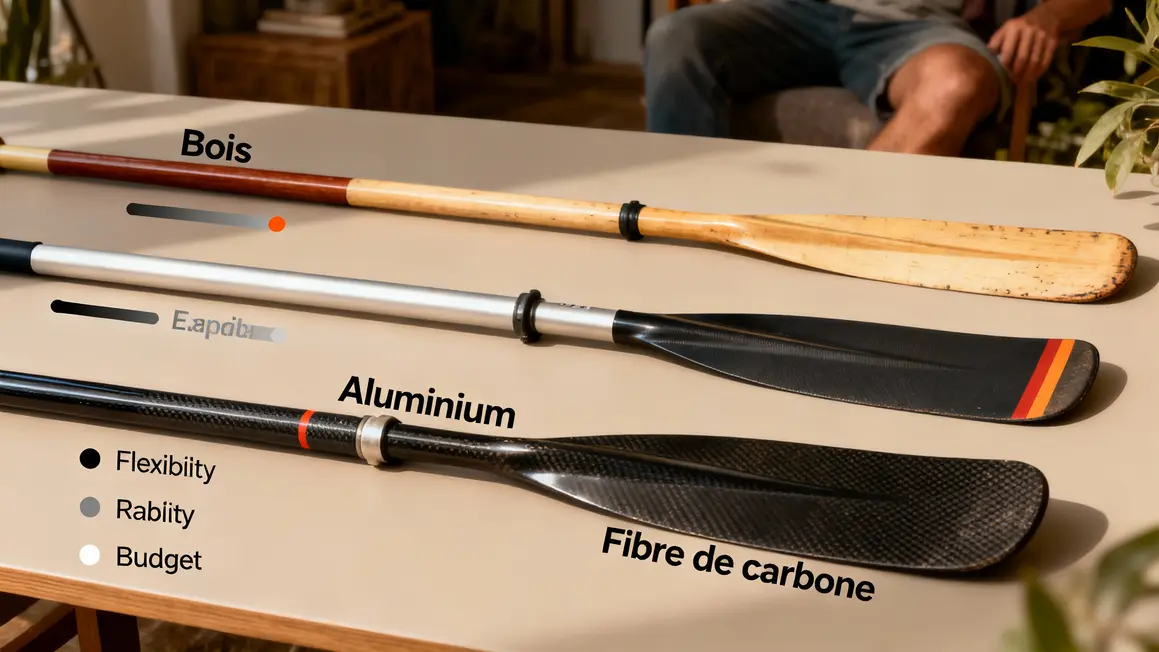
The choice of material conditions the handling and longevity of the row. Here is a comparative table:
| Material | Flexibility | Rigidity | Sustainability | Estimated budget | Recommended use |
|---|---|---|---|---|---|
| Wood (cedar, ash) | Knowledge requirements | Average | Maintenance requirement | 20-50 € | Beginner, leisure use |
| Aluminium | Low | Knowledge requirements | Good | 40-80 € | Clubs, intensive leisure |
| Carbon fibre | Controlled | Very high | Excellent | 100-200 € | Competition, high demands |
To be noted: The wood remains affordable and traditional but requires diligent maintenance. The aluminum provides solidity for a manageable cost, the carbon fibre is unbeatable in lightness and dynamism, but requires technical knowledge for assembly.
Essential tools for making a row
- Jumping or circular saw (crude cutting of pallet/handle)
- Rabot or sander (precise adjustment of edges and fine details)
- Double component epoxy glue gun (sustainable assembly, especially for handle/pallet junction)
- Tape meter, rapporteur, bubble level (precision, angle control and straightness)
- Gloves, glasses, mask (safety during cutting and sanding)
Also include sheets of abrasive paper (grain 120 to 320), a vice, joints and finishing tools (pinch or spray gun).
Pallet manufacturing steps
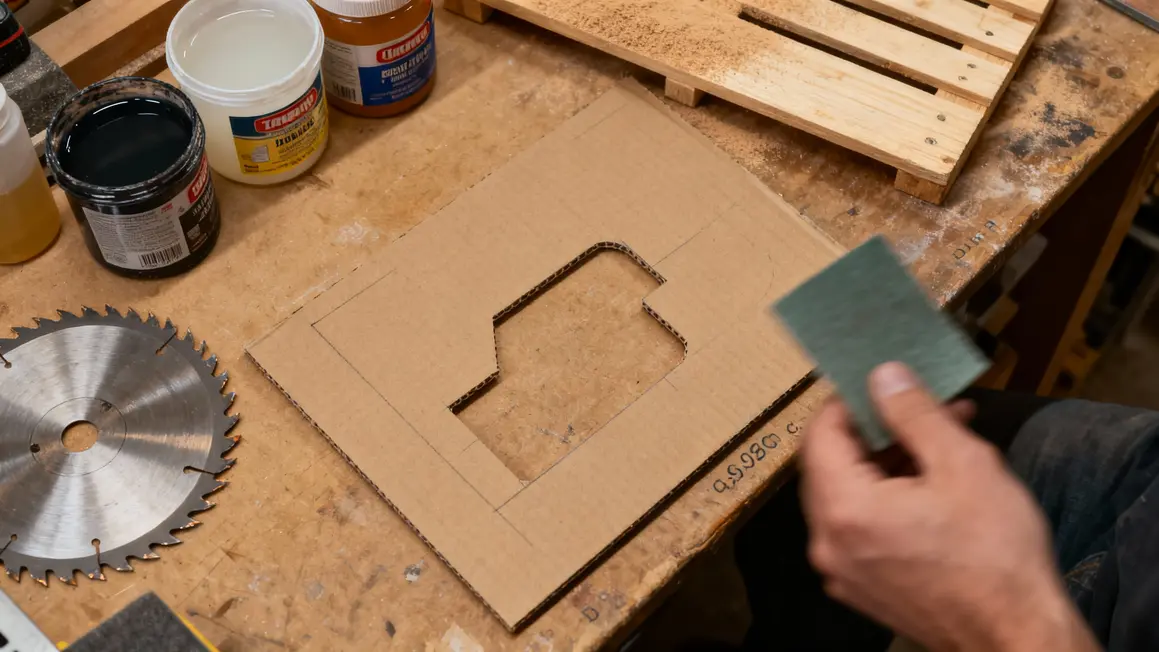
- Draw the template on cardboard or plywood (current dimensions: 50-60 cm x 25 cm)
- Report this template to the chosen material and carefully cut
- Sand edges to round the silhouette, promote penetration and avoid splinter
- Apply a layer of epoxy resin (wood) or UV varnish (composites) to protect and strengthen
- Control centre of gravity and weight to maintain overall balance
Construction of the row handle
- Length often between 2.5 m and 3 m for conventional use
- Ergonomic diameter from 30 to 38 mm; adapt to grip comfort
- Sanding or turning according to the desired shape (conical taper possible for high-end tips)
- Adding a grip (rubber or cork) for a better grip
- Test straightness (laser or tensioned wire) before final bonding
Assemble and finalize the row
- Sanding and degreasing of fastening surfaces (pallet/leach)
- Apply a good thickness of epoxy glue or possibly screw it with the help of stainless steel if necessary (respecting the structure of wood or composite)
- Check alignment using a level
- Allow 24-48 h to dry
- Perform a bending test: a homogeneous curvature without cracks is a sign of good preparation
- Apply a protective finish (marine varnish, UV-resistant paint, hand protection tape)
Test and adjust the row
Once the train is completed, confirm:
- The bending (Static test with light load and then motion simulation in a swimming lady)
- Lpallet-manche alignment (ideal angle of attack for propulsion)
- The comfort grip and grip
Correct any anomalies before the first intensive use.
Customization: materials, lengths, grips
Adapt the row according to your specific needs:
To customize your creation, explore these ideas DIY decoration: techniques to transform your rowing trains and add a unique touch to your row.
To ensure best performance, discover the best practices and tools in this comprehensive guide onsupport for rowing: all solutions and explanations.
In case of damage on your creation, find out how repair a broken rowing row: essential steps for successful repair and extend its life.
- Focus on carbon if lightness counts, or wood for tradition and flexibility
- Add ergonomic anti-humidity grips to prevent injuries and improve endurance
- Choose an adjustable section of the handle if you switch between different types of row
- Think about adapting the length to your size or the specifics of your boat
Maintenance and storage: for a sustainable train
- Clean with fresh water and wipe thoroughly after each exit
- Regularly check grip joints, cracks and wear
- Store in a dry space, sheltered from moisture and direct sunlight
- Plan an annual inspection (light/finish or grip change if required)
The editor recommends that you take the time to master these routines to extend the life of your equipment. These gestures make the difference on the water and for the safety of the club.
Precautions and safety during construction
- Always wear gloves, glasses and, for fiber, a suitable mask
- Check the sharpening and correct condition of your tools before each use
- Work in ventilated space, especially with glues and fibers
- Perform a row test « Dry » before watering on a natural water body
Frequently Asked Questions
- Which material to choose to start? Wood for budget, aluminum for robustness, carbon for performance (at the price of more demanding technical manufacturing).
- How to check the balance of the row? Place it in a horizontal press on two points: it must not switch. Otherwise, adjust the weight or sanding.
- Are craft trains accepted in competition? Yes, subject to compliance with federal regulations (weighing controls, dimensions).
- Dimension the pallet? 50 to 60 cm long for 25 cm wide in torque row – adjust according to practice.
- How to guarantee the life of a craft train? Maintenance after each use (cleaning, drying, seasonal varnish), annual revision, dry storage.
In short, the ability to manufacture a rowing row is based on the choice of suitable materials, rigorous construction and careful adjustments at each stage. To go further on the maintenance of the equipment or the life of the clubs, do not hesitate to consult the additional resources of the official website of the French Federation of Aviron or the fact sheets published by the recognized manufacturers of the sports sector.
What construction technique have you already tested or improved in your clubs or in your personal experiences? Share your feedback and tips in the comments to enrich the community. If this article has been helpful to you, disseminate it to your collective or section of the d Has any particular detail caught your attention or would you like to explore a specific aspect of craft manufacturing? Give us your opinion and suggestions for future files.
Article written by Marie F., a rower in a club for 12 years and volunteer association aviron Rhône-Alpes. Documented from club protocols, feedback from educational workshop experiences, and recommendations Fédération Française d'Aviron (2023).
Updated on 21 March 2026