An incident during training, a shock to the dock or simply natural wear: a rowing row may quickly show signs of weakness, but it is possible to intervene before considering its replacement. This guide offers concrete advice, used in many clubs in Rhône-Alpes, to re-start a row with confidence.
Contents
Identify damage on a rowing row
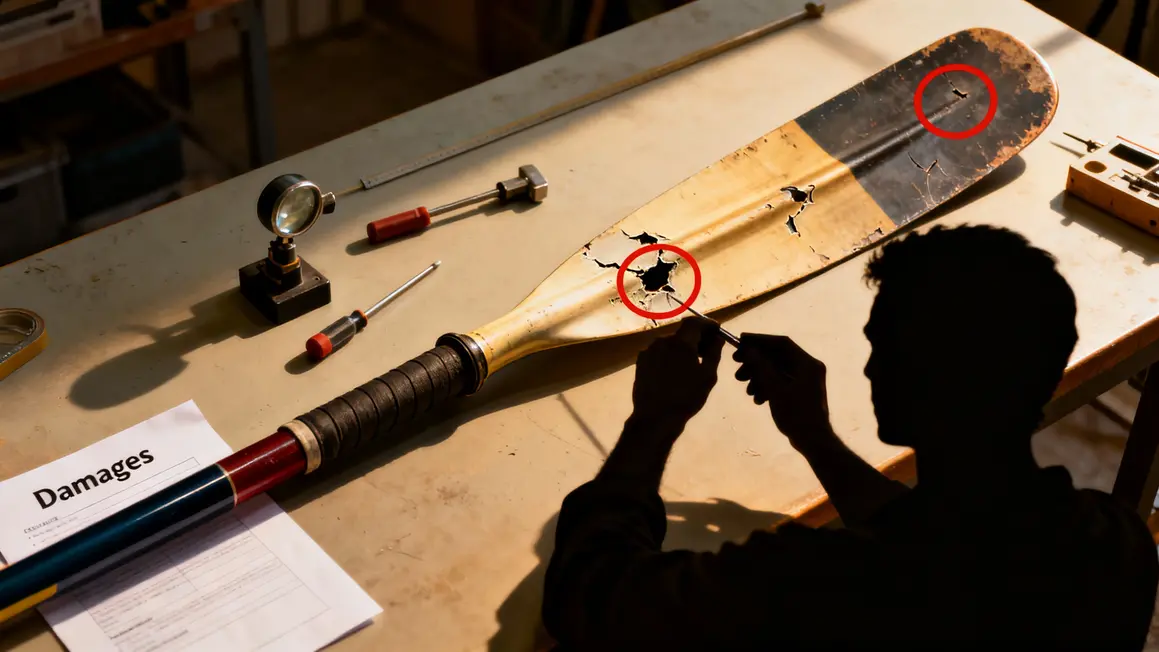
To identify damage, inspection must be methodical. Experienced clubs in the region insist on certain points: working in a clear and well-lit area, and taking the time to check each element. Starts with a visual observation of the shovel (the blade), looking for irregular cracks, cracks or edges under the hand. Any shrapnel can weaken the area in direct contact with water.
The handle must remain straight. Any longitudinal curvature or crack must alert and lead to a thorough inspection, as the structural integrity of the row is at stake. Use a cloth to clean and bring out any defects. Hands over the whole length: regional professionals agree that this is the safest way to detect irregularities invisible to the naked eye.
Pays particular attention to connection areas, especially between the shovel and the handle, or at the joint with the swimming lady. Repeated twists sometimes create cracks or play in attachments. A fragile connector would quickly endanger safety.
Finally, check the overall balance of the row on a support. An unusual imbalance or bending after repair requires additional control or even intervention by a specialist or the replacement of the train.
Prepare the necessary tools and materials
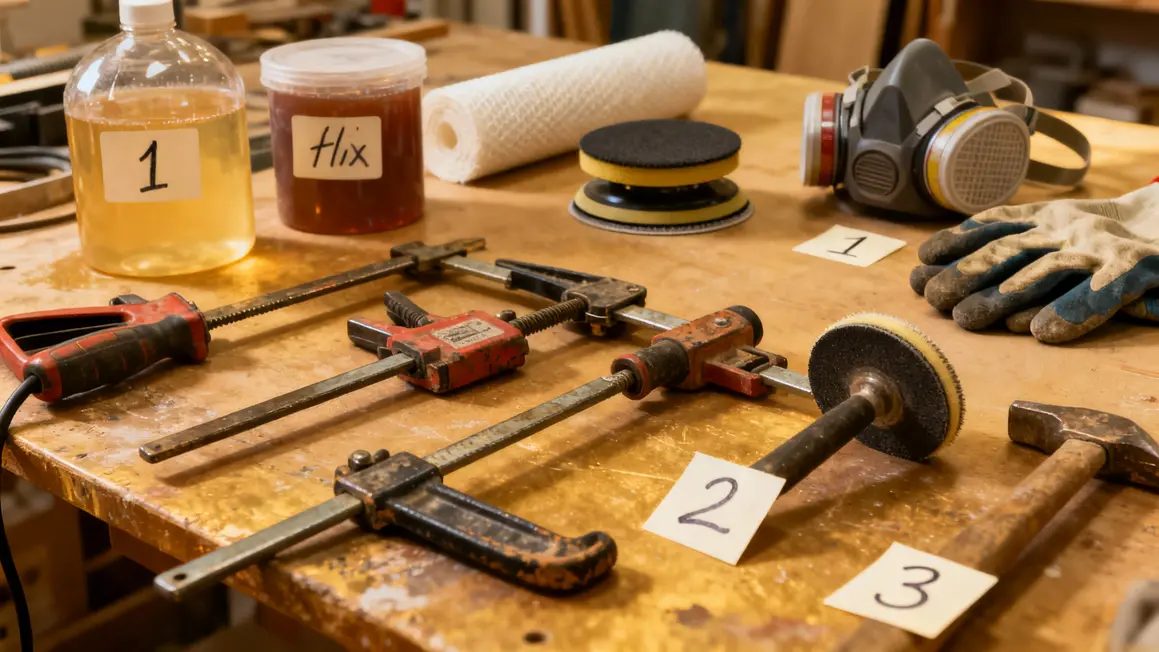
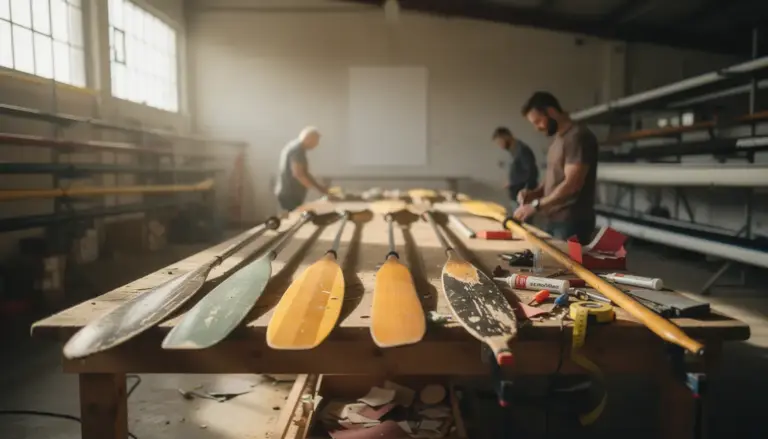
Prior to repair, assembles all the equipment: a seamless organization reduces interruptions and reduces the risk of errors, as many local supervisors share. For each type of damage, take the time to adapt the solution:
- Epoxy resin repair cracks and strengthen the structure;
- Glass fibre for areas requiring light but solid reinforcement;
- Cyanoacrylate glue for small shrapnel;
- The Seals to stabilize the elements the time taken;
- Orbital sander or abrasive paper to prepare the surface;
- Nitrile gloves and filter mask to protect against chemicals.
A good preparation also includes a clean cloth for cleaning, acetone if necessary, sufficient light and scissors to cut the fiberglass. This table summarizes the essentials:
| Materials | Use | Remarks |
|---|---|---|
| Epoxy resin | Repair and strengthen cracks | Choose a resin suitable for composites |
| Glass fibre | Strengthening damaged areas | Pre-cut to damage size |
| Cyanoacrylate glue | Repair minor shrapnel | Ideal for quick repairs |
| Lockers | Maintain repaired parts | Stabilize while taking |
| Orbital sander / abrasive paper | Smooth and prepare the surface | Start with medium grain, finish with fine grain |
| Nitrile gloves | Protecting chemicals | Recommended specific and resistant |
Safety and method are the guarantees of reliable repair: do not neglect them to continue to row calmly.
Clean and prepare damaged area
The club experience shows that a rigorous cleaning makes all the difference on taking materials. Start by diagnosing exactly the place of damage: handle, shovel or connector, not forgetting to search for micro cracks. Remove the debris and irregular edges using a precise tool, then clean the surface with isopropyl alcohol and let it dry completely. Go to sanding, from medium grain to fine grain, to standardize the area.
Think about whether there is a spread of damage in nearby areas: some impacts hide wider fragility. This vigilance is valuable in order to avoid a repair that would not last over time.
Perform repairs with appropriate materials
Once the preparation is complete, perform the appropriate repair. A crack? Apply a layer of epoxy resin with a spatula or brush, ensuring that it penetrates the damaged area. Follow the drying phase (12 to 24 hours depending on the product). For localized flakes, a tip of cyanoacrylate glue with a clasp holding is sufficient. Trick picked up by several volunteers: always leaves an extra rest time, even after the quick take, to guarantee a permanent wear.
In case of persistent weakness on the handle, then strengthens the area with fiber and resin, detailed technique just after.
Strengthen repair with composite components
To sustainably strengthen the damaged area, uses the fiberglass tempered in epoxy resin. Cut the fiber to the right size, then position it beyond the fragile zone to distribute the effort. Coats each band with a layer of resin, gently presses to remove air bubbles and stabilizes the assembly with a flexible band or joints during drying. Club experience: don't spoil this stage, because a well-positioned fiber really changes the durability of the repair.
Sanding, painting and finalizing the repair
Once the fiber and resin are dry, proceed to a progressive sanding until the surface is smooth. Cleans thoroughly before applying the paint or the protective varnish, producing the thin layers successively.
Use water and UV resistant products. Within the regional clubs, the aesthetic phase is often the opportunity to rehabilitate the collective material and teach the younger ones the importance of the maintenance.
The final inspection, in good light, prevents the return of defects that could worsen in intensive use. The finalisation of a repair is also to strengthen the longevity of the entire club's material stock.
Test the train in real conditions
Before returning to water, perform a static check (moderate pressure on repaired areas, general equilibrium check), then perform a dynamic test: start with low-intensity rowing on a calm water plane. Look, look, no vibration or suspicious noise should appear. Compares the gesture and balance with those of an intact row. In case of doubt about the holding or in case of abnormal noise, prefers a new adjustment or requests advice from an experienced coach.
Local clubs recall that these precautions reduce the risk of breakage during high-speed regatta or training.
Tips to avoid future damage
Regular maintenance remains the best prevention. Visually inspects your trainsets after each exit: early detection of a worn varnish or shine avoids costly repairs. Effective protection also requires the storage of sun and moisture in dedicated covers, especially in winter.
To better understand the structure and materials to repair, discover how to make a rowing ram: practical steps and tips.
After repairing your row, let your creativity flow with these ideas of DIY decoration: techniques to transform your rowing trains.
To avoid further damage to your equipment, discover how to maintain your nautical equipment: practical methods and tips to extend your life and preserve your trainsets in the long term.
- Avoids shocks while travelling;
- Train new rowers with safe gestures;
- Integrates collective control into club life, especially for cleaning and checking fixations.
The experience of coaches in Rhône-Alpes proves that sharing good practices with young people and unexperienced members improves the entire material stock, while securing the practice of the club.
When should we consider replacing a train?
Beyond a certain level of damage (broken structure, multiple repairs, significant loss of balance), replacing the row becomes indispensable for safety. Regional clubs opt for repair when reliability remains possible, but do not hesitate to renew equipment when performance or safety are involved. Cost: 350 € 600 € for a new carbon row, compared with 150 € or more for complex professional repair.
For young people and learning rowers, having high-quality material promotes technical progress and reduces the risk of injury. For any hesitation, the opinion of a manufacturer or specialist repairer in the sector is always relevant.
In sum, repair a rowing rowing rowing rowing rowing rowing rowing rowing rowing rowing rowing rowing rowing rowing rowing rowing rowing rowing rowing rowing rowing rowing rowing rowing rowing rowing rowing rowing rowing rowing rowing rowing rowing rowing rowing rowing rowing rowing rowing rowing rowing rowing rowing rowing rowing rowing rowing rowing rowing rowing rowing rowing rowing rowing rowing rowing rowing rowing rowing rowing rowing rowing rowing rowing rowing rowing rowing rowing rowing boarding boarding boarding boarding boarding board. This guide is based on the most shared practices in Rhône-Alpes, validated by mentors and volunteers involved in local associative life.
To deepen your knowledge, do not hesitate to consult the recommendations of the French Federation ofviron and to ask for feedback from neighbouring clubs.
What tools or tricks have you already used to restore a row? Share your feedback experience and help enrich the community! Do you find this guide useful? Don't hesitate to share it: it could be helpful to other rowers or club managers in your surroundings.
A question, a particular need around the d'aviron equipment? Make it clear in the comments: it is your feedback that pushes the regional collective resource forward.
Marie F. – Practicant of rowing and volunteer club for more than 10 years, specialized in material management and accompaniment of new rowers.
External sources: French Federation of Aviron, Olympic France.
Updated on 21 March 2026