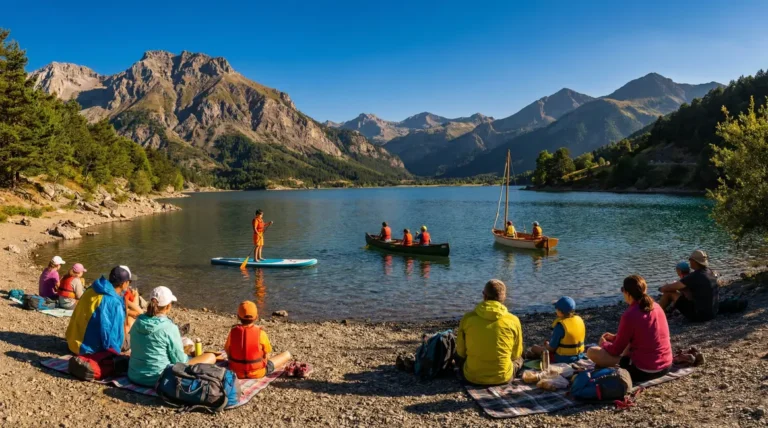
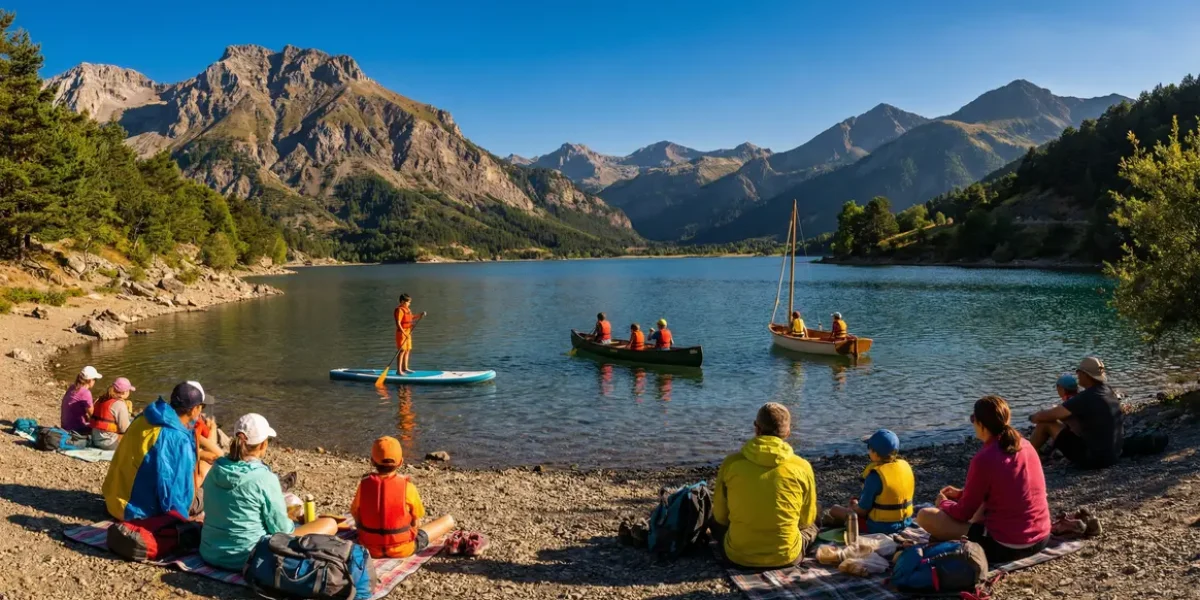
You are planning to introduce your children to water sports in Rhône-Alpes, but you are wondering about the ideal age, the benefits for their development, or the precautions to be taken? This selection summarizes the essentials: sports best suited according to age, points of vigilance for safety, impacts on development, and concrete tips to engage calmly with your family or in a regional club.
Contents
The benefits of water sports for children
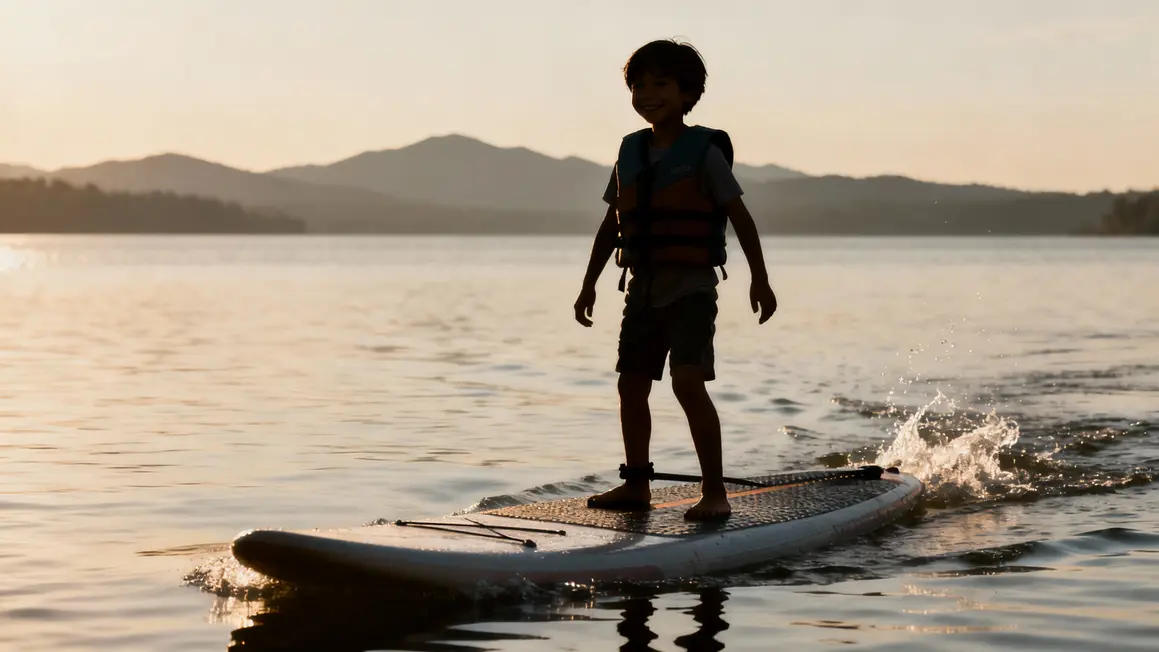
Water sports are not limited to fun and discovery: they stimulate coordination, balance and promote harmonious muscle development. The stand-up paddle, for example, learns from an early age to synchronize movements. This body pressure strengthens posture and self-consciousness. Some parents notice better insurance in their children after a few sessions.
Water activities also provide an ideal framework for stress management and trust. To tame a kayak or to locate yourself in a sailing boat allows you to overcome your own apprehensions. Monitors often see visible pride in children after their first successes in autonomy.
Socially, rowing, sailing or collective disciplines require real communication and listening skills. When each rower plays his/her role or acts as a duo in a yole, the ability to cooperate increases and this know-how often comes back to school or group activities.
The aquatic environment also confronts children with patience, unforeseeable management (weather conditions, currents, etc.), while remaining under close monitoring. This develops their ability to adapt and persevere.
The French Federation of Physical Education and Volunteer Gymnastics insists on improving cardio-respiratory endurance and preventing overweight among young regular practitioners.
How to choose water sports by age and child's abilities
To select a suitable nautical activity, one must consider age, motor maturity, and the child's relationship to water. Some sports require endurance or balance; others favour the collective.
- 3-6 years: Light water games and guided zone initiations. The priority remains the aquatic awakening and discovery in the form of games, a stage often led upstream in the training clubs.
- 7-8 years: First supervised sports like the Optimist (small sailing boat) or the stand-up paddle on a calm water; These activities open up to autonomy while keeping a large share of the game.
- 10 years and over: Access to disciplines requiring more technique, such as kayaking, or even the first steps in surfing, is possible, with swimming guaranteed at the base.
- 12-14 years: Wakeboard, kitesurfing and sensational activities for those who combine experience and good balance, with enhanced surveillance and complete equipment.
| Water sports | Recommended minimum age | Qualifications | Suggested environment |
|---|---|---|---|
| Aquatic games | 3 years | Water Familiarization | Swimming pool/supervised areas |
| Sailing (Optimist) | 7 years | Concentration, listening | Quiet waters |
| Kayak | 10 years | Coordination, strength | Lakes/fresh waters |
| Wakeboard | 12 years | Advanced balance | Lake towed |
| Kitesurf | 14 years | Stability, Material Management | Adapted coastal zone |
Some clubs offer an evaluation to target the discipline most suited to technical progress or temperament. Taking into account the child's pleasure remains decisive in the final choice.
What equipment is essential for safe practice?
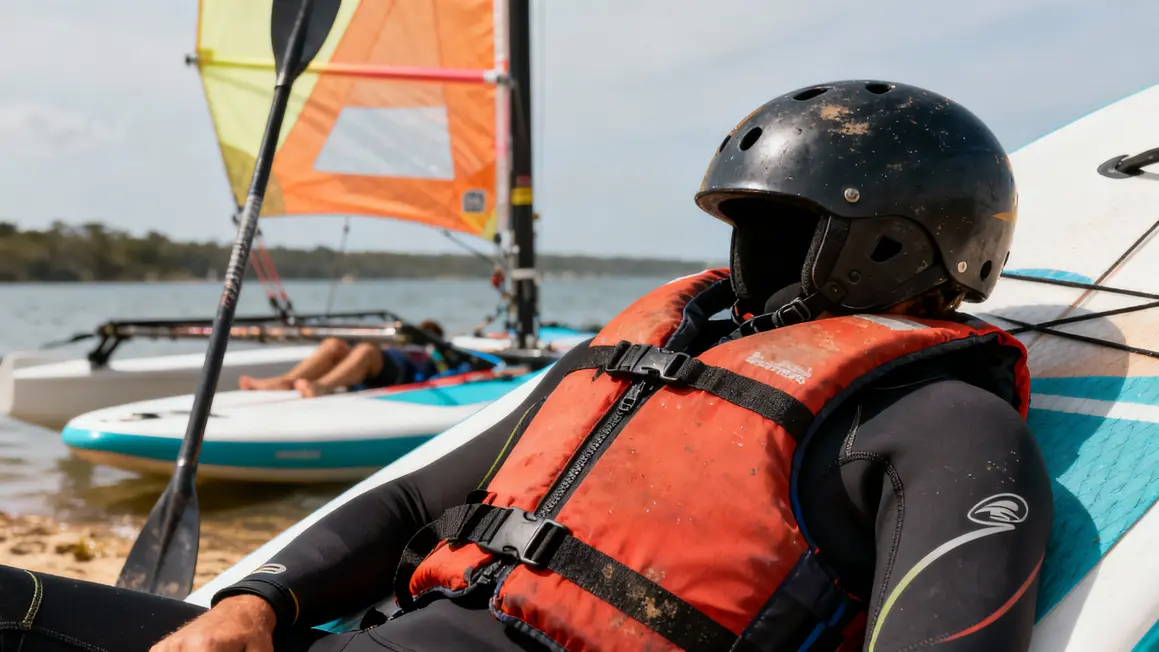
Regardless of the sport chosen, the vigilance on the equipment is constant. The lifejacket, set in ISO 12402 and adjusted to the size of the child, is always rigorous. For kayaking, rowing or kitesurfing, the helmet (EN 1385) is justified by the nature of the movements and the possible risk of impact.
The port of a neoprene combination offers cold protection and limits irritation caused by equipment or natural elements. The thickness varies according to the temperature of the water 3 mm in summer, 5 mm for the first freshness.
For family initiations (paddle, slow sail), prioritize a large and stable board or support, adjusted vests, and check the absence of material wear before each session.
- Fitted and approved vest
- Helmet by discipline
- Combination adapted to the season
- Regularly checked equipment (coating, fastening, stability)
Safety rules for serene sessions
Constant supervision by a qualified coach or an adult who knows the specific risks of activity is crucial. The practice in the monitored area (club or labeled base) is to be preferred. In the river or lake, prefer quiet conditions without strong current points recalled in all clubs affiliated with the French Federation d'Aviron or Canoe-Kayak.
Train the child to observe the weather, identify obstacles (rocks, currents) and understand that the wearing of the vest is not negotiable is part of basic learning. This cultivates autonomy while strengthening their collective vigilance.
- Always close supervision
- Areas monitored, instructions adapted
- Equipment properly controlled and worn
- Basic instructions training (meteo, obstacles, warning signs)
Overview of water sports popular with children and their families
The stand-up paddle seduces from 8 years old, easy to start on the lakes of Rhône-Alpes, and ideal for smooth learning. Sailing (Optimist) is designed for young people aged 7 and over to develop autonomy and decision-making in a reassuring environment.
Canoeing, done as a group or as a family, is recommended from 8 years old. It allows to mix physical effort and exploration of the territory. Surfing is less widespread locally, but accessible from 6 years on suitable spots during the holidays, for new sensations and control of balance.
For lovers of sensations, wakeboarding envisages around 7 years, in well equipped clubs. Professional coaching remains the best guarantee of safety in this demanding sport.
| Sport | Recommended age | Main benefits | Club accessible? | Free practice possible? |
|---|---|---|---|---|
| Stand-up paddle | 8 years | Balance, family accessible | ||
| Sailing (Optimist) | 7 years | Autonomy, strategy, collective | The recommended age to begin river rowing is 10-12 years, while for sea rowing it is preferable to start from 12-15 years old due to additional safety and navigation requirements. | |
| Canoe-kayak | 8 years | Coordination, exploration | ||
| Surfing | 6 years | Balance, confidence | The recommended age to begin river rowing is 10-12 years, while for sea rowing it is preferable to start from 12-15 years old due to additional safety and navigation requirements. | |
| Wakeboard | 7 years | Balance, sensations | The recommended age to begin river rowing is 10-12 years, while for sea rowing it is preferable to start from 12-15 years old due to additional safety and navigation requirements. |
How to facilitate the discovery for children in Rhône-Alpes?
Starting with a structured club remains the safest and most trainer. Graduate instructors (BPJEPS, CQP) adapt the progressions to the ages, and offer apprenticeship cycles with internships or mini-competitions all year round. Every year, many clubs organize open doors for local families to test the discipline.
For those who want to start outside the club setting, turning to rental equipment on supervised water bodies is an accessible solution. A gentle family progression with the stand-up paddle or the discovery of the tandem canoe allows to approach the aquatic environment without pressure. A few sessions are often enough for the child to gain ease.
In order to diversify practices and maintain commitment, the summer courses offered by the associations of the region (especially in clubs affiliated with the French Federation of Aviron or Canoe-Kayak) alternate initiation, collective games, techniques and exploration of the territory. At each stage, regularity and listening to the desires of the child are the best asset for the long-term installation of the sports habit.
Clubs and schools in Rhône-Alpes: what structures to supervise young people?
The region has a recognised fabric of structures, labeled by the national federations (FFV, FFCK, Fédération Française d'Aviron), where equipment and supervision are systematically monitored. Clubs located on the main lakes (Annecy, Bourget, Nantua) and rivers (Rhône, Isère) offer suitable niches, new equipment and often parent-child animations. Several local bases regularly organize ecological workshops or interclub meetings, strengthening social ties and environmental responsibility among young practitioners.
To help your children get started safely, discover which water sports to choose in the Rhône-Alpes: comparative and tips for beginners and find the ideal activity according to their age and level.
To introduce your children to rowing in complete serenity, discover the key techniques and tips for rowing well.
For more ideas and inspiration, discover the Top 5 nautical activities to try during the holidays and find the one that will suit your children perfectly.
| Club | Situation | Disciplines | Public |
|---|---|---|---|
| Nautical Club of Aix-les-Bains | Lake Bourget | Sailing, rowing | Youth and adults |
| Seyssel Nautical Base | Upper Rhine | Canoeing, paddle | Families, beginners |
| Lyon Canoe-Kayak | Rhône (Lyon) | Canoeing, dragon boat | Groups, competitors |
| Rowing Club in Grenoble | Isère | viron | Competitiveness, leisure |
Educational and social values of water sports in clubs
Integration into a club far exceeds physical activity. The spirit of self-help, the management of collective success and the learning of respect for nature are cited by many regional families. Local accounts show that many young people continue after sport to become involved in other associative actions or to raise awareness about aquatic ecology around them.
- Development of individual autonomy
- Solidarity, management of failure: valued social learning
- Respect and discovery of the territory
- Amitied and local anchor through shared sessions
Practice with the family and disseminate regional sports culture
A family outing in paddle, tandem canoe or at a regional event creates strong memories. Some clubs organize family days to demystify nautical activity and promote cohesion. Anticipating logistics (picnic, replacement clothes, adapted equipment) prolongs user-friendliness. In the region, this openness to discovery values natural heritage and access to sports for all ages.
What new products for young water sportsmen?
Recent initiatives are emerging: yoga paddle, educational outings around wildlife, personalized material for children... Animators test new formats with collective games or ecological workshops so that each session is a fun and rewarding experience. Clubs that innovate in this direction generate a strong commitment to new practitioners.
Get closer to affiliated clubs and check out their specific programs for children and families. The site of the French Federation of Aviron, the French Federation of Canoe-Kayak or the regional pages RHONESPORTS provide concrete benchmarks on the right structures to start or progress.
What water sports have you shown your children or young rowers? Which clubs or water plans would you recommend to start in Rhône-Alpes? Share your feedback on the experience below and contribute to the exchange of ideas between parents, mentors and local enthusiasts.
Did this content help you? Do not hesitate to share it with other families, volunteers or club leaders. Your experience enriches the regional community!
Any specific subjects to dig into or an idea for field reporting? Tell us: the comment space is open.
For more information on regulation, please consult: Fédération Française d'Aviron, Fédération Française de Canoë-Kayak, Ministry of Sports.
Marie F. (pratic daughter, mother of two children, specialist editor of sports and leisure in the Rhône-Alpes region)
Updated on 21 March 2026