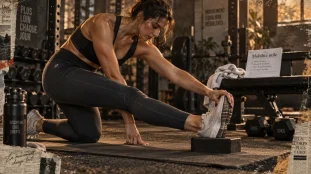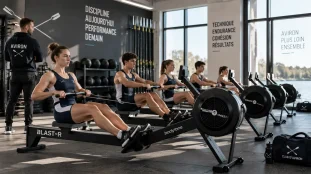
Strengthening the upper body, it is much more than aiming at the look or the raw performance: we talk about a stable posture, a balanced look, and, above all, a real gain in energy in the daily business as in leisure activities. With more than twenty years of experience as a coach and former rower, I noticed that the key is to give importance to regularity, adapt its progression and intelligently select exercises, even without the latest equipment.
Whether you start or already follow an advanced cycle, structuring your sessions protects from pain, strengthens self-confidence and regularly radically changes the dynamics of everyday life. Hard to turn around the pot: here is a clear method, which gives concrete and practical benchmarks, accessible to all those who want to build their own upper body training, aim for real benefits and regain the desire to advance session after session.
Summary of key points
- ✅ The importance of regularity and gradual adaptation in training.
- ✅ Two targeted weekly sessions are sufficient without sophisticated equipment.
- ✅ Structure your sessions protects from pain and improves posture.
Contents
A strong upper body: the basis of a functional, aesthetic and resistant body
To get a real change – a back that lasts all day, well designed shoulders, more dynamic arms and a real boost for posture and confidence – the starting point remains a thoughtful training planning. So how do you do it? An effective program targets decisive muscle groups, alternates between complete movements and specific exercises, then progresses at a pace that fits your abilities.
Two sessions from 45 minutes to 1h15 per week are usually enough, without the need for pointy equipment. For having crossed many profiles on the water, what really distinguishes those who are progressing is attendance, listening to oneself, and an adjusted exercise choice. This is the rule, and everything else develops with this base.
Simplified Anatomy: Which muscles to target and why
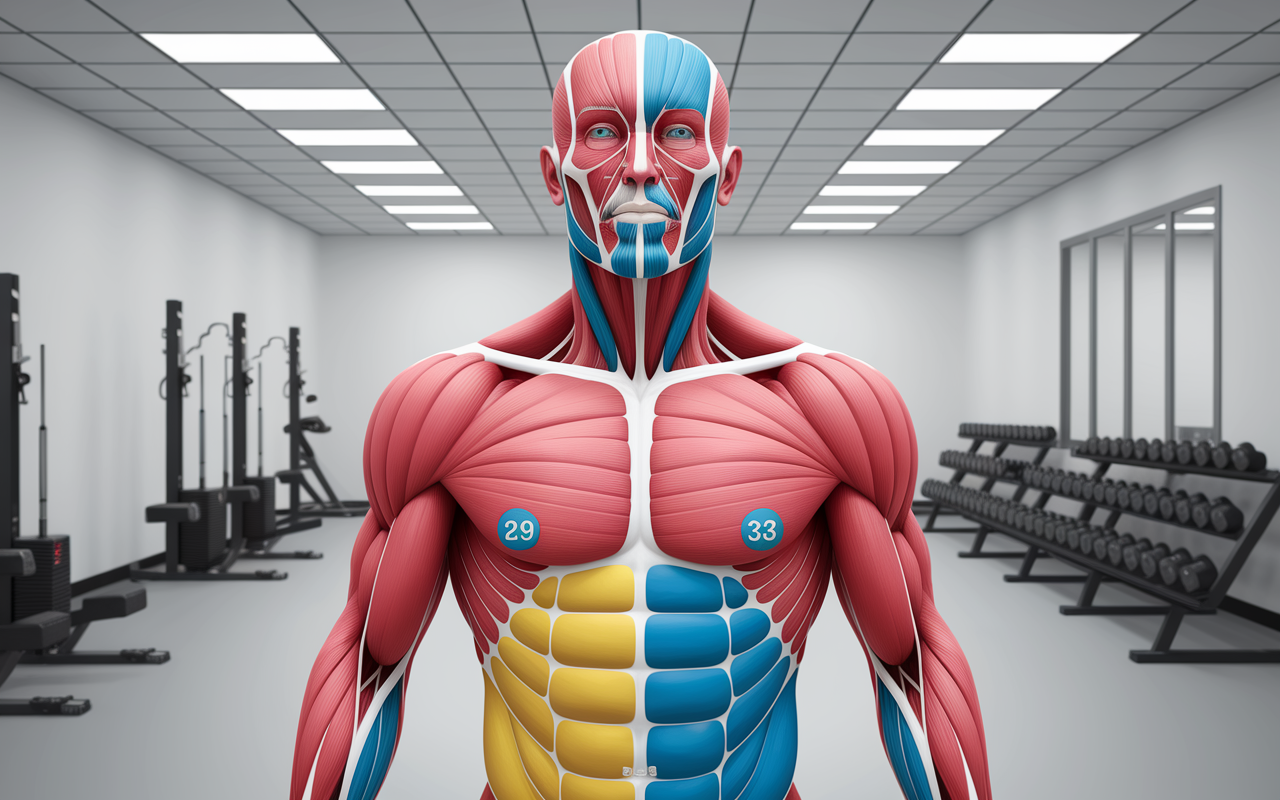
The upper body is not just a matter of pectorals or arms. These include:
- Pectoral (large and small) : motor of thrust, support of tonic posture
- Dorsal (large dorsal, trapeze, rhomboids) : essential to draw, give back stability
- Shoulders (deltoids, rotator cap) : for mobility, strength and overall
- Biceps and triceps : tonic arms, powerful gestures
The ensemble composes the famous "scapular belt", pillar of a real functional force and defense against the pains of everyday life. You can see your back, your shoulders rolled forward... A well thought-out session structure allows these imbalances to be corrected relatively quickly. Some practitioners also evoke an improved feeling from the first few weeks, provided they remain regular.
Impact on posture and health
To solicit the upper body is to make a choice in favor of daily vitality – outside of its sessions. A strong back offers, as a priority, a natural posture that reduces tensions and anticipates small classic problems. We are not trying to grow to grow, but to aim for a real functionality of the body, a general balance.
The beginnings can be tricky: several novice rowers confuse mass gain and improved posture, after the field returns.
Choose your training mode: full body or half body?
Between "full body" (general sessions) and "half body" (separate high or low sessions), the choice depends mainly on your schedule, your training habits and your current energy.
Quick comparison: when to choose each method?
The full body, which consists of working the whole body during each session, lends itself well to tight schedules: 2 or 3 times a week are sufficient in most cases, each muscle group being mobilized frequently. On the other hand, specifically strengthening the upper body can encourage a shift to a half body logic.
This distribution allows you two more targeted high body sessions, with an emphasis on the quality of the gesture and the right technical settings. To give some key benchmarks:
- Full body : 2 to 3 weekly sessions, each area requested at each passage
- Half body : top priority over two dedicated sessions in the week
- Objective : Depending on the need, endurance (high repetition) or hypertrophy (heavier loads) can be preferred.
- High flexibility : easy adaptation to your equipment or progress
Last point to note: in a hurry to progress effectively? The full body remains your ally. Willing to muscle a weak spot or perfect aesthetics? The half body, more structuring, accompanies you over time.
Good to know
I recommend you choose your training mode according to your schedule and your goals: the full body is ideal for regularity and frequency, while the half body allows you to target more precisely the upper body with dedicated sessions.
Upper Body Programs: structure, exercises and progression for each level
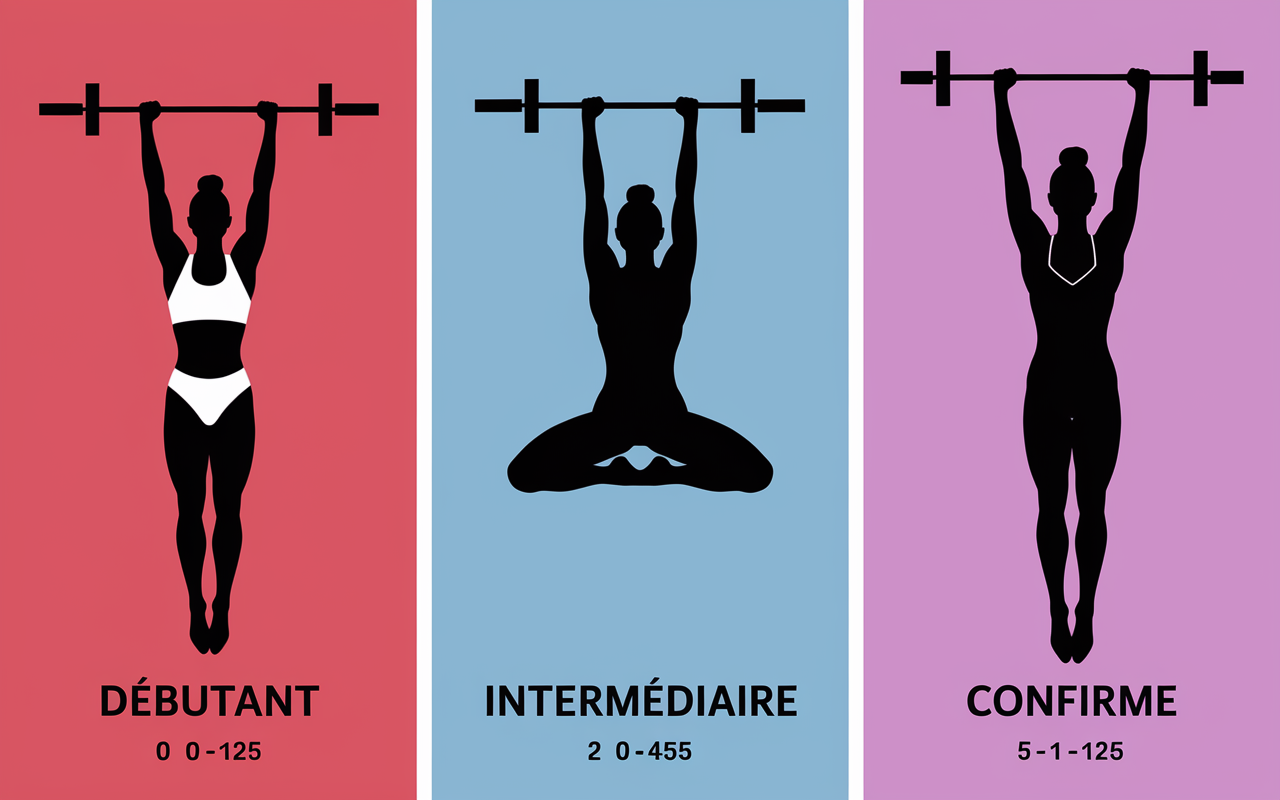
Here's what you can remember: whether you're a novice or already familiar with training, the secret is to adjust your plan as you go, depending on your sensations and the equipment available.
Beginner program – access without hardware
At the beginning of the course or during a recovery, aim to master the basic movements above any performance objective. The most frequent feedback shows that the first progress is regularly rapid: over six weeks, the majority observe at least +20 % on force on the main movements (confirmed experience in both young and 40-year-old profiles, after some sports coaches interviewed).
| Day | Exercises (3 to 4 series, 15 to 20 reps) |
|---|---|
| Monday | Pumps, Rowing logger (handle/bottle), Cups on chair, Lumber cutting |
| Thursday | Side elevations (bottles), Straps with elastic, Board, Curl elastic biceps |
Think about starting light: dumbbells 2 to 4 kg or elastic 15-35 kg for the drawing. On each gesture, focus on the performance quality over the cumulative figures. It happens that a beginner surprises himself to progress clearly on the sheath, while he thought he could not do it the day before.
Intermediate programme – integration charges and variants
At this stage, the instruction: to solicit more muscles by changing the load, the number of repetitions or the tempo. To aim for muscle development (hypertrophy) or strength, it is better to move forward at its own pace while opening up to new difficulties. Some participants report that, after a few cycles, they themselves surprise their entourage with 10 strict tractions or a developed-couched 40 kg.
Example of a structured session to be adopted:
- Developed or pumps: 4 sets from 10 to 12 repetitions
- Rowing with dumbbell or woodwood variant: 4 x 10–12
- Traction pronation (elastic or body weight): 3 x maximum
- Side elevations or elastic shoulder work: 3 x 15
- Sequence arms : curl biceps + triceps extension : 3 x 12 each
Do not deprive yourself of varying the speed of execution (well controlled descent, small breaks in low position): it is regularly observed that real changes appear simply by zaping the automatic rhythm. "It's not always obvious at first," slips a physical preparer, but this effort pays fast.
Confirmed program – advanced techniques and optimized split
For the most advanced athletes, the progression requires a gradual increase in difficulty, the introduction of supersets, and a concern to balance pectoral and dorsal (which some professionals consider decisive). This type of plan is inspired by cycles 5 x 8 to 10 repetitions on heavy loads, two minute breaks between blocks.
A common pattern among followers:
| Year | Series x reps |
|---|---|
| Developed | 5 x 8 |
| Tractions | 5 x 8–10 |
| Rowing bar | 4 x 10 |
| Dips | 4 x 10 |
| Side elevations | 5 x 15 |
There is almost always a net increase between 4 and 6 weeks, before needing to renew the exercise cycle or move to a higher level. Curiously, some athletes report a second breath after this type of cycle, without radically increasing their training volume.
High body heating: your anti-injury ally
It is impossible to ignore heating, even with 20 years of experience: the more we advance, the more it becomes obvious that this moment effectively protects from injuries (studies progress up to –70 % risk for those who care).
The following routines are often recommended:
- 5 minutes general heating (string, rowing, jumping jack...)
- Chain 2 x 20 rotations (shoulders, arms, wrists)
- Targeted mobilisation series : slow pumps, light elevations
Ideally this phase remains to be adapted according to the expected intensity or fatigue of the day. Some heat their joints with a simple towel, or improvise with the handle of a broom. For the kine who was gluttonizing me, "a prepared shoulder is the key to lasting."
Exercises classified by muscle group and alternatives without equipment
At home or on the move, lack of equipment is never a real barrier. It is common to get good results simply with a bottle of water or an elastic: a coach in personalized follow-up recently recalled that creativity counts as much as the weight of dumbbells!
| Muscle group | Exercise with / without equipment |
|---|---|
| Pectoral | Pumps, tilted pumps, developed-shelled dumbbells |
| Sleep | Rowing logger (bottle / dumbbell), tractions with elastic/without |
| Shoulders | Side elevations (bottles / dumbbells), shoulder press |
| Biceps | Curl elastic biceps / dumbbell / weighted backpack |
| Triceps | Dips chair, extension triceps behind head |
In practice, the benchmark remains simple: 3 to 5 series according to form or experience, 8 to 15 rehearsals to gain in volume, or 15-25 to target muscle endurance. An amateur rower, hesitant about training without a room, was often surprised by the effort generated on a single chair.
Progression, load and security: the cycle that will transform you
How can we avoid stagnation? It is advisable to rely on progressive overload – this principle of gradually increasing difficulty, varying load, volume or speed. A change in each cycle of 4 to 6 weeks may be sufficient. Safety must stay in mind: monitor sensations, run, stop at any unusual signal and adapt.
To the question "how long before visible progress?", the classic range lies between 4 and 8 weeks, and a good expert will always specify that recovery counts just as much as training.
- Progress in short cycles : 4 to 6 weeks before change
- Targeted rest : 30 sec (endurance) to 2 min 30 (force or hypertrophy)
- Recovery : at least 1-2 days between two upper body sessions
- Better keep or integrate active/mobility break from time to time
After some feedback from new practitioners, progress is sometimes noticed after only a few weeks – I accompanied young people who doubled their pumps from the first cycle, proof that progress is never frozen.
For quickly visible results, find out how having big arms in 1 month through targeted and effective strategies.
To develop powerful arms and improve your posture, integrate targeted exercises such as curl biceps bar EZ : technique, variants and tips in your strength training sessions.
For a powerful, injury-free upper body, find out how to integratepulley shoulder: the practical guide to muscle and protect your shoulders in your workouts.
Safety/medical framework and consultation
Before starting fully, performing a medical check-up (especially in case of history or chronic pain) remains the most secure option. A physiotherapist recently pointed out that a postural analysis session at the very beginning regularly avoids the small seeds that drag.
Any persistent discomfort to the shoulder, elbow or wrist? Better stop a session than let the problem settle over time.
FAQ – answers to everyone's questions
Do you still hesitate? Some frequent questions, heard systematically during the accompaniments:
How many times a week work the upper body?
Twice a week is suitable for the vast majority; three if recovery follows progress.
What difference between developed lying and developed inclined?
The inclined developed targets the top of the pectorals, the lying together. Both are complementary, some coaches even suggest alternating each cycle.
Can't I do traction, alternatives?
Start with an elastic 15-35 kg, half-tractions or rolling logger (the bottle of water or even a backpack is enough in many cases).
Dos or pectorals: should one be preferred for balance?
Simple rule: a back series for a pecs series. This ratio protects from the rounded back and helps keep the line in the long term.
The best shoulder exercise according to the studies?
Side elevations, shoulder presses, tractions: these movements offer a complete deltoid work, which is emphasized by several sports preparers interviewed.
How to avoid shoulder injuries?
A specific heating routine, mobility, regular breaks and an impeccable technique are put on every passage (a point often overlooked, according to some kines).
Any results with the upper body at home without material?
Yes, it seems quite possible: simply organize its sessions, integrating variety, you can go very far without a room. A mother in the community even saw her level double at home over three months.
How long to see the results?
After 4 to 6 weeksMany clearly feel more force, and sometimes notice the first visual changes. Patience and attendance remain the two key words.
Testimonials, social evidence and downloadable program access
More 5000 members tested the methods dedicated to the top of the body, according to MyProtein, Jogging International or L的Atelier Gym. The same remarks come back relatively often: "Posture straightened in eight weeks", "Dos reinforced, finished the painful point of the morning", "Bras and shoulders metamorphosed".
Access to the community offers a platform for exchange, sharing progress, and resources (PDF guide, step-by-step videos, adapted coaching). For those who want to go further, a full program to download free of charge and direct contact with a certified coach allow you to plan your custom routine.
In short, we quickly find the pleasure of moving forward, surrounded and supported, even solo.
Updated on 21 March 2026