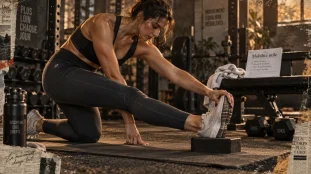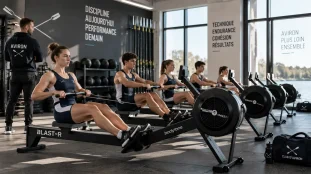
Doing justice to Medium buttocksIt is to give his body the stability it needs to limit recurrent pains and gain efficiency in movement, both in rowing and in everyday life. Twenty years spent on rhônalpin water showed this: practice targeted exercises, simply and regularly, not only transforms posture but also changes confidence in his gesture – from the college student who rediscovers the row to the adult attentive to keeping his knees. Finish the random routines: each board here relies on the reality of the field, and each example aims to support the activation of this stabilizer muscle, with the ambition of perceptible and lasting results.
Contents
Strengthening the buttock medium: where to start to see (finally) results?
I am regularly asked this question: « What exercises really make the difference for the buttock medium, and when do you feel an evolution? ». Everything is played on three axes: choose exercises that isolate the muscle, ensure correct performance, and repeat 2-3 times a week – the first progress often appears from 3 to 6 weeks.
There is no point in waiting for a painful discomfort to get there: to strengthen the buttock medium, it is to give a solid base, whether to stabilize the pelvis, improve a rowing stroke or have less sensitive knees. Besides, a physiotherapist suggested that a progressive work on this muscle avoids many passages on the treatment table...
Basic exercises to activate the buttock medium
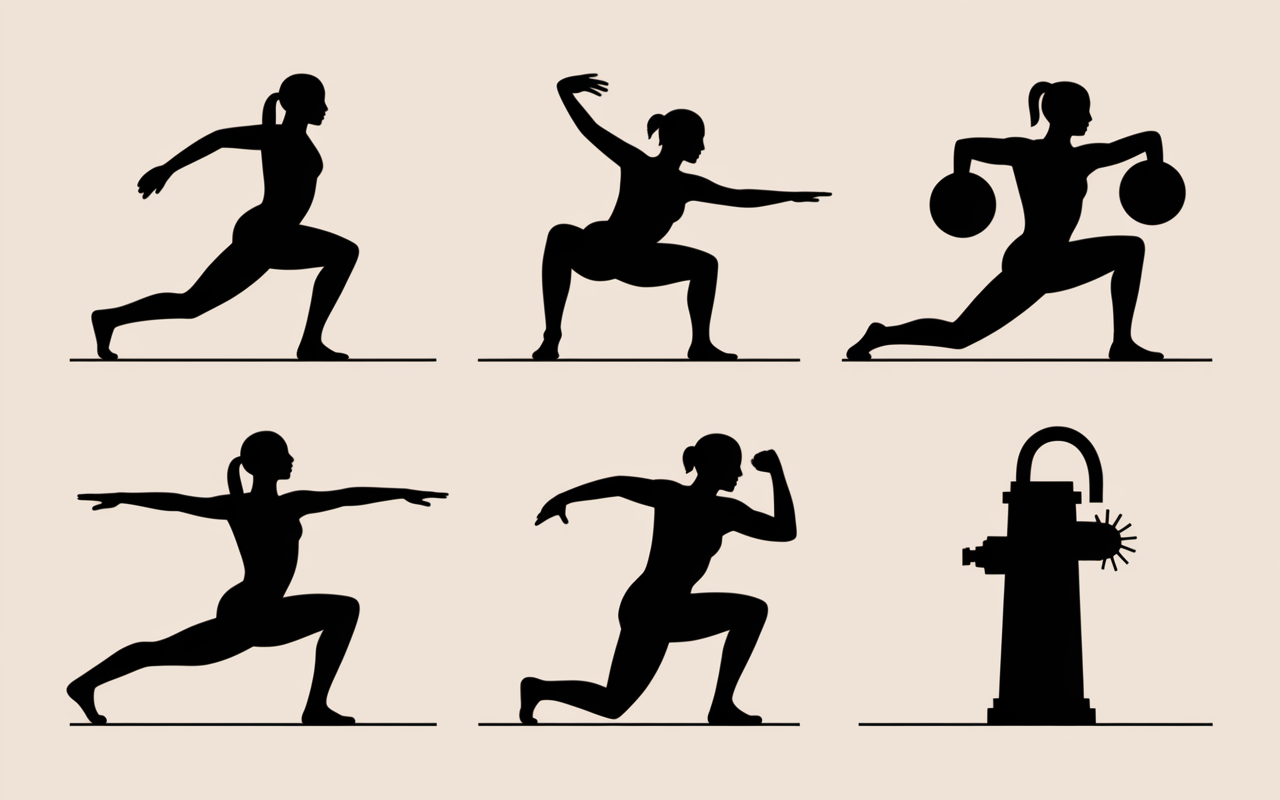
Let us move on to proven movements, validated by the EMG (electromyography) as well as in the programmes of rowers or sports kines. J « crab walk » with elastic!).
Side hip removal, standing or elongated
Lateral abduction remains a pillar to awaken the buttock medium. On the side, with a tight leg, you just have to slowly climb up the upper, doping the descent: the contraction feels on the outside of the hip.
The standing variant (with or without elastic ankles) is equally effective. Studies show that 3 sets of 12 repetitions per side, twice a week, activate the muscle in depth after 3 weeks. Many report a frank feeling of « burn » This is a sign that engagement is good (but not the front of the thigh!). A coach told me that this simple routine reduces the number of recurrent injuries in his juniors.
Fssier bridge (glute bridge), unilateral version to advance
The buttock bridge is indispensable: it particularly mobilizes the buttocks if it is executed on a leg. When taking off the pelvis, knees bent but one of the legs stretched, you aim at a straight shoulder-hanche-knit line. Hold 5 seconds before release. In general, 10 rehearsals are recommended on each side, over 2 to 3 series.
A frequent return: the sensation of tremor after 6 or 7 movements shows that the muscle is well sought. Some practitioners, anxious to preserve their backs, use a cushion under their lumbar axis to start smoothly.
Side walk with elastic (lateral band walk)
It is to put on the elastic around the thighs, just above the knees, and chain about ten to fifteen steps on the side taking care to keep the feet well separated. Quickly, the posterior part of the middle buttocks activates.
In practice, 2 to 3 series are sufficient, even in front of a serial episode. According to the Physiouturs team, this movement is among the most powerful to target this muscle. Some kines say that regularity with elastics ends up correcting years of compensation.
Side board with leg elevation
In the sideboard position on the forearm, lifting the upper leg is already a real challenge – aiming between 20 and 30 seconds in position is a good goal. Interest? Both the buttock medium and the lateral sheath, essential for general stability, are reinforced. Two attempts per side, at each session, allow a nice progression when integrated rigorously.
Unilateral squat (pistol or step)
By performing a squat – even on 1⁄4 d Keeping the knee well aligned, without tilting inward, is more important than going low. It is better to prefer 5 well controlled movements to start, quality control takes precedence over quantity! A physical preparer recently recalled during an internship in Lyon that only one poorly controlled series delays the progression more than it accelerates.
Moisturizing fire
In quadrupedic position, lifting the leg sideways (dog way that lifts the leg) gives a small but intense movement. The average butt responded directly, with 3 sets of 10 per side. Reticents sometimes fear ridicule; those who persevere quickly realize that this movement puts everyone in agreement on its effectiveness – the effect feels from the third series, without discussion!
Benchmarks for each financial year
| Year | Repetitions / Recommended Series |
|---|---|
| Lateral removal | 12 x 3 / side |
| Unilateral buttock bridge | 10 x 3 / side |
| Elastic lateral step | 10-15 steps x 2-3 |
| Side board raised leg | 20-30 sec x 2 |
| Moisturizing fire | 10 x 3 / side |
Identifying and correcting major blockages
Before thinking about increasing repetitions, it is better to check that the average butt actually works: a muscle « sleeping » will not progress. Many athletes compensate for the lower back or thigh, reducing all the benefits of work. So how do you spot this yourself at home? A national team osteopath recently noted that subtle blockages often escape... unless they are scrupulously sought.
Test the strength of the buttock medium: a balance sheet accessible to all
Stand on a foot in front of a mirror. If your pelvis falls down on the opposite side or your knee goes inwards, there is a good chance that the footway will be strengthened. More precisely, during a partial unilateral squat: do you feel balanced?
Note – this weakness is common in runners suffering from the knee. The inability to maintain a sideboard for more than 15 seconds without the hip collapsing also shows it. This test makes you think, the experienced coaches also systematically slide it during their balance sheets.
Frequent mistakes to avoid and tricks to feel the « Good » muscle
The following traps are generally found:
- Hanche which « opens », too or roll back during lateral abduction (work then loses)
- Backs that swing on the buttocks, instead of a hip-centered movement
- Abdominal strap forgotten during unilateral squats – stability collapse
- Race to the amount of repetitions, at the expense of good muscle sensations
To correct, observe in the mirror (or film a series), or place a hand on the hip, really helps locate the effort. To illustrate, after a winter injury during a workout, running too fast was worth several weeks on the bench (and that is to say...).
Schedule its buttock reinforcement
A common question: « How many sessions does it take to make progress? Do we have to have equipment? ». Generally, 2 to 3 sessions a week ensure a noticeable result as soon as you stick to it. Needless to invest in expensive equipment: an elastic has 7 or 15 € finds its place in all pockets.
Many sports kines also point out that with only this type of accessory, almost all work becomes accessible at home.
Build your custom routine
Here is a routine frame for beginners, to refine according to your feelings and availability.
- Heating 2×20 seconds in static sideboard (for « Wake up » pelvic belt)
- Block 1 : 3×10 lateral abductions, well straight, on either side
- Block 2 : 2×10 side steps with elastic (without rushing, prefer slowness)
- Block 3 : 3×10 buttock bridges on a leg
To advance to an expert level, add unilateral squats or play on intensity (more resistance, time under tension). A sports educator specified that 15 minutes of well-made, regularly, are worth more than a long, isolated session once a month. If envy is missing, invite a loved one to discover the exercise with you!
Progress and follow-up: tables and feedback
You can use a progress chart (to download) to track the number of repetitions, the difficulty felt and even the stability on one foot. It is relatively common for progress to be observed at the sixth or seventh sitting, approximately after 2-3 weeks if the routine remains serious.
Now, think that a follow-up application or distance coaching (with a tax credit of up to 50% in France) can really amplify motivation. This small plus often makes all the difference, according to some experts of maintenance habits (sport, feeding, recovery).
Role of the buttock in health prevention and posture
This muscle acts as a d « discreet adjuster » body stability. A weakness not only creates aesthetic worries, it maintains or triggers a lot of small daily hassles: knee pain, back pain, hip instability, risk of falling when senior... Everyone is concerned, sportsmen and sedentary. A former Olympic preparer felt that strengthening this muscle halved the number of injury stops in a team over the season.
Major consequences of a deficit in the average buttock
Up to 80% of runners with a racer's knee syndrome or diliotibial show weakness in the middle buttocks. The snowball effect is easy to imagine: the knee is tilting, the pelvis is wavering, and the spine is trying to compensate... which exposes you to the wound. In the elderly, the loss of stability is very rapid with the risk of falling or losing autonomy.
For posture, strengthening the buttock medium can really change the feeling of anchoring: some compare it to installing new shock absorbers on their car! This image, often advanced by clinicians, strikes by its accuracy.
Gains and testimony
Many practitioners evoke a clear evolution in 3 or 4 weeks: back and knee pain in sharp retreat, more reassuring stride, more comfortable sitting posture, and increased energy in everyday life. According to key figures, 2 to 3 weekly sessions allow to increase the balance on one foot more than 20% In adults. Why not try the experiment?
Small return from family experience: my 11-year-old daughter now holds the sideboard more than 30 seconds in a row – her basketball coach also congratulated her on this!
To effectively strengthen the buttock medium, integrate exercises like squats by body weight: master the technique and progress without material is essential to improve stability and posture.
By strengthening the buttock medium, you not only improve your posture, but you also reduce the risk of pain, such as those mentioned in pain in knees during squats and sport: understanding, acting, preventing.
To optimize the stability and mobility of the basin, it is essential to combine work on the buttock medium with a good understanding of the hip flexor muscles: understand their role, anatomy and preserve them.
FAQ: Your questions about strengthening the buttock medium
Many people hesitate on some specific points – here are answers inspired by the practices of coaches, kines and motivated users:
What is the difference between the big, medium and small buttocks?
The large buttock (gluteus maximus) is the most prominent, it shapes the gall and serves to extend the hip (pump, rise). The medium buttock, located on the external slope, stabilizes and allows the opening of the joint. The small buttock, buried deeper, intervenes in internal rotations and fine balance. Their collaboration ensures a harmonious movement. According to some anatomists, lateral exercises are those that most effectively stimulate the middle part.
Why can't I feel my butt during some exercises?
As a rule, it is the accumulation of involuntary compensations (at the back or thigh level) or too fast a tempo that hinders the feeling. Go back to the bases: run slowly, look for optimum amplitude, place your hand on the hip to feel the contraction. If, despite 8 to 10 controlled repetitions, nothing is triggered, it may be useful to vary the position or change the load. According to a trainer in sports physiotherapy, autopalpation remains effective in reconnecting the right engine scheme.
Can we strengthen the buttocks without equipment?
Of course, the main exercises mentioned here require at most a floor mat. The elastic only correlates the difficulty, it is not obligatory to begin. We win to start « Simply » where we are – even in a modest living room! Some families also launch intergenerational mini-challenges, which are fun and unifying.
How long to see results?
With 2-3 weekly sessions, there is often a better stability or an emerging muscle sensation around the 2nd to the 4th week. For more supported visual modelling, it usually takes between 6 and 8 weeks. Sometimes a user discovers greater fluidity from the first fortnight – sometimes everyone goes at their own pace.
Sign of a weak buttock medium?
Instability marked on a leg, knee that tends to fit during the race, hip sensitivity or lower back during walking or sport, rapid fatigue on a sideboard. These are all signals to watch.
Coaching and application, for whom?
For those who want to move faster, coaching remains an option: personalized follow-up, adaptations after injury or during a recovery, motivation over time. Between the tax credit (up to 50 % at home) and fee adjustments (student, first time), there is little risk to test. Signing up for a dedicated application also allows a motivating and visual follow-up of its own progress, making each step concrete. Some users claim that this helps to hold in time.
To go further or take action
- Download the offered progress chart via this link: Download
- Contact a graduate coach (1st session offered) : Request an appointment
- Get your PDF guide « Average express buttock » free of charge: Receive the guide
(Recovery of body stability depends mainly on regularity and minimum method.) It's up to you to play – and as I often say to my young rowers: every step on your side brings you closer to real progress!
Updated on 21 March 2026