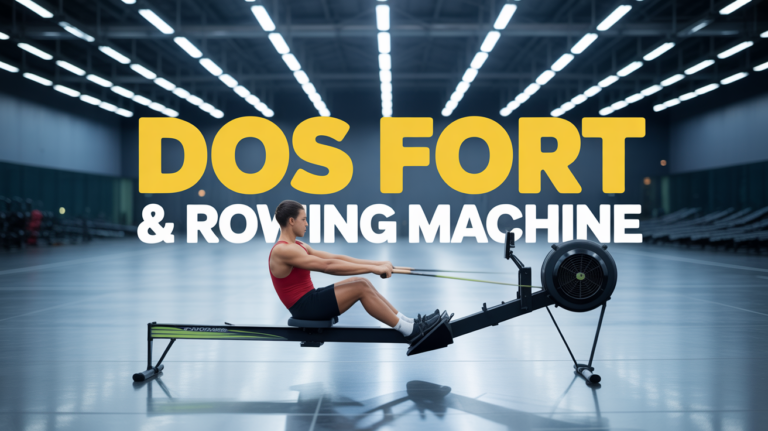
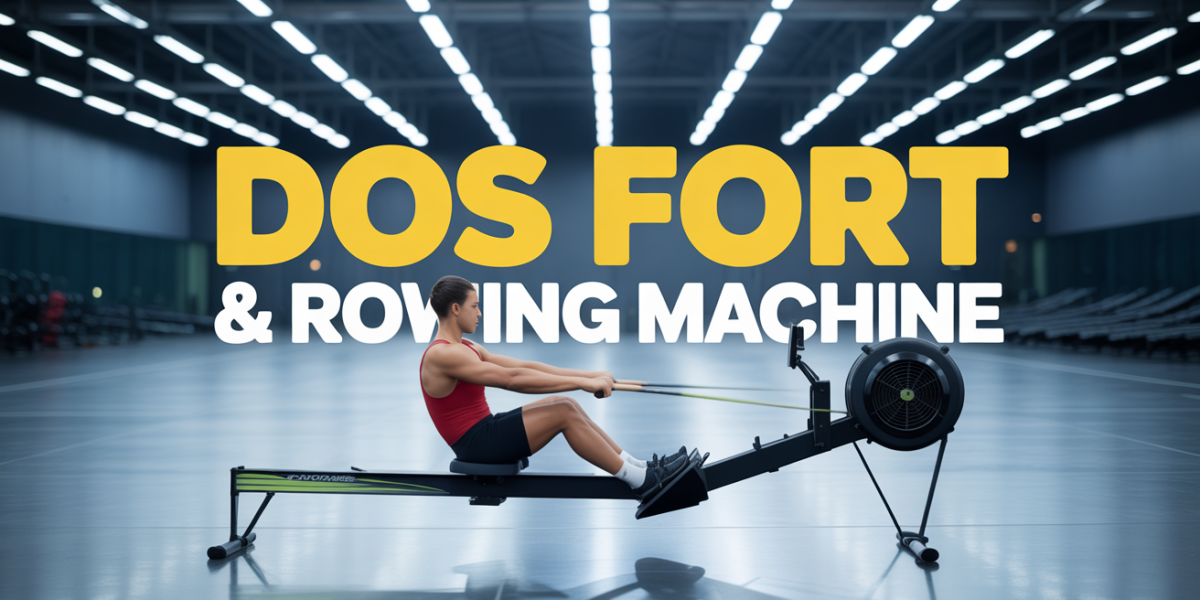
If you aspire to strong back and a posture able to hold over the duration facing the days in front of the computer, rowing sitting at the machine remains to be tested both in the hall and in the field for more than twenty years. This movement, in a simple appearance, reveals all its interest when the technique is rigorous and adapted to the level of each person. Whether you're starting or getting used to bodybuilding, every detail (from seat adjustment to drawing sensation) deserves to be retarded to combine progression, safety, and satisfaction without risk of injury. (Sometimes an experienced practitioner « rediscovers » open back sensations after adjusting just the seat or hold. )
Summary of key points
- ✅ Rowing sitting at the machine is essential to strengthen the back and improve posture.
- ✅ The rigorous technique and the appropriate settings are key to safety and efficiency.
- ✅ 3 to 4 sets of 10 to 15 repetitions are sufficient for optimal muscle work.
Contents
Rowing sitting at the machine – the right technique for a solid back, without injury
Looking for key exercise to strengthen your back and improve posture while limiting risks? Machine sitting rowing combines muscle efficiency and simplicity if one respects some major principles. It is better to focus on background control rather than stacking details: the essential is to understand how to engage the movement and why it naturally fits into a serious routine.
What is the ringing sitting at the machine?
The rolling sitting at the machine also called horizontal drawing targets the upper body through the drawing, in favor of the back. Sitting on the machine equipped with a seat, footrest and handle attached to a flexible load, you have a stable station that limits compensation and reduces the risk of injury: no parasitic gestures, less d« Coupling » Unexpected. (Some beginners are surprised to feel for the first time their back muscles contract without pain.)
For those who have never practiced, installation and loading are easily regulated. And, an anecdote from the room, a coach reported that his students regularly progress better on this movement than on many others « more spectacular », especially in terms of postural maintenance.
What muscles are required during sitting rowing?
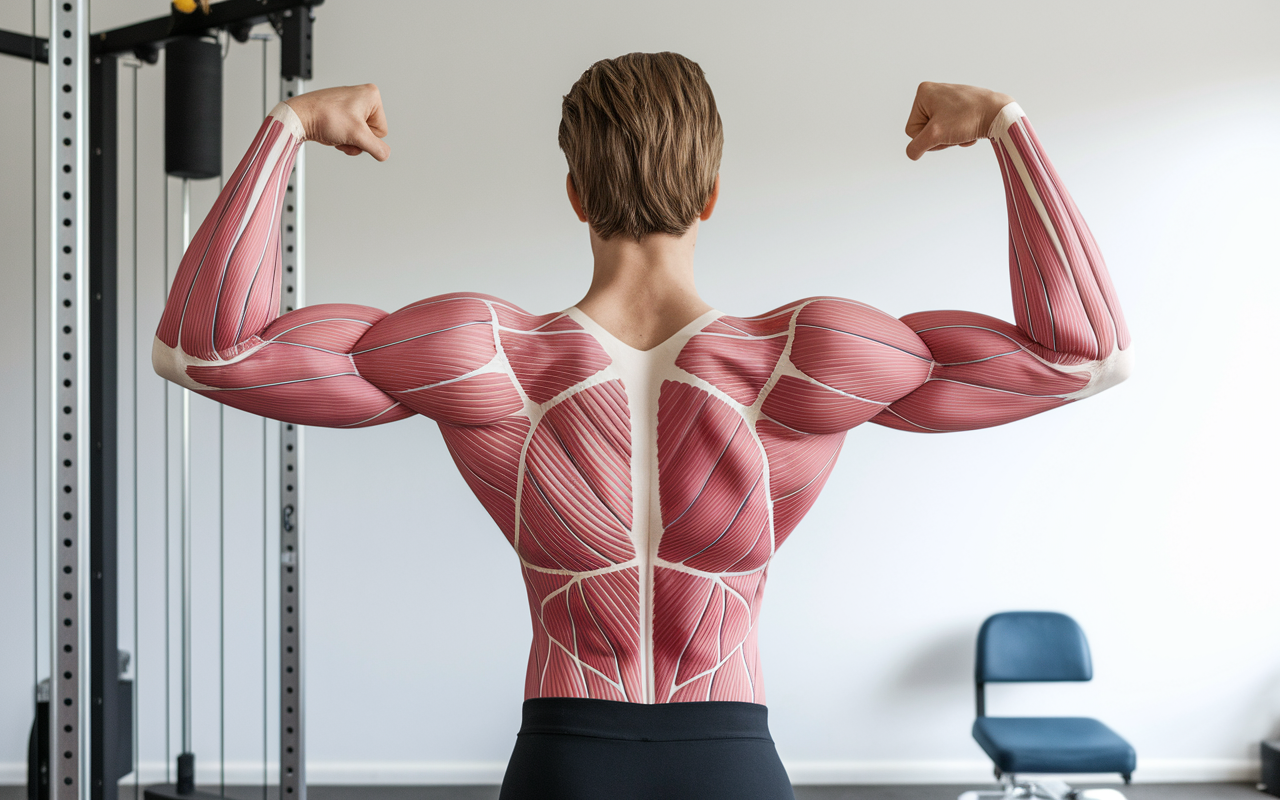
This movement primarily involves the "dorsal motor": large dorsal, rhomboids, trapezes and posterior deltoids. These muscles form the basis of a powerful back, but also help to open the shoulders and protect the spine. Another point is to keep in mind their role in the fight against the vaulted posture of everyday life.
- Big back: allows to visually extend the back and increase overall stability.
- Rhomboids / trapezes: act on the engagement of the shoulder blades, and help keep the chest open.
- posterior Deltoids: affect the stability of the shoulder at the end of the draw.
- Lumbar sheathing & biceps: These muscles stabilize the position of the ensemble and accompany the drawing movement (biceps are sometimes felt at each end of the series!).
In practical terms, a sitting ringing session, executed in 3 to 4 series of the 10 to 15 repetitions, enough to fully activate the back. It is common that 10 to 15 minutes of targeted training often produce more effects than endless training.
Apply the right technique: step by step
To appropriate the bases is to aim for durability a stable back, and a straight posture, even for those who sit long hours. Better to give priority to quality rather than burden. It is relatively often recommended to look for muscle sensation (backs!) rather than gross weight performance.
Step 1: Settings and Installation
Take the time to adjust the seat to have the knees slightly bent, and the feet firmly laid. Grab the handle with two hands, arms stretched, while keeping the back straight with a light and natural arch, shoulders lowered. Fixing your gaze to the horizontal is a simple and effective way not to overturn yourself in the effort phase.
Better start light than the opposite: most athletes see better sensations with 50 % their estimated maximum load. (It is not uncommon for a regular to rediscover the pleasure of movement simply by lightening the load!)
Step 2: Controlled Draw
The draw starts from the back, in the manner of rowing. Bring the handle back to the navel, keeping the elbows near the body and the shoulder blades engaged on the back. One expires during contraction; Then we inspire when we come back. At this point, each centimeter of movement counts: look for tension in the back muscles, not just in the arms (a trainer indicated that a slight "pause" in contraction further strengthens the muscle sensation).
If your shoulders ever go up, or you feel a strain on your wrists, stop for a moment, adjust your posture and leave. (A coach suggested never insist on a poorly calibrated rehearsal. )
Step 3: Controlled Return
Let the handle come back slowly, arm under control, without "abandoning" the load. This eccentric phase is essential to stimulate muscle adaptation. A detail evoked by some practitioners: stop just for a moment, at the end of extension helps to resume the posture for each repetition.
One student testified that the fact of "really slowing down" the movement allowed him to save his lumbars and improve the quality of muscle recruitment.
Classic traps... and how to avoid them
There are many users who think they can control sitting rowing, but it is regularly small and repeated defects that cause progression or pain over time. To recognize these traps is to prevent stagnation or the appearance of discomfort.
Table of errors and immediate corrections
| Frequent error | Immediate correction |
|---|---|
| Round back (round back) | Rise, engage the sheath, pull the shoulder blades back before starting the movement |
| Load too heavy | Reduce weight, make sure movement remains controlled from start to finish |
| Hit in the draw | Fluid the movement, check that the handle is moving/returning without shaking |
| Insufficient flexibility | Lose your arms completely when you return, without losing your posture |
| Knots apart | Pull the elbows close to the bust, to target the back and not the arms |
Consider filming a series to see the real posture, or otherwise ask a professional for a quick return. In some cases, what is "sent" is not faithful to what the image reveals. (This trick, blown by a physical preparer, allowed more than one to correct its faults!)
Custom Variations and Settings
Rowing sitting at the machine is not frozen: depending on the template or lens, small adjustments (take, amplitude, installation) can transform feeling and muscle recruitment. Athletes like to test different versions, even back to the "classical". Is it really useful to change your take often? This often depends on the priority muscle feeling and joint comfort.
To properly identify the ideal device and avoid room errors, consult our Name of bodybuilding machines: the visual guide to recognize each device.
To strengthen your back while improving your overall balance, take inspiration from yoga posture on the head: control, safety and serene progression, which combines strength, stability and control.
To maximize the effects of sitting rowing on your posture, associate it with practices like Munz floor: the benefits for mobility and well-being, ideal for increasing flexibility and preventing tensions.
Change socket or amplitude
- Neutral grip (face to face palms): increases back pressure, limits tension on wrists and shoulders, and often allows a little more load.
- Pronation grip (palms down): target the top of the back – very relevant to perfect the posture and strengthen the chest opening.
It should be added that for large gauges or in the case of reduced mobility, a reduction in amplitude (or even a different installation of the seat) allows control of movement. One-arm variants are also recommended by several professionals to correct asymmetric fatigue or side imbalance.
A rarely mentioned point: neutral take generally allows between 10 and 15 per cent additional load, without losing as a gesture this figure, quoted at a coach round table, makes think about the value of testing several formats before fixing.
Include sitting ringing in its routine: models and progressions
It is not necessary to multiply the sessions disproportionately. Better stay on approximately 2-3 sessions per weekThis is enough to build a strong back. Last point to note, the consistency and quality of the gesture are decisive to enjoy a real progression. Moreover, it often happens that a regular prefers a "clean" session with less burden than an overly ambitious but sloppy program.
Bases of a typical program
- Beginner: about three sets of 12 to 15 repetitions with moderate load and special attention to posture.
- Intermediate: four series, 10 to 12 rehearsals, progressing on weight and insisting on control.
- Advanced: four to five series, 8 to 10 heavier repetitions, possibility of bi-set (chaining with a restless back exercise).
This is also why it is better to increase the between 2.5 and 5 kg every two to three weeks, as soon as the execution remains impeccable. In a training session dedicated to the back and shoulders, it is usually advisable to place the rowing sitting at the very beginning of the session, to benefit from optimal energy and preserve the technique.
FAQs and advanced resources to advance even remotely
It is regularly observed that exchange, ask questions or get an expert return allows to go further and overcome possible stagnation. A trainer pointed out that sharing practical tips makes all the difference in progress.
Frequently Asked Questions on Machine Sitting Rowing
- How do I properly place my back?
The bust must remain straight, a slight natural camber is activated, a point is fixed in front of you to avoid collapse, and the engagement of the shoulder blades remains the key to postural maintenance. - What muscles are really contracted during sitting rowing?
Large dorsal (primarily), followed by rhomboids, medium and lower trapezes, and posterior deltoid. Biceps also intervene in certain formats, especially with a narrower grip (it is sometimes this detail that surprises a practitioner after a few weeks). - What charge do I start if I start?
Choose a charge allowing 15 repetitions without sacrificing the technique, usually between 40 and 50 % a maximum theoretical load. - How many series/repetitions to advance?
Plan a handful of series (between three and four) of 8 to 15 repetitions depending on your experience, regularity every week remains crucial. - What are the signs of bad technique?
Round back, broken wrists, sudden movements or shoulders projected forward... If the contraction does not intervene clearly in the back, resume the posture without waiting! (A coach warned that it is often "a little forgetfulness that is expensive" in progression...) - Is it painful for a fragile back?
With a suitable technique and a progressive load, the sitting rowing remains accessible even for back pain. It is worth favouring a short amplitude at the beginning, then slowly increase, always in consultation with the kine in case of rehabilitation.
It can be assumed that a personalized coaching (with video analysis, practice sheets, evolutionary routines) offers a reassuring framework: accompaniment at a distance or at home results in a 50% tax reduction through personal service, which reduces the budget for people wishing to get help.
To expand your resources, there are video guides, option to program your own back circuit, or free charging simulation via a interactive simulator. These tools really help to build confidence, beyond the classic room.
Coach testimony (bonus)
"After years on the water and in the hall, I always go back to the spinning sitting machine. Simple, progressive, secure... With a few weeks of regularity, my students find an open posture, almost disappeared back fatigue, and the pleasure of feeling stronger on a daily basis. " Camille, row coach & strength training
Updated on 21 March 2026