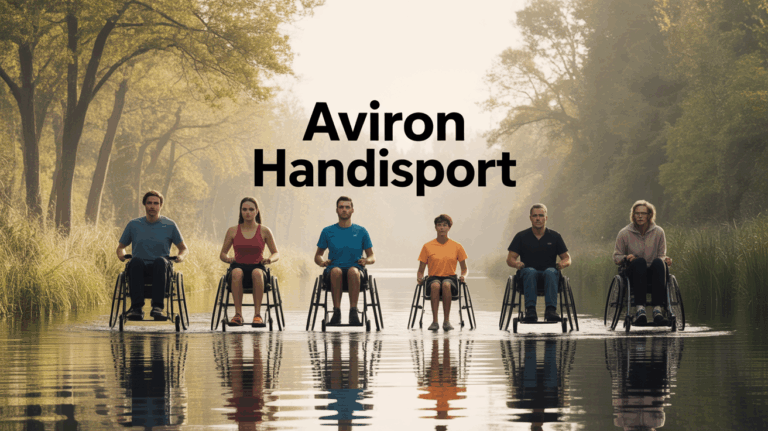
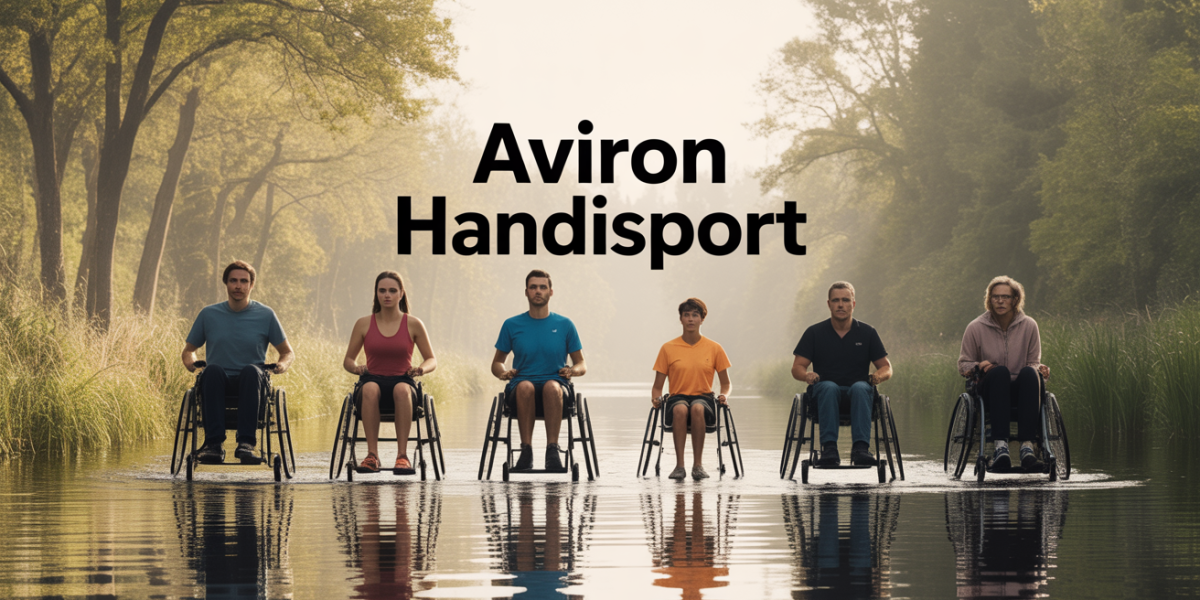
Practiceaviron mandisport reveals all the richness of a collective sport, open to everyone, which places human accompaniment and security at the forefront. Thanks to solid technical adaptations and a wide network of clubs distributed in France, everyone has the opportunity to regain the pleasure of sailing, to feel fully involved, and to create real links within the team, surrounded by competent and attentive supervision.
Contents
Aviron Handisport – an accessible, sustained and perfectly adapted sport
Looking for a new breath or pleasure to practice outdoor sport in a reassuring setting? It is also known as para-viron and welcomes those who want to move, regardless of their level of mobility or their particular needs. Since the discipline appeared at the Paralympic Games (that was 2008), it has pushed many boundaries and attracted more and more participants thanks to the presence of more 420 clubs accessible in Hexagon, each benefiting from a recognised and trained guidance.
Who can practice? Overview of disability and accessibility
Over several years to accompany rowers and rowers, the same question has come up many times: « Would I, in my situation, also be entitled to my place on the water? » In the vast majority of cases, the response remains positive. The practice remains very open: motor disability, visual impairment, sensory disorders and, depending on the location, support possible for certain forms of mental or mental disability. A club manager recently noted that it is not uncommon to see technical solutions emerging for each profile, whether the difficulty is related to reduced mobility, neurological sequelae, amputation or vision defect.
The main cases involved are often as follows:
- Engine handicap: paraplegic, wheelchair, or amputated persons
- Sensory disability: partial or total visual impairment
- Mental disability or mental disorders: possible support according to the projects and dynamics of the clubs
- Sequence of disease or accident: limitations of stabilized movements, specific mobility
Every year in France, it is almost 113 000 persons who practice rowing, and the number of rowers joining the Handisport sections continues to increase thanks to tailor-made accompaniment. Moreover, some clubs bear witness to surprising stories: a young man, following a long re-education, discovered that he could progress far beyond what he imagined. Is it really so different from other practices? Not so much, according to the regulars...
Understanding categories: PR1 – PR2, PR3... we all row, but not in the same way
At the first information meetings, many new entrants question terms such as PR1, PR2, PR3. These categories simply refer to the mode of propulsion on board, which conditions the choice of equipment and the formation of crews.
Small useful landmark:
- PR1: advanced mainly with arms and shoulders, with stabilized boat and fixed seat (e.g. paraplegia, double leg amputation, early tetraplegia)
- PR2: use of arms and trunk, but without involvement of legs. The seat is fixed and adapted, usually reserved for certain cases of disability of the lower limbs
- PR3: posture closer to classical rowing, possible support on legs, trunk and arms: this category often concerns visual impairments or slight physical limitations
If the categories are essential in competition, in club, it is the dialogue and personalized testing of the material that make the difference. A trainer explained how, recently, a crew combined a visually impaired rower and an amputated partner, each finding their place in the boat: a fine example of concrete synergy.
Implementation – equipment, adaptations, security... we accompany you hand in hand
One of the real strengths of the Handisport clubs in France is the diversity and quality of the equipment available. Fitted seats, strapping systems, stabilizers, reinforced footholds or specially selected vests: all converge to maximum range for each rower. Some clubs even invest in specific equipment, inspired by the needs of their members over time.
Thus, during a recent session discovered in Lyon, a participant, amputated in the thigh, was able to sail from the first morning thanks to a tailor-made arrangement and a pontoon easily accessible. For the visually impaired, other tricks exist: onboard sound guides, presence of an experienced barmer, or crew mixed with a valid rower. According to several sports educators, it is rare that a trial fails: the sector offers on average 2 to 3 adapted boats by club labeled, which illustrates the concrete commitment of the network.
Benefits of practice: health, trust and teamwork at the key
On the physical level, the rowing industry is distinguished by its very wide demand: 85% of muscle comes into play, all with minimal impact on the joints. The reference distance in competition (2,000 m, whether in the valid or para-viron) is intense, adjustable to each. The sessions often extend between 45 minutes and 1h15, depending on the objectives and level of each rower.
But according to some experienced coaches, the issue goes beyond physics: regaining confidence, progressing in the collective, and feeling the solidarity of the group are equally powerful levers. We support each other, and not only on the water: the links also weave at the pontoon between sessions, promoting cohesion. In young people or on rehabilitation courses, significant progress is regularly observed on posture, endurance or feeling of autonomy in everyday life. It's not always obvious at first, but the satisfaction of going through the steps is only stronger.
Access, registration and steps: find your club and dare the first try
Ready to try the experiment? The approach is often more direct than is assumed. The most 420 clubs affiliates in France reserve many slots at the reception Handisport, with for many of them the label « Accessibility ». On open days or by appointment, you can take the time of a free discovery and chat with the team.
In concrete terms, just follow a handful of key steps:
- Exchange with the club (telephone, email, official website FF Aviron), first contact recommended
- Visit the facilities, take the time of a personalized interview with a coach
- Test equipment, pre-register folder, tailor slots according to needs
- Regulating the administrative (search for specific aids, licensing, medical certificate, etc.)
In general, an annual registration returns around 120 € to 270 € (with local adjustments or possible aid on a case-by-case basis). In Rhône-Alpes, several clubs offer individual support on the material side and for administrative formalities: a point highly appreciated by the families interviewed.
The tricolor chart and the strength of the federal network
Since Beijing 2008, where France won its first Paralympic titles, the tricolor teams confirm their high-level presence (e.g. Tokyo 2020 edition). The pace: between 25 and 40 major regattas each year, from local to global, with regular programming published on federal sites. Some federal officials regularly share the same conviction: these competitions reinforce group spirit and national visibility.
On a network-wide basis, the Aviron FF, hand in hand with the French Paralympic Committee, guarantees access to graduate coaching, quality facilities, and support well beyond the simple session: in 2015, more than one 45 000 dismissed FF AvironThis demonstrates the vitality of discipline. Several clubs also emphasize their social and family role, a factor of lasting attachment among practitioners.
FAQ: The main questions on the Handisport rowing
Here are some clarifications from the ground, designed to remove the frequent doubts of newcomers or their entourage.
What types of handicaps can be used to practice Handisport rowing?
Most are compatible: motor disabilities, visual impairment, sensory disorders, and, in a number of clubs, psychological or cognitive disorders with adapted project. The main point is to discuss the situation in the first exchange: this allows us to shift the category (PR1, PR2, PR3) and discuss possible adaptations. According to some sports officials, it is better to specify his expectation to build the best project.
How are boats and equipment adapted?
Through different devices: specific seat, straps, stabilizers, or sound and visual guidance systems. The development of pontoons or launching is also part of the overall approach. As a labeled club, there is always at least two modular boats. An animator recently told how, for a visually impaired adult, the combination of sound guidance and an experienced barrister has removed his final concerns.
Do you need to know how to swim to practice?
Through his captivating journey, Alexis Sanchez, the inspiring trajectory of a French para-viron champion, illustrates perfectly the resilience and accessibility of the Handisport rowing.
To learn more about the technical adaptations and benefits of para rowing, discover Para row: understanding and starting an inclusive and accessible discipline.
Control of swimming is recommended, but to reassure beginners, reinforced equipment (gilet, floats, close supervision) are planned during the first sessions. Several clubs even launch specific initiations to boating safety, especially for novice audiences. An educator noted that we get insurance very quickly!
How much does the practice of Handisport rowing cost?
The club rate generally ranges from 120 € to 270 € by season. Some institutional or federal support can cover some of the costs – clubs are willing to provide information on the steps taken. The loan of suitable equipment is almost always part of the package.
Where to find a Handisport club near my house?
The French Federation ofviron website provides an interactive map, filterable by type of access. It is wise to go through a direct contact, in order to customize his arrival and organise a tailor-made welcome. Several families confess that the first visit regularly dispelled half the practical doubts!
What is the difference with traditional rowing?
The essential is the personalization of the material and belonging to a category (PR1 to PR3), but the group spirit and gesture remain very close to the practice « classic ». Some associations even open shared slots between valid and mandisport, to vary experiences.
Can we start at any age?
Yes, it's open from 10 to 80 years (and sometimes beyond), with specific programmes for each age group and level. For the anecdote, a well-known rower in Nantes started at the age of 68... Like, it's never too late!
Are there any particular risks associated with disability?
The management is particularly concerned with the choice of equipment, the safety on the water and the individual rhythm: everything is done to ensure a positive experience. Several clubs report that returns are very reassuring even among those who greatly appreciated their first attempt.
Resources and support: guides, videos, clubs, federations
To go further or to organize in concrete terms, we can rely on several essential resources:
- The site of the French Federation of Aviron Handisport: access to clubs, practical guides, contacts for coaching
- French Paralympic and Sports Committee (CPSF): space dedicated to para-viron, videos, results calendars
- World Rowing – Para Rowing: regulations, international competitions, technical documents translated
Want to know more or take the step? It is not uncommon for the first trial to be offered in many clubs and for detailed guides to be sent on request. Enjoy it: the experience is worth it regularly!
Updated on 21 March 2026