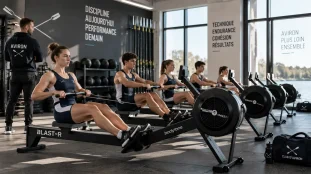
The para-viron No doubt embodies this deep conviction that the pleasure of the movement and the sporting challenge are accessible to everyone, regardless of their history or physical limitations. After twenty years to accompany both novices and experienced athletes, it is worth remembering: the least technical development thought for the disability becomes a real springboard for more freedom, sharing and progress on the water. Behind each row drawn, there is the strength of a collective, the pride of drawing its own path and the lively emotion of the first slides, whatever your assets – these are stories that come to life, week after week, on the water in the Rhône-Alpes.
Contents
What is para-viron? Sport that makes water accessible to all
The para-viron, in practice, takes over traditional rowing and opens to those with physical or sensory disabilities. A direct companion of classic rowing, he shares the same benchmarks of commitment, team spirit and gliding pleasure... while relying on a range of technical adaptations that make sport truly inclusive, both in clubs and in competitions. Today, with more than 420 clubs accessible in France and its official entry into the Paralympic Games in 2008, the para-viron is a positive player in the lives of many.
The basic principle is clear: regardless of the degree of mobility or the nature of the disability, everyone can join a boat, take the trains and enjoy the water safely. The para-viron vessels integrate fixed or mobile seats, setting systems, stabilizers, or grip aids. It is the Fédération Française d'Aviron (FFA) that ensures the framework, trains the mentors and guarantees compliance with the PMR accessibility standards. Through my experience with athletes, there are often real exchanges of energy and, sometimes, a good dose of humour that will animate the session, regardless of the profile of the rower.
To illustrate: the official distance in para-viron competition remains the same as that of Olympic rowing, i.e. 2000 metres. The rowers give everything in 8 to 12 minutes sustained effort. In other words, it is not a sweetened sport: it demands, values, and offers a real thrill – sometimes unsuspected when you start.
Summary of key points
- ✅ Para-viron adapts rowing to people with physical or sensory disabilities
- ✅ More than 420 clubs accessible in France and Paralympic discipline since 2008
- ✅ Vessels equipped with seats, frames and aids to guarantee safety and inclusion
Classifications and safety: each rower, its category, its support
Before you think about wearing gloves or adjusting their installation, there is a lot to bet that you will cross three acronyms: PR1, PR2 and PR3. These classifications, set internationally (World Rowing), aim to ensure fairness, security, but also the pleasure of rowing together. They guide the adaptations to be made to the proposed material and accompanying, thus shaping what everyone will live on the water.
Major PR categories: how does it work?
The logic of this system – bringing rowers together according to their functional capabilities. The following benchmarks are generally observed:
| Category | Description | Examples |
|---|---|---|
| PR1 | Propulsion only by arms/shoulders, fixed seat, immobilized legs | Low tetraplegia, high paraplegia |
| PR2 | Propulsion by trunk/arm, legs not or not functional | Low paraplegia, bilateral amputations |
| PR3 | Partial or total mobility, moderate disabilities, sometimes visual impairments | Visual impairment, mild orthopedic disability |
This sometimes strikes: even blind or visually impaired people (PR3) can join mixed crews, notably through hearing-guiding systems and the presence of an experienced barrister (in fact, a trainer evoked a regal or this organization was decisive).
Safety and control: one thread at each exit
In FFA-labelled clubs, the issue of security is taken very seriously. From the first contact, each one is equipped with specific vests, and the coach reviews every technical detail. The discovery sessions are regularly a little shorter at the beginning (20 to 30 minutes effective), which allows everyone time to adapt and allows the supervision to remain very attentive. Little anecdote: in twenty years, it has rarely been given to see two strictly identical arrangements... each session recalls that any solution is customized according to the rower, his experience, his needs.
Good to know
I recommend that you take care of the individual adaptation of the equipment, as each rower has unique needs that evolve over time.
Adapted boats and equipment: the custom to row in confidence
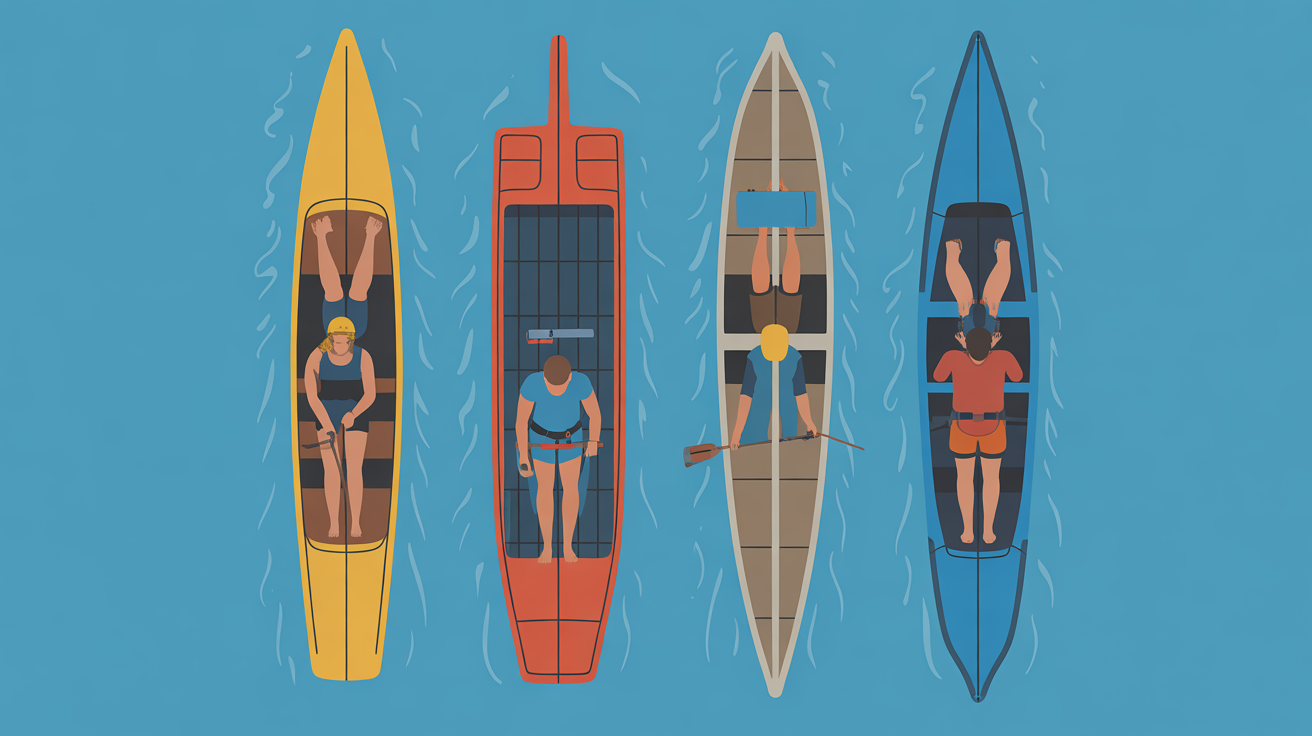
It is not necessary to run specialized sports stores to understand the importance of para-viron equipment. A boat configured to measure, it is above all a secure practice and stimulating, whether in a logic of new sensations or in a context of rehabilitation. Some users remember their very first try, sometimes hesitant, but the reception of the adapted material makes quickly tilt the balance...
The para-viron is a wonderful example of howrowing sport: an accessible and stimulating nautical world can adapt to all abilities to provide physical and mental development.
A notable example of success in the para-viron is that ofAlexis Sanchez, the inspiring trajectory of a French para-viron champion, which perfectly illustrates the resilience and passion needed to excel in this discipline.
To better understand how para-viron combines performance and inclusion, discover the essence of theaviron mandisport, an accessible and inspiring discipline.
What types of boats for which profiles?
In practice, the boats resemble those of olympism, but their secret lies in the multitude of adjustments:
- A fixed or sliding seat is used, depending on the ability to mobilize the legs; a key asset to progress at its own pace.
- Various attachment systems: straps, backrests, side supports... everything evolves, along the route and in search of comfort.
- For greater stability, some vessels benefit from additional floats installed on the pontoons (more than a newcomer found there a welcome tranquility).
- More rarely, we find specific grip aids for rowers with manual difficulties (an occupational therapist even said that these options sometimes make the difference between giving up and continuing).
However, it is observed that the equipment evolves hand in hand with the practitioner: the typical route is a first strap, then access to other settings, as the progression and the taking of insurance.
Innovation for accessibility
It is also thanks to innovation that the discipline is advancing: over the last ten years, we have seen the emergence of 3D printed frame, ergonomic holds designed on request, or GPS vocals designed for visually impaired rowing machines. Sometimes, in a club, we test a double-bar boat for a binomial apprenticeship. And if a technical question arises, the federation offers an updated list of specialized suppliers, easily searchable.
Summary of key points
- ✅ The boats are equipped with custom seats, attachments and special aids
- ✅ The equipment evolves as the rower progresses
- ✅ Recent innovations: 3D chassis, GPS voice, double bar boats
Updated on 21 March 2026