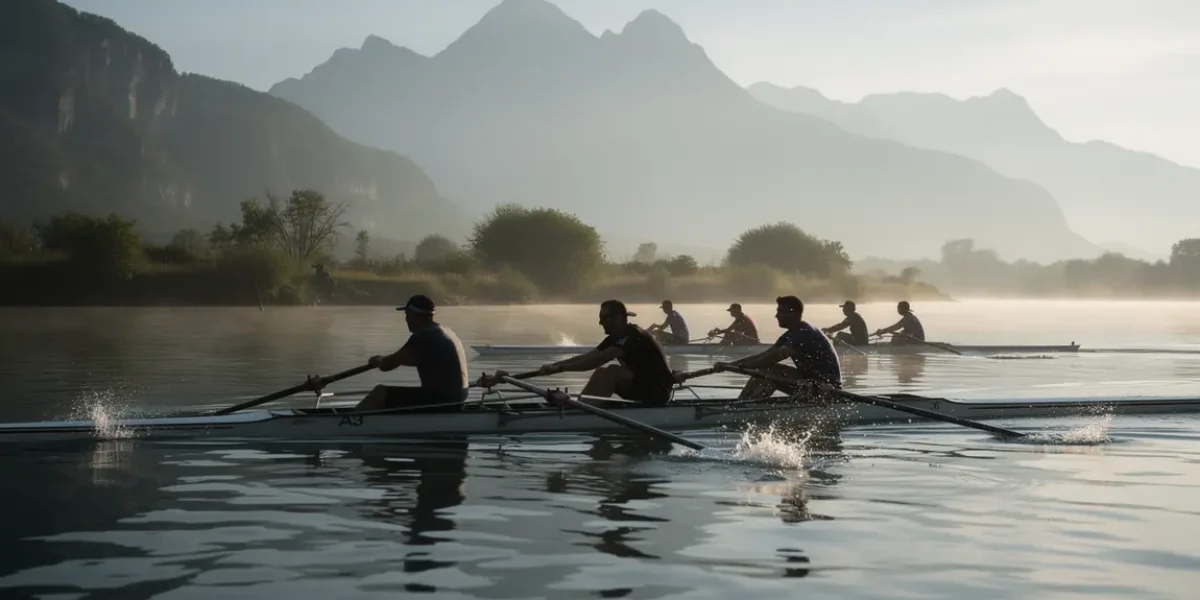
Are you looking to perfect your gesture and better understand what makes an efficient row on the plans of Rhône-Alpes? To master the train technique is first and foremost to know each phase, to know how to adjust your effort and avoid the mistakes that even experienced rowers still make. Here is a detailed guide, designed for regular rowers, club volunteers and the territory's curious, to better advance session after session.
Contents
Understanding the basics of rowing and rowing technique
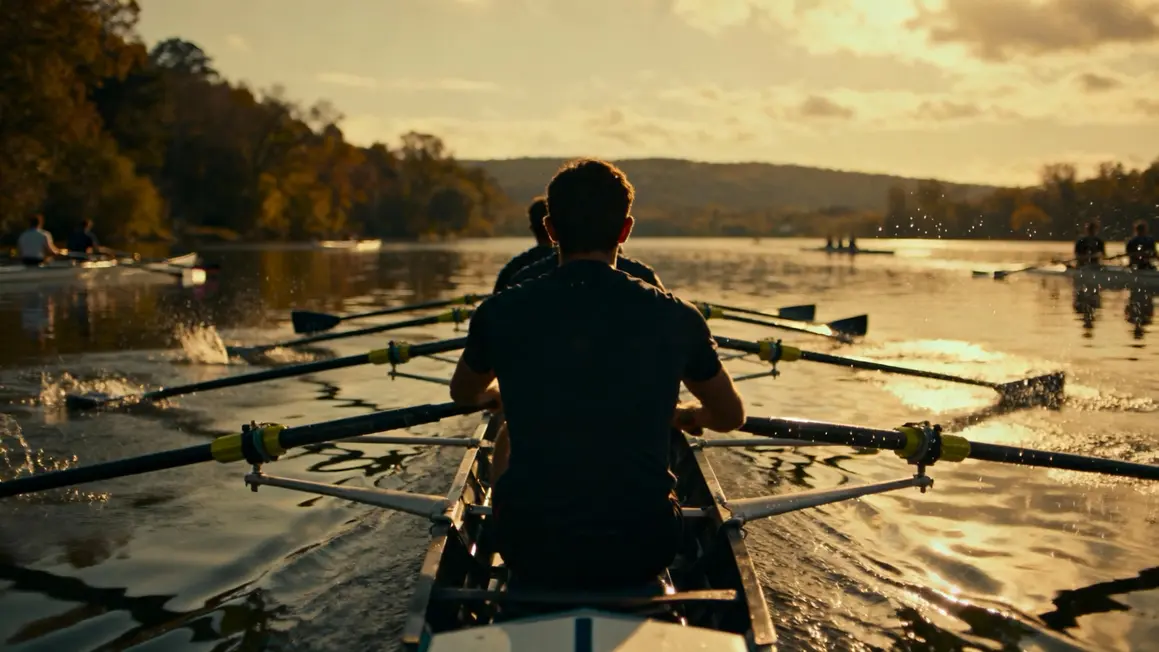
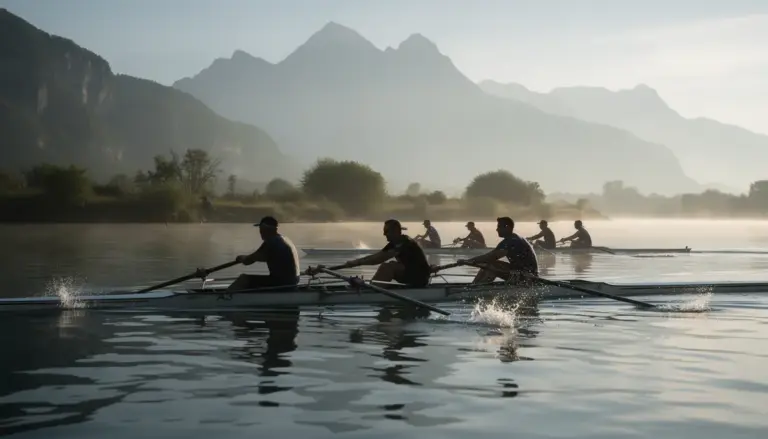
It relies on fluidity, coordination, and a connection with the natural environment. Each exit welds body and mind: legs, back, arms and abdomen work together, while concentration exercises from start to finish. The clubs in the region, whether on the Saône or in Aiguebelette, illustrate how much each gesture relies on learning as well as on the experience of the field. The boats vary: from individual skiff to large collective boats, the approach differs but technical mastery remains central. In a couple boat, each manipulates a row in each hand, while in point, the direction also depends on the collective synchronization and, as the case may be, on a rhythm-loaded bar.
The train movement consists of four phases: attack, propulsion, clear and recovery. Each leans on a solid posture: right back to transmit the effort, progressive engagement of the legs, then back and arms. The amplitude of the gesture and the precision of the chain guarantee efficiency, but also prevention of lumbar or joint pain. Common mistakes? A rounded back, too tight hands or poorly distributed supports.
Starting position and body alignment
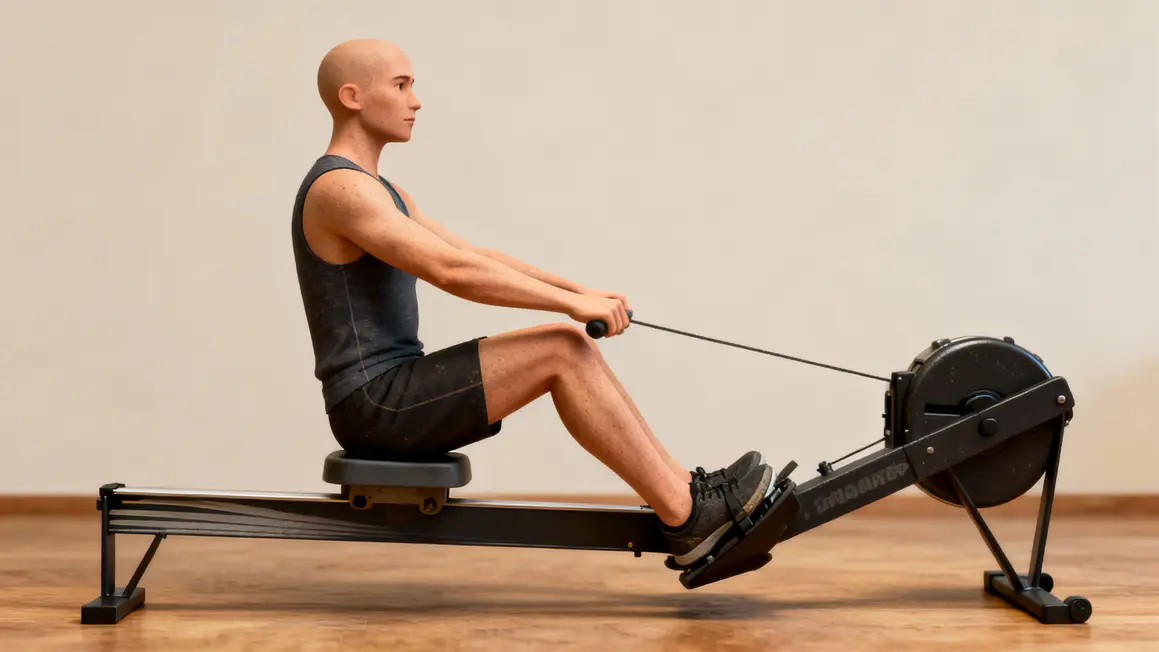
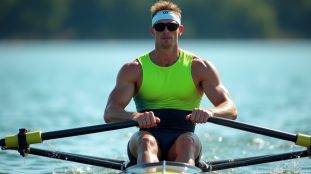
Everything begins with a rigorous placement, on the sliding seat: pelvis slightly tilted forward, shoulders relaxed forward, knees bent and aligned, feet firmly fixed but free in their movement. The grip on the row must remain flexible, straight wrists, to avoid any constraint.Take a quick alignment check (hands, elbows, shoulders, pelvis) before each series, especially in autonomy. This routine, encouraged in clubs in Rhône-Alpes, prevents the installation of bad postures.
The four essential phases of the train movement
The progression on water depends on a precise sequence of phases, both muscle and technical:
- Attack : bent legs, right back, rowing ready to touch the water.
- Propulsion (pushing) : effort concentrated first in the legs, then back, finally the arms.
- Clear (water outlet) : release the pressure, soft wrists, sharp extraction so as not to disturb the momentum.
- Return (recovery) : the body moves back and forth, arms and legs return to the initial position, preparing the next cycle.
The following table details the muscle engagement and common pitfalls to be monitored:
| Phase | Muscles required | Frequent errors | Key points |
|---|---|---|---|
| Attack | Quadriceps, ischios, lumbars | Too much diving, rounded back | Accurate seizure, back aligned |
| Propulsion | Quadriceps, buttocks, dorsals, biceps | Shooting with arms too soon | Order: legs – back – arms |
| Clear | Forearm, back, lumbar | Brutal exit | Release, neat gesture |
| Return | Abdos, back, quadriceps | Saccades, desynchronization | Regular rhythm, control |
Coordination and chaining of movements
The strength of the technique rests on the succession of legs – back – arms. To anchor, integrate into your workouts:
- Exercises single legs, back and arms locked, to feel their power specifically.
- Combination legs + back, with passive arms, to improve energy transfer.
Finally add a rhythmic breathing work, inspiring when returning and exhaling on propulsion. This coordination optimizes performance, and a video or feedback from a coach can make the difference to detect a break in the motion chain.
Quality criteria for optimal technique
Think fluidity, amplitude, regularity and effort management:
- Fluidity: continuous movement, without saccades, for a constant force on the boat.
- Amplitude: exploits the legs and arms in a correct posture.
- Regulation: maintain a uniform rhythm, key to the welded crews.
- Rhythm and Force Management: Dose the thrust, avoid sudden accelerations.
Control: Localized fatigue at the lumbar, cramps in the wrists or loss of rhythm are alerts. In the club, ask for advice from a coach or use a video return.
Warming and injury prevention
A dynamic warm-up (race, jump rope, bust rotations and active stretching) takes 8 to 10 minutes before each exit. Adapt each posture: front pelvis, right back, relaxed wrists, hands without tension. After training, a few minutes of targeted stretching (ischios, lumbars, shoulders) contribute to recovery. The observation of the posture on the water by a framer and attention to the fluidity of the gesture are the main cues to limit the appearance of lumbar or muscle pains, common in beginner rowers.
Equipment settings for efficient technology
Technical efficiency depends first of all on a well-fitted material: foot hold at the right height, fluid seat, handles adapted to your hand. In club, it is common to check the set at each launch. A poorly adjusted detail (rail, foothold or straps) quickly imposes harmful compensations for the back or shoulders.
Practical exercises to improve rowing technique
Among the successful exercises in clubs:
- Ramp legs alone, to feel the original impulse.
- Draw arms alone, to refine the accuracy of the water outlet.
- Cycle these exercises alternately, then integrate complete motion at moderate speed, before increasing intensity.
You will gain in control and gesture quality from 2 to 3 dedicated sessions per week, aiming first at regularity before performance.
To improve your technique and take the right steps, discover this full article on Row: position, equipment and technical bases to start well.
To complete your mastery of the row, also discover the basics for barring a wheel: techniques, practical advice and responsibilities of the barbera key role in crew coordination.
To improve your rowing technique, discover practical tips and detailed tips with this row support: solutions for games and rowers.
Respiratory synchronization and rowing rhythm
Breathing, forgotten pillar? Inhale on return, exhale on propulsion, set your breath on the cycle of gesture: all this contributes to muscle balance. At high intensity, check the frequency to avoid premature shortness of breath and remain stable throughout the distance. A coach's advice and observation of the club's seasoned rowers serve as a concrete example to adjust the respiratory rate.
Tips for progress and avoid common mistakes
Even experienced rowers are being corrected for details: unsynchronised draw, late water outlet, excessive wrist rotation... To move forward:
- Work each phase in isolation, then chain on regular series.
- Film your movements or ask a teammate to check your technique.
- Train at a moderate pace, integrating the field returns of the framers and local markers (crew cadence, water noise, stability of the boat on the water plane).
This combination of demand and experience sharing is embodied in the winery in Rhône-Alpes. Many clubs offer technical training sessions, open to licensees of all levels. Dare to ask your questions, value self-help on the water: progress is always built together.
All the steps mentioned here are the result of practices recognized in clubs, validated by certified regional mentors and consistent with the recommendations of the French Federation of Aviron and various published studies on biomechanics (e.g. the Department of Sciences of the Movement of the University of Lyon and the INSP publications on injury prevention).
Which technical exercises have the most marked your progress? What questions or tips do you want to share with the aviron-rhone-alpes.org community? Don't hesitate to leave a comment: your feedback enriches regional practice. If this article is useful to you, make it known around you and on your associations or sports networks. Your suggestions for topics are also welcome: the rowing technique evolves over the course of the experiments, and it's together that makes up the rest.
Article written by Marie F., a rower and coach for more than 15 years. Last update: June 2024.
Updated on 21 March 2026