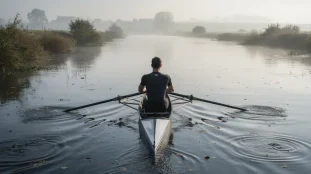


Mastering the helmsman position is an asset for any rower wishing to progress or invest in the life of the club. This guide offers concrete benchmarks to navigate effectively, ensure the safety of the crew and make the difference in various conditions, whether in training, in discovery or during a regatta on the Rhône-Alpes basin.
Contents
Understand the role of the rod barmer

The barrier is the guarantor of the cohesion and the good progress of the yollette. He constantly looks after the direction of the boat, leans on visual markers and adapts the heading thanks to the rudder. This role requires increased vigilance to correct wind or current drifts and anticipate potential obstacles.
By monitoring rowing synchronization, it detects imbalances and adjusts efforts to preserve crew efficiency. The orders give rhythm and coordinate each manoeuvre: start, stop, change of pace.
Safety underpins all its actions: identification of risk situations, anticipation of technical incidents or fatigue of a teammate, rapid response to problems. This aspect is fully integrated into club life, as required by federal and community protocols.
Moral support is also fundamental. With appropriate encouragement, the barrister stimulates the team spirit and helps maintain an atmosphere conducive to collective performance, especially during regional competitions or "defeated" trips on local rivers.
Beyond the technique, its strategic decision-making capacity during a regatta or training is decisive for everyone's outcome or experience.
Presentation of essential equipment to bar a yollette
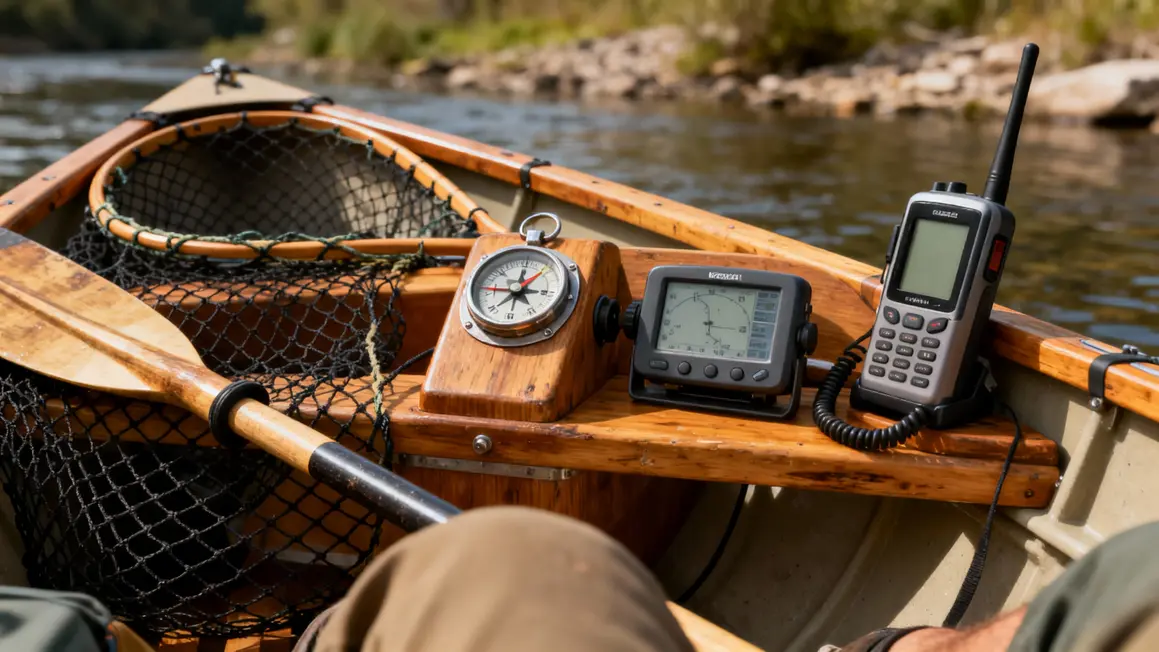
Barring a yollette is based on the precise use of some key equipment:
- Gouvernail and tiller : to maintain and correct the trajectory.
- Communication systems : intercoms or voice carriers, necessary when conditions are noisy or distance between important members.
- Navigation tools : compass to keep a steady heading in the fog, GPS to monitor speed and position, especially during long trips or interclub events.
The condition of the equipment must always be checked before and after exit. Specific attention to rudder fixing or GPS charging status, for example, avoids unforeseen events that could compromise group safety. This rigour reinforces the confidence of rowers and the efficiency of the barber, contributing to the collective preparation before each launch.
Navigation techniques for controlling a yollette
The accuracy of the gestures on the tiller condition the stability and appearance of the vessel. The movements must accompany the inertia of the yollette, rather than oppose it. It is recommended that:
- Focus on progressive adjustments, avoid brutality.
- Observe currents and wrinkles on water, identify areas likely to deviate the course.
- Anticipate the effects of wind with regular and concerted corrections with rowers.
- To manage natural obstacles as best as possible by keeping in mind the fixed markers on the shore.
Training on a mobile bench or with a club simulator accelerates learning: it allows you to feel directly the impact of the bars' actions on the direction and fluidity of the overall movement.
Voice controls and communication with the crew
Collective success is based on the clarity and accuracy of vocal orders. Some examples of current orders:
- « Ready to push! » to prepare the collective effort.
- « First of all! » to launch the aviron propulsion.
- « Stop the oars! » to immobilize the boat with one movement.
- « Light starboard! », « Shipboard stronger! » to correct the power on one side.
The barmer modulates its tone depending on whether it is a technical manoeuvre, a change in pace or a moment of motivation during a test. The balance between firmness, encouragement and adaptation to team fatigue promotes a constructive and dynamic atmosphere.
Manage specific manoeuvres and contingencies
The barmer initiates every key movement:
- Departure: Position check, start order given only when all are ready.
- Arrival at pontoon or wharf: gradual slowdown, precise management of avirons to avoid any imbalance during approach.
- Response to an obstacle: a quick decision on the border to seek to bypass or mark a safety stop.
Faced with an unforeseen event (wind surge, wave, crossing another boat), its responsiveness and its ability to give brief instructions avoid panic and guarantee the group's cohesion. The alertness on posture and timing remains constant, especially when fatigue settles.
Practical tips for beginners at the helmsman station
To advance in confidence, it is recommended:
- Exercise first to keep a straight course with visual markers on the shore.
- Take advantage of mobile bench sessions to experience the reactivity of the yollette without stress.
- Actively listen to rowing returns, which instantly feel the variations in stability.
- To keep calm in all circumstances, which secures the crew and facilitates decision-making.
The most experienced advice, within the clubs of Rhône-Alpes, remains a valuable resource for refining its practice and entering the local culture of the collective boat.
To understand the specific commands and terms related to the barring role, see this lexicon row : all technical terms and manoeuvres explained.
To become an effective barber and guide your crew accurately, it is essential to master the rowing technique: the fundamentals explained.
To better understand the specificities of the yollette, discover how many rowers according to the rowing boat: guide of the main boats and adjust your barring role accordingly.
Common errors to avoid as a barber
- Use too sudden movements on the tiller, which destabilizes the yolet.
- Lack of clarity in orders, which creates confusion and breaks synchronization.
- Ignore the signals of rowers, at the risk of letting technical problems evolve.
- Focus on one aspect (trajectory, crew, markers) at the expense of the overall vision.
- Think we already know everything and refuse to inspire feedback from the club.
The observation of other bars and the exchange of practices make it possible to overcome these traps.
Explore the challenges of the helmsman by weather conditions
Yolette navigation in Rhône-Alpes exposes you to various climates: rain, crosswind or large swell. In the rain, you have to deal with reduced visibility and adapted instructions. The wearing a suitable garment facilitates concentration. In the event of a strong wind, the hand on the tiller becomes decisive and the communication between barber and crew is strengthened: all these points appear in the federal recommendations but take a special relief on the water planes of the region. The stabilization and anticipation of submerged obstacles in rough water must be subject to increased vigilance.
Anticipation remains the best asset: observing the evolution of the sky, looking at the reflections and texture of the water, continually adjusting the parameters of the boat.
FAQ on the role, responsibilities and tools of the barrier
- How to choose your equipment? Ensure the simplicity, ease of handling of the tiller and readability of navigation instruments; prefer a comfortable seat on long run.
- Is the tiller more interesting than electronics? For most Yolette routes, manual feeling is preferred, even if electronics is a useful complement to the safety and accuracy of the heading.
- What distinguishes the yollette from a shell or a peak eight? The yollette, more stable and adapted to initiation as to endurance, requires an increased attention to the coordination of the power, with a different reactivity of the fine ships.
- What are the practical tips of clubs in Rhône-Alpes? Multiply feedback with teammates, exchange roles to better understand each other's expectations, and do not hesitate to learn from other experienced barbers.
Making the barber station accessible and rewarding requires a combination of technique, material preparation, listening and ability to federate. Regular exchanges in clubs in the region reinforce this collective approach, the cornerstone of success on the water.
Mastering the requirements of the helmsman position ensures safety, improve performance and strengthen team spirit – a major asset for any local rowing club.
What situations or field tricks do you think are most useful in advancing as a yolo barter? Share your feedback with the community as a comment, or offer us your topics of interest for future issues!
If this folder has been helpful, send it to other rowers in your club or on local networks.
The diversity of feedback and testimony feeds regional dynamics and offers everyone the best chance of progress.
To go further, find the official resources on the barrister at the Fédération Française d'Aviron or consult the specialized sports press (The Team, France 3 Regions). The sharing of experience and the recovery of local practices remain the basis for continuous progress on our water bodies!
Article written by Marie F., an experienced rower and coach in clubs in the Rhône-Alpes region.
Last updated : June 2024
Updated on 21 March 2026