

Practice, mentor or simply follow the rowing club requires a good understanding of the technical vocabulary used on the water and around the equipment. This lexicon brings together the main words and maneuvers of l'aviron, with precise definitions and practical advice useful to rowers, volunteers and parents and curious of the community in Rhône-Alpes.
Contents
Essential equipment for rowing
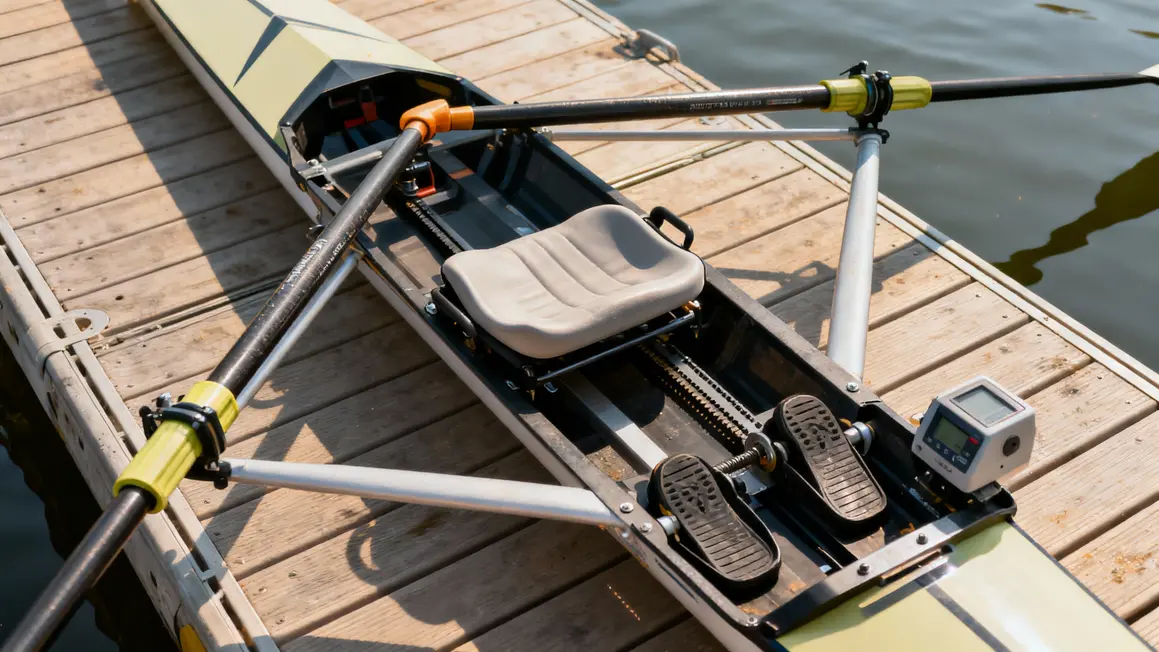
Equipment is at the heart of practice. Each of the elements below plays a key role in performance, comfort or safety on board.
- Row / Rame : consist of the pallet (part immersed in the water), the handle and the handle. The pallet can be flat or profiled according to the type of practice. Check the length, control the handles to prevent them from slipping are maintenance gestures that really make the difference when going out.
- Swimming lady : pivot where the row is fixed to allow movement. Good adjustment prevents parasitic movements and optimizes efficiency, especially on skiffs. Before embarking, testing the flexibility of the mechanism is a habit adopted in many clubs.
- Cales-feet : supports to hold the feet, adjustable to the size of each. Control of straps is part of regular checks to prevent discomfort. In club life, changing a worn strap has sometimes prevented annoying injuries during a full season.
- Behind the scenes : rolling seat, whose fluidity depends on the good condition of the rails and wheels. Regular cleaning and lubrication are not very time-consuming, but improve the slide in an obvious way.
- Carrying : metal support hung on the hull and which supports the swimming lady. Its role on the stability of rowing is particularly observed in crew vessels where synchronization requires unwavering reliability.
- Cox box : electronic device used by the barter to amplify its voice and give indications of speed or speed. Checking the battery load before each output is a team reflex that volunteers usually transmit to the youngest on the regional basins.
| Equipment | Definition | Practical utility |
|---|---|---|
| Row / Rame | Tool to propel the boat, consisting of the pallet, handle and handle. | Choose its length and material according to the rower and needs (training or competition). |
| Swimming lady | Pivot that keeps the rowing and allows it to rotate in a controlled way. | Avoid uncontrolled movements, essential for precision and safety on water. |
| Cales-feet | Support fixing the rower's feet. | Ensures a stable position and promotes effective thrust. |
| Behind the scenes | Mobile seat slipping on rails. | Allows the necessary leg movements for each rowing stroke. |
| Carrying | Metal support now the swimming lady. | Ensures stability and optimizes the force transmitted to the vessel. |
| Cox box | Audio and GPS device to communicate and coordinate the crew. | Synchronizes rowers via the barber's rhythms and instructions. |
Mastering these equipment, checking them and adjusting them according to their needs, makes the water experience much more enjoyable and efficient, regardless of the level or framework of practice.
Position and orientation on the vessel
The position of each person on the boat and his or her understanding of the associated vocabulary facilitates the efficiency of the manoeuvres and avoids the awkwardness of the crew.
- Port : left side of the vessel (viewed in the direction of walking), usually indicated in red.
- Starboard : right side of the boat, marked in green. This signaling is systematic on the crew vessels of the region to better integrate the new members.
- Doll : rear of the boat, often occupied by the barber.
- Proue : front part, showing the direction of movement.
- Chief swimmer : rower placed at the bow, imposes the collective pace. In many local clubs, this function alternates to empower each team member and develop a better rhythm reading.
There are two main rowing techniques : the point rowing (1 rowing rowing rowing rowing rowing rowing rowing rowing rowing rowing rowing rowing rowing rowing rowing rowing rowing rowing rowing rowing rowing rowing rowing rowing rowing rowing rowing rowing rowing rowing rowing rowing rowing rowing rowing rowing rowing rowing rowing rowing rowing rowing rowing rowing rowing rowing rowing rowing rowing rowing rowing rowing rowing rowing rowing rowing rowing rowing rowing rowing rowing rowing rowing rowing rowing rowing rowing rowing rowing rowing rowing rowing rowing rowing rowing rowing rowing rowing rowing rowing rowing rowing rowing rowing rowing rowing rowing rowing rowing rowing rowing rowing rowing rowing rowing rowing rowing rowing rowing rowing rowing rowing rowing rowing rowing rowing rowing rowing rowing rowing rowing rowing rowing rowing rowing rowing rowing rowing rowing rowing rowing rowing rowing rowing rowing
The different types of vessels and their use
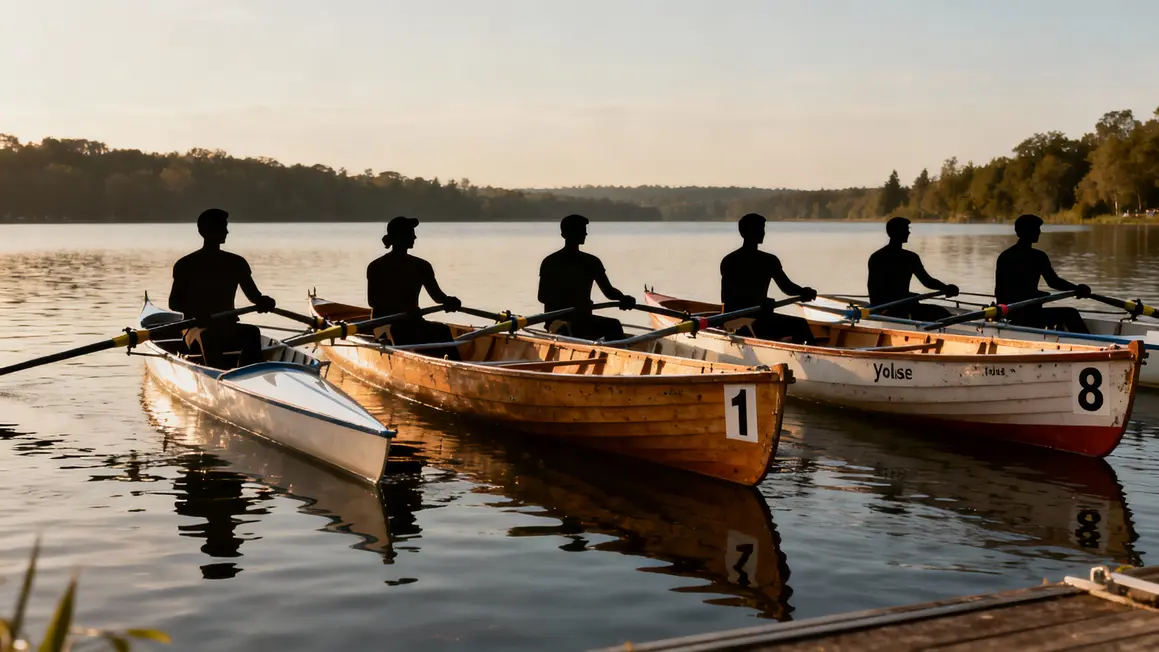
Each boat model meets a specific objective, ranging from initiation to high-level competition.
- Yollette : ideal for beginnings or leisure trips. Enhanced stability, up to 5 rowers, widely used in clubs for discovery sessions.
- Skiff : single-seater boat where technique and balance are crucial, recommended for experienced rowers looking to progress.
- Double and four : team boats, available in version « point » or « couple », sometimes with barber.
- Eight : iconic competition boat, with eight rowers plus a helmsman to fly the crew.
| Type of vessel | Number of rowers | Configuration | Presence of a barber | Use |
|---|---|---|---|---|
| Skiff (1x) | 1 | Couple | The recommended age to begin river rowing is 10-12 years, while for sea rowing it is preferable to start from 12-15 years old due to additional safety and navigation requirements. | Individual competitions |
| Double (2x / 2-) | 2 | Couple or Point | Optional | Training or duo competition |
| Four (4+ / 4-) | 4 | Point | With or without | Experienced teams |
| Eight (8+) | 8 | Point | Major events | |
| Yollette | 4 or 5 | Variable | The recommended age to begin river rowing is 10-12 years, while for sea rowing it is preferable to start from 12-15 years old due to additional safety and navigation requirements. | Initiation and leisure |
Adapting to the type of boat chosen according to its skills and objectives guarantees a smoother progression, whether during the first training or at an interclub championship.
The technical manoeuvres and steps of the rowing cycle
To train safely and progress, it is useful to distinguish the gestures and maneuvers that one finds during each exit:
- Border : orient the shovel in the water vertically to make the best use of the thrust.
- Swimming : forward rowing movement, to be controlled in a collective pace to avoid any imbalance.
- Denger : offer rear propulsion, useful to back off or adjust its position quickly on the water plane.
- Plumber : Bring the shovels out of the water by tilting them to reduce drag during the aerial return.
- Steel : short and rapid rowing, usually to brake or stop the boat in emergency.
The rowing cycle is usually cut into four stages: attack, past, release and return. Experienced rowers show that working each sequence in isolation, then chained, significantly improves coordination, especially during long trips or in competition.
Specific terms related to navigation and vessel
To recognize, maintain and transmit good practices on the water plane, knowing the structure of the boat is part of the local community culture.
- Carlingual : main beam along the hull, responsible for rigidity and distribution of forces. Its surveillance is regular in clubs to avoid cracks after a dense season.
- Starboard : upper edge of the hull, useful to limit water intakes. A quick check before each exit detects any problems or weaknesses.
- Crossings : cross bars, watched during winter revisions to avoid a collapse of the hull.
- Rails : Backstage support, clean the rails and pass a clean backstage.
- Governnail : piece to orient the boat, hand or foot driven depending on the type of boat.
| Element | Function | Maintenance advice |
|---|---|---|
| Carlingual | Main bone guaranteeing the rigidity of the vessel. | Check for cracks or flexions after each season. |
| Starboard | Upper strength, protects from splashes. | Inspect to detect impacts or cracks. |
| Crossings | Cross-sectional maintenance of the hull. | Check attachments at each disassembly. |
| Rails | Slide the backstage. | Clean and lubricate according to usage. |
| Governnail | Allows to steer the boat. | Test the reactivity before each launch. |
A well-maintained boat gives confidence to rowers, helps to limit equipment failures and encourages serene use during regional training or official events.
In order to start well, it is essential to choose suitable equipment; find out how to do this guide on row boat: understand, choose and practice well.
To master the technical bases, discover this row support: practical solutions and tips for rowers, indispensable to any enthusiast of rowing.
To master the art of team navigation, discover the fundamentals for barring a yollette: techniques, practical advice and responsibilities.
Time management and its impact on performance
The rate, or number of strokes per minute, varies according to the objectives: maintenance of endurance in training (about 20-24/min), search for explosiveness in competition (32-40/min). The regional rowers adjust the pace according to the course, the weather and the composition of the team, sometimes under the helmsman's control thanks to the cox box or a simple voice signal.
- To progress, alternate work at slow pace to refine the technique and sessions at high speed to develop speed and regularity, on the water as well as at the ergometer.
- Clubs share their favourite series: « 10×1 minute fast, 2 minutes recovery » or « 30 minutes continuous at low speed », a method which allows both individual progress and the crew to be soldered.
The technological monitoring (counters, cox-box) facilitates real-time adjustment and transmission of the barber's instructions to the whole boat, which is particularly valuable during tight technical passages during regattas or on routes with many natural obstacles.
Every term of the lexicon you have just covered remains deeply rooted in the daily lives of clubs, crews and volunteers from the Rhône-Alpes region. Knowing this vocabulary and its uses makes it possible to gain autonomy on the water and to improve the organisation during competitions or associative sessions.
What technical terms did you ask the most questions or seemed indispensable in your early days? Share your experience or anecdotes in the comments to enrich this collaborative regional lexicon.
If this guide has been useful, don't hesitate to pass it on to other members of the community, and suggest the next lexicon or decryptions you would like to read here.
All this lexicon is based on the practices of regional clubs and the recommendations of the French Federation of Aviron. To go further on the official or regulatory aspects, Federation sites and resources such as INSEP are essential. The direct returns of the local mentors complement these bases and nourish each season the evolution of practices.
Everyone now adapts this vocabulary to their needs, desires, and challenges at the edge of the basin.
Marie F. – volunteer and mentor, Rhone-Alpes row
Last updated : June 2024
Updated on 21 March 2026