Choose your rowing boat goes well beyond a story of size or style: behind each hull, hides a clean experience, mixing balance, desires, and shared memories on the water. That we are looking for solo adventure on a skiff or the joy of several outings, a host of technical criteria come into play, but listen to his practice and his level remains the best way to avoid false steps (including among the most experienced rowers... as often a coach slides).
After twenty years of passionate counselors and families on the banks of the Rhone, I deliver here, without a doubt, tried and tested tips and benchmarks so that the selection of your boat becomes a simple, serene moment – and above all, a source of pleasure.
Contents
Vessel for rowing: how to choose well according to your practice and level?
In view of the diversity of rowing, choosing a boat that suits you can really seem complex, especially for those who start or seek to take a step. To clarify the point: two large families of boats are distinguished above all from the couple vessels (where each rower uses two trainsets) and the peak ones (one train per person), whether they are alone (skiff) or in the imposing crews of the eight (with barrier).
Your level, your personal expectations (leisure or competition), the water body where you will go, not to mention your morphology, are all decisive parameters. Budgets vary greatly: we talk about 4,000 to 13,000 € about for a new boat, depending on the model and range. Finally, simplicity, safety and pleasure remain the key words: most of today's models are designed to make rowing fun for all, regardless of age.
Types of rowing vessels: classifications and uses
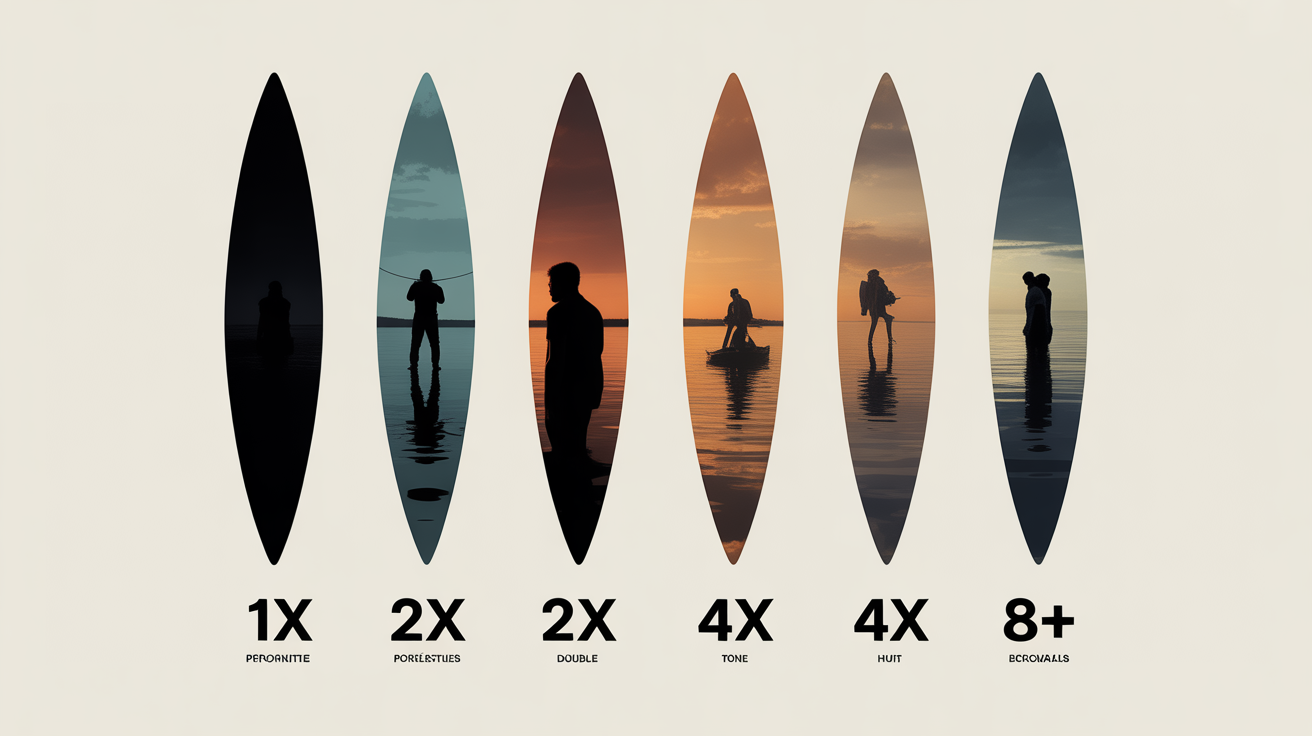
From afar, these tapered shells all seem identical... However, in detail, rowing has a true diversity! A skiff and an eight offer nothing comparable, each type of boat revealing unexpected sensations. Small panorama to fix ideas.
Couple or tip: the whole logic of the row
That's the basic question: « couple » or « point » ? As a couple, each rower leans on two rowers (shull), while at the point, each one operates only one row – hence the need to work in osmosis to maintain the trajectory!
A concrete example: the skiff (1x) as a couple to navigate solo, while the four pointer (without barrier) requires a perfect synchronization of the group. In some boats (eight, some four), there is also a barber who is responsible for direction and rhythm. Some people remember trying a double couple out without the rudder... Learning experience – driving at foot takes on a whole new dimension!
Categorying by number of rowers and configuration
To find out more, a few practical benchmarks:
- Skiff (1x): ideal solo, torque configuration, 8 m long, weight around 14 kg (end, speed, but destabilising for first grip)
- Double sculpt (2x): two rowers, couple, 10 m, 27-28 kg (polyvalent, very appreciated in club)
- Two without bars (2-): duo, tip, 10 m (only for those who like close coordination)
- Four torque (4x) or tip (4-): for four rowers, length of 13-14 m, weight between 67 and 70 kg (impresses regularly during regattas!)
- Eight (8+): Queen boat with eight rowers + barber, >18 m, reaches 115 kg (handling station!)
Another point: overvitamin variants exist for sea rowing – there are larger, self-sustaining hulls, very reassuring for beginners or those who like to navigate in the wave (some models, such as the Liteboat, have an exceptional width of 83 cm).
Technical differences and innovations
If one looks closely, each rowing boat is distinguished by its technical choices: from the material used to the slightest attachment piece. Beauty is just a small part of history!
Materials, stability and sliding seat: what changes everything
The vast majority of recent models rely on composite materials (carbon fibre, kevlar, alloys) to combine rigidity and lightness. As a result, we are reaching boats of 14 kg solo, where the competitive eights reach 115 kg for 18 m long.
Stability, on the other hand, relies mainly on the width: the thinner the hull, the more the boat runs... but it reacts to any imbalance, which may surprise the neophytes. A trainer suggested that with leisure or sea models, the progress of teenagers is spectacular: seeing a young person trust a large hull often marks a real click.
As for the sliding seat, it is a key innovation: it makes it possible to optimise the gesture by sliding on rails, from the tip of the feet to the ends of the arms. Some anecdotes go back to the discovery of this unique sensation, which really transforms the way of rowing (is it really intuitive at first? We can doubt it).
Moreover, international rules very precisely regulate the size and weight of each category to ensure fairness in competition.
Modern governance, leadership and innovations
The steering system evolves a lot according to the boat format: in the smallest, it is the rower who flies with his feet via a palonnier; on the large hulls, the barber manages the trajectory. Many novice rowers bear witness to some memorable zigzags during the first double-sculpted attempts!
The longer the boat becomes, the more bend anticipation becomes.
Interesting detail, one now encounters self-emptying boats (very popular in row of sea) or designed with so-called materials « form memory » to limit maintenance. It circulates, among some enthusiasts, the conviction that no sensation really replaces traditional wood, although in terms of longevity and robustness, composites undoubtedly dominate.
Choosing your boat: practical tips
Rather than rushing to the first model or sticking to the catalogues, it is worth taking a little step back to target its real need. A thoughtful choice is already half of the way to development on water.
Essential criteria: level, water, morphology and budget
Better to play cards on the table: do you start, or are you looking to progress? Should the boat suit children, adults, or the whole family? Will you sail on sea, river, or quiet water? A narrow skiff of 14 kg will correspond to an experienced practitioner, while recreational hulls more than 80 cm wide reassure clubs and families (and sometimes, adults who are late in the row).
On the portfolio side, the range ranges from 4,000 to over 13,000 € as required; between the initiation vessels close to 5,000–7,000 € and more elitist competition models, the gap remains notable.
Ideally, consideration should be given to the following points before any purchase or rental:
- What is the priority use (leisure, compet, walk, or occasional discovery)?
- Will the water be flat, sinuous, or stirring (lake, wide river, sea)?
- Do my body shape and weight fit with the size of the boat?
- Will the boat be reserved for one person or shared?
- What about the global budget – regular maintenance and storage included?
Let's add that many brands now offer interactive simulators: a few clicks, and we get a well customized recommendation (which is also why clubs save time).
Comparison table: models, templates and prices observed
Here is a current overview of the market:
| Type | Length | Weight | New price (€/€€€) |
|---|---|---|---|
| Skiff (1x) | Approx. 8 m | 14 kg | 4 110 to 8 000 € |
| Double sculpt (2x) | 10 m | 27-28 kg | 6 500 to 10 000 € |
| Four pairs | 13 m | 67 kg | 9,000 to 13,000 € |
| Eight point | 18 m+ | 115 kg | 12,000-13,471 € |
| Leisure or sea models | 7 to 9 m | 18–30 kg | 5,000 to 12,200 € |
For young practitioners, a large majority of clubs have « boats school » reinforced, designed to provide maximum stability and limit apprehension. An educator recently recounted the happiness of seeing a teenager cross his first meters on a large hull and display a smile to the ears: moments that fed up a whole club (not always obvious to live in the beginning, the anxiety of the watch capsizing!).
For solo rowers, the skiff row: understanding everything on the boat king of the row solo is essential to make a choice adapted to its ambitions and level.
Whether you are attracted to the calm waters of the rivers or the challenges of the waves, discover the differences and benefits between river and sea oars can help you choose the ideal boat.
To choose the ideal boat, discover how many rowers according to the rowing boat: Guide of the main boats and find the one that fits your practice.
Testimonials and feedback
Behind each boat are anecdotes, collective dreads... and sometimes some unexpected dives! If one wants to project it, the word comes back regularly to the rowers themselves.
Early experience: the importance of stability
In many people who discover rowing (and I've been part of it!), the fear of falling is the main brake. Recent recreational boats such as the Liteboat or some Wintech models, thanks to their widths close to 80 cm and their oversized floats, really change the deal.
As Sonia, a recently registered mother, recently pointed out: « I thought I could never balance; from the first exit on a wide hull, I found sensations similar to those of the bike! ». There are many returns in this direction, and it would appear in some cases that the click is occurring faster than is thought, despite initial hesitations.
Competitions and club anecdotes
In competition, the technical requirement is invited to each row: many insist on carbon input for responsiveness, the difference in comfort of the seats depending on the range, or the need to adapt the pedal wheel to the rower's gauge.
It is not uncommon for clubs to seek to complete their fleet via the market of the occasion: a eight used carbons negotiations between 7,000 and 10,000 €, but it's better to check the number of repairs – under penalty of bad surprises (one day, the waterproof hatch proved to be runaway during a team trip... Result: general cold shower! Careful upstream monitoring is recommended on a regular basis).
FAQ and maintenance/price tips
Before embarking for good, we find a number of key questions, both on pontoons and online. A bit of anticipation saves time and effort.
Frequently asked questions about choice and maintenance
- What is the difference between a skiff and a double?
The skiff (1x) is exclusively solo, with each rower using two trains. The double sculpt (2x) welcomes two rowers, each with two trainsets: perfect to progress together or simply enjoy the slide with two. - Boat with or without barber?
As soon as the hull exceeds a certain length (like the eight or some four), the presence of the barber provides coordination and reliability on the trajectory. In smaller formats, manoeuvring is usually done at the feet, according to the habit of each. - How much does it cost to maintain a boat?
Count a fresh water cleaning after each session, a monthly check of the rails, the stud, and the joints; The replacement of rowing or excavators occurs every 3-7 years, depending on the intensity. Maintenance shift in an individual most often oscillates between 100 and 300 € per year. - Skin « axe » or « Macon » ?
The type shovel « axe », more modern, offers a better yield in support, prized by competitors. The shovel « Macon », older, seduced by its roundness, facilitating the taking in leisure or school. - Can we practice at sea with any boat?
No: it's best to give priority to sea-approved models, with a wide core and secure devices such as rapid draining and side floats.
Last point to note: most manufacturers guarantee their boats until 7 years and the used market remains very dynamic (more than 22 companies referenced in France, according to some specialists in the sector).
Maintenance and storage tips
The top? Humidity shelter storage, careful cleaning, and control of small sensitive parts such as screws, seats, or studs. An experienced coach slides this trick: a simple blow of dry silicone on the rail of the seat It can prolong its life, and in front of the salt, it is repeated – it is always better to rinse thoroughly after each navigation at sea.
For those who prefer the operation clarity or want a personalized quote, many specialized sites offer simulators or reminder requests by local pros. We often find that it is in this way that clubs and individuals renew their equipment without stress... and sometimes with beautiful surprises at the key!
Updated on 21 March 2026