

Under the sun or the morning mist of the Rhône-Alpes rivers, the skiff Incarnates this part of adventure and freedom that makes the hearts of all the enthusiasts vibrateaviron. A real technical challenge and complicit in emotions, it reveals both the delicacy of the gesture and the determination of the rower, from the first school boat starts to the tension of a regional final.
Through lived stories, coaching tips and concrete landmarks, here is what two decades of club sailing have allowed us to remember to choose, understand and tame the skiff, whether you are simple curious or a confirmed rower looking for authentic sensations on the water.
Contents
What's a row skiff?
What does this famous skiff that makes so much talk on the banks really look like? From the first exchanges on the pontoon, we notice that the skiff arouses as much admiration as questions. It is the flagship boat of individual rowing – the lightest, sharpest, passage required for both Olympic champions and those who love independence.
Definition and place in discipline
The skiff imposes itself as the reference of the Single-seater row boat. Its standard length oscillates around 7.20 to 8 m, for a minimum weight of 14 kg– in other words, a real feather running on the water. What makes it singular: its finesse, a relative stability (it is here that expresses the real challenges for whom adventure alone), and the peculiarity of rowing with two oars called "couple".
Unlike collective boats, each gesture has its importance, no question of resting on the synchronization of others, the entire movement will depend on your technique.
Origins and variations of skiff
We find the first traces of the skiff from the beginning of the Olympic rowing races, and it is still used today as a barometer of the technical level of a rower or rower. Some great names passed there, not without some passages in the water...
We come across models of initiation, other models designed for the pure speed of competition, as well as a version designed for the Handisport: the famous PR1, which favours stability and accessibility.
Special features: why does skiff fascinate so much?
« Master of his boat, master of his mistakes », launched an experienced coach during an internship. The skiff puts the rower in front of himself: every stroke resonates, every small imbalance is felt. The great clubs gladly reserve it to rowers who have acquired some control, seeing it as the summit for all those who wish to explore, in its slightest nuances, the pure pleasure of the slide.
One might ask: Is this really a passage required to progress? Many would say yes, even if each had their own experience.
Segmentation of models and uses: leisure, competition, mandisport
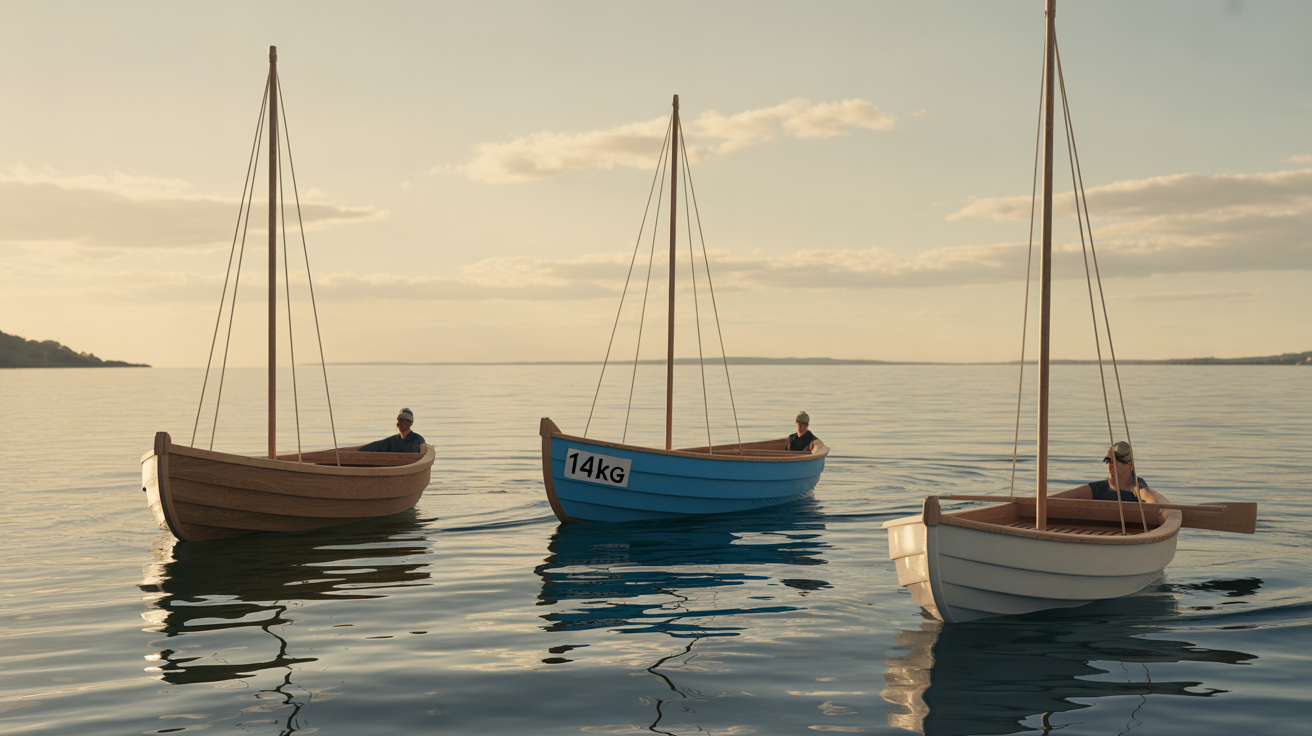
Few disciplines offer such a rich choice of equipment as experience gains. Skiff is no exception – we find a model for almost every profile, project or morphology. A professional recently recalled that he never saw two rowers choose the same skiff without asking a thousand questions.
Skiff leisure vs skiff competition: what differences?
The skiff intended for leisure focuses primarily on stability and the robustness a perfect ally to serenely initiate discipline. Some compare it to a sort of elongated kayak, but the magic of the rowing is prompt: the slide is well present, without the constant fear of desalination. Some witnesses saw adults regain their confidence in these reassuring models in a few weeks.
As for the skiffs of competition, these are thought of for a performance logic: more slender hull, lower weight (14 kg minimum in running), advanced composite materials... We quickly understand why it is best to leave them in shelter on days of sustained wind! A club trainer pointed out that, for some profiles, transition can take time and requires a lot of patience.
- Model PR1: Handisport oriented, equipped with floats or specific devices to ensure the autonomy and safety of each.
- Junior Skiffs: designed for lighter rowers or those under the age of 16–a common choice within youth sections.
- Initiation range: wide hulls, often with or without bypassing, sought by those who discover or prefer pleasure on the water.
What we can easily remember: there is a skiff that is tailored to every need – a local club will in most cases guide you, and there is rarely a shortage or bad advice in the community environment.
Choose range according to level and project
Among the first questions, the relationship between "level" and "skiff model" quickly arrived. Most manufacturers structure their offer around three ranges: Bronze (discovery), Silver (multifunction club), Gold (elite competition). The principle? We will not go on the same boat for a friendly ride as to aim for a national selection.
| Range | Characteristics | Target |
|---|---|---|
| Bronze | Wide, robust, easy to maintain | Beginners, school children |
| Money | Balanced stability/performance, adapts to different templates | Clubs, rowing machines |
| Or. | Ultra lightweight, premium composite, refined lines | Competitive, elite |
Micro-anecdote: a 13-year-old rower started on a Bronze, then joined the interregionals the following year after his passage on a gold model cut for him. In practice, it is best to try, compare, and discuss at length with the steering team before any decisive choice.
Technical focus: dimensions, weights, materials
Nothing better illustrates the impact of the equipment than a side-by-side test between a club skiff and a competition model: a few kilos less on the scale, and we feel like we're flying over the water.
Standard dimensions and weight categories
The rules established by the International Federation of Aviron Societies (FISA) remain strict for the competition: the skiff must measure at least 7.20 m and weight 14 kg Once equipped. These standards ensure a fair framework from one model to another, while facilitating ownership at each level.
Depending on your weight, there are "carrier" models designed for rowing machines. 55-65 kg, 65-75 kg or 70-85 kg. Essentially, it is not to "shove" too much back or forward of the boat: a balance that saves energy and allows you to row straight.
A coach recently pointed out that there is no magic recett to find the right compromise, but the feeling often prevails over the fact sheet.
Recent materials and innovations
Currently, the composite (carbon fibre/glass fibre) imposes itself for the competition: it combines lightnessrigidity and robustness. Some clubs maintain a wooden fleet, ideal to regain the vintage atmosphere of our elderseven if their maintenance requires constant care, which is not to be overlooked.
- High-end composition: recommended for performance and to wear the skiff effortlessly (14 to 16 kg all inclusive).
- Aluminium or PVC: more rare, but appreciated for leisure use or first steps, especially due to its attractive cost.
- Traditional wood: heavier (16-18 kg) but very resistant and appreciated for its "hot" side.
Small confidence extracted from a morning briefing: a modern skiff can travel on most of the roof bars of family cars. I had to do it many times before the arrival of my two children... Just make sure everything is secured before you get on the road!
Stability, safety and skiff learning
Who never tasted the freshness of the water after putting a little too much on his skiff balance? The beginnings may seem intimidating, but the satisfaction of success is largely worth the few unexpected immersions.
Start skiff: good practices
Better exercise on calm water, in mild weather, and dare to repeat short series regularly. Many clubs offer wide-line boats designed to simmer, sometimes with famous "chicken" floats if needed. There is no age to surprise yourself to learn from scratch.
Whether you're a skiff fan or curious about other nautical disciplines, find out how windfoil or wingfoil choose its foil discipline according to its profile and desires to vary the pleasures on water.
Like the rowing skiff, the Hobie Catamaran 16: icon of sports sailing between legend and modernity embodies a unique mix of performance and thrills for water sports enthusiasts.
- Dare the mistake: losing balance is part of the journey, no one really escapes.
- Treat your posture: look far ahead, release your arms, keep a moving pelvis.
- Prioritize security: wearing the vest is imperative during leisure initiation, and it is better to report any lonely exit to a framer.
I have seen as many adults applied as young fools: depending on the involvement of each one, you can feel comfortable in 2 to 6 months. Some get there in a few weeks, others struggle a little more before they find their "house on the water".
Robustness, maintenance and specific safety
A solid skiff will accompany your progress and know how to cash in the beginner's little mishaps! Consider checking the condition of the hull, the various attachments, and learn to detect signs of fatigue (cracks, infiltration). In addition, the regulations provide for year-round and competitive branding, while in PR1, some manufacturers install side floats to ensure maximum safety.
Little trick heard many times: always inspect your boat when launching. A moment of inattention, especially with the agitation on the pontoon, and it is quickly risking an unfortunate forgetfulness.
Buying or finding a skiff : new, used, renting
To decide to buy (or even rent for the simple pleasure of a weekend) often raises far more questions than expected. But the skiff market is well structured, and between clubs and specialist sellers, one can navigate without too much worry. Experience shows that there are some for all profiles and budgets.
Price benchmarks, years and used offers
A new top-of-the-range skiff mainly displays a price between 3,000 and 7,000 € (Gold models, state-of-the-art composites). The dynamism of the occasion sometimes surprises, with many models of 2019 to 2024 proposed around 1 800 to 4 000 €, condition and materials in mind.
As for the rental, it remains more confidential, but exists on some major clubs or tourist bases. A question often comes up: is this a good investment? Many rowers, however, regret that they did not move forward earlier.
| Model year | Average price observed (€) | State |
|---|---|---|
| 2019 | 1 800 – 2 800 | Good/Very good |
| 2022 | 2 800 – 3 300 | Very good/As new |
| 2024 | 4 000 – 7 000 | Nine/Elite |
Insider advice: prioritise a test of the vessel before any decision is taken and carefully inspect the most sought after parts (backstage, seat, rails). A well-maintained "old generation" skiff is sometimes more valuable than a recently neglected model. Some specialist sellers often recall this during open days.
Methods of purchase, transport and storage
Whether your choice is for new or used, it is best always to ensure that you fit your model and experience (boat length, lift, hull width). It is also recommended to request the detailed product sheet: some clubs even offer a logistical help for transport or adjustment.
With regard to storage, providing a garage or sheltered space significantly increases the life of the vessel.
A good skiff will usually accompany the practice during 10 years or more, provided that there is regular maintenance and sufficient frequent use to prevent dust from covering passion... It's not always obvious, you have to recognize it.
Updated on 21 March 2026