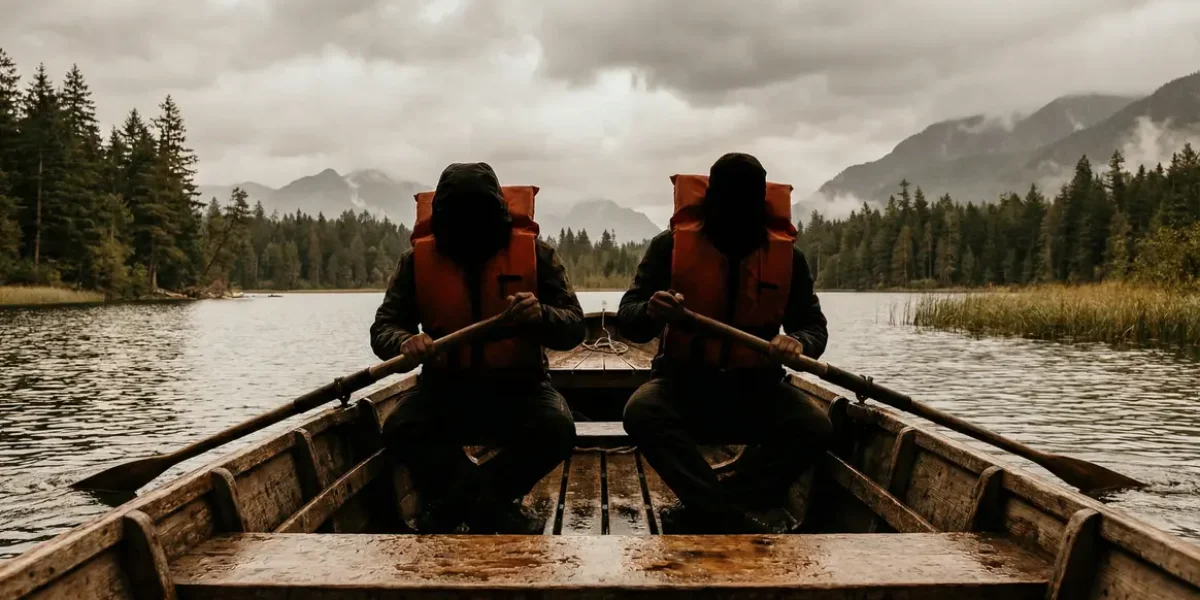
Navigating safely with a flat-bottom boat is a common concern for many rowers in Rhône-Alpes. Given the specificity of these boats, knowing how to prevent capsizing is not only a matter of equipment, but also of vigilance, experience and preparation. In this article you will find concrete methods and adapted practical advice, resulting from both field observation and recommendations from local clubs.
Contents
Understanding the peculiarities of flat bottom vessels
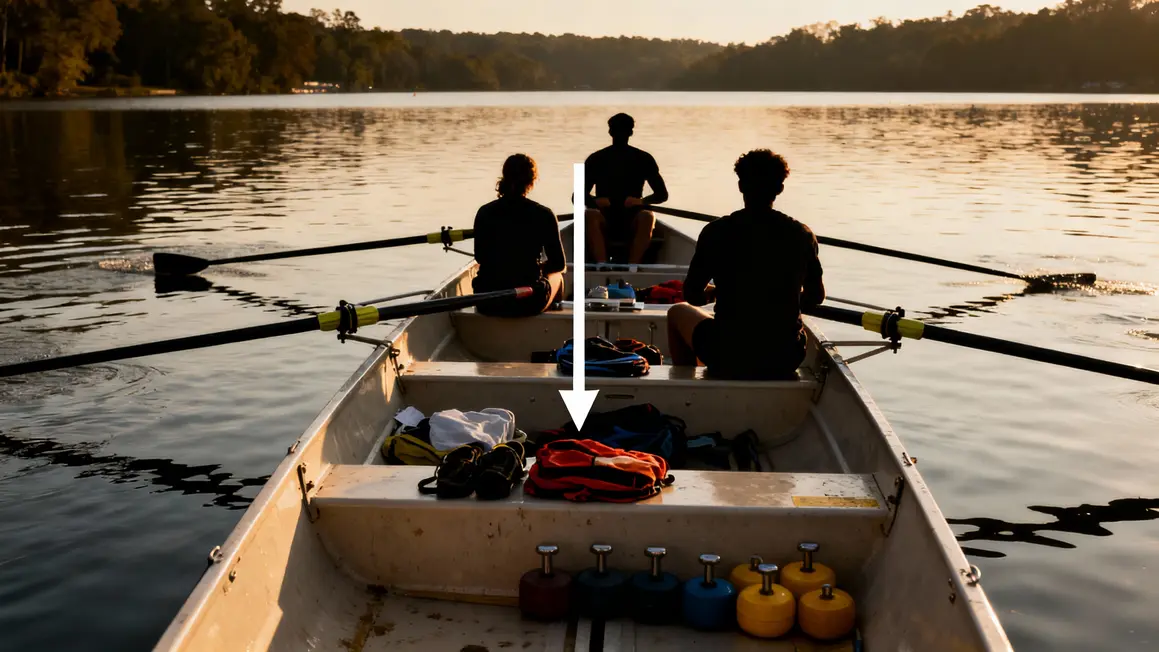
Flat bottom boats are distinguished by their design designed to offer great lightness and manoeuvrability adapted to certain types of calm or shallow waters. Unlike V-shaped hulls, which penetrate water by promoting better stability and fluid movement, flat hulls rest entirely on the surface, making them less stable in the event of sudden movements or tumultuous conditions.
Their stability remains precarious, mainly because the centre of gravity is relatively high in relation to their dimensions and their seat on the water. The higher the centre of gravity, the more sensitive the vessel will be to tilt. Poor weight distribution, such as gathering rowers or equipment on the same side, exacerbates this imbalance and thus increases the risk of capsizing. These vessels therefore require a permanent adjustment, both in the distribution of loads and in the management of movements on board.
This design has advantages in areas of low depth: they offer great stability at the stop, quality desired for fishing or relaxation, but become vulnerable on lakes in strong wind or against marked currents. Without keel or ballast, the slightest lateral impulse can cause a loss of balance – a point that distinguishes these boats from more profiled models.
Dynamic stability is also essential to take into account. Flat-bottomed vessels find it difficult to return to their initial position after an inclination: at the slightest sudden displacement or wind blow, they require continuous attention. However, the adoption of appropriate practices, including the addition of Light ballasts or stabilizers, allows to limit their tendency to capsize and navigate safely.
Identify causes of capsizing
Several factors expose these vessels to the risk of turning:
- Environmental conditions : Unforeseen currents, lateral winds or cross waves quickly unbalance the flat hull, especially without proper ballast. An exit to the Bourget lake allowed us to observe that a sudden wind is enough to push the novices towards situations at risk – all the more so if the preparation is lacking.
- Human errors : Misallocation of loads or sudden displacement of a passenger makes the vessel unstable in an instant. During training, a young rower moved his weight on one side to adjust an accessory: only the collective reflex prevented the boat from tipping.
- Technical deficiencies : Cracked shell, fragile anchor chains or worn rail supports reduce the control of the boat and accentuate its lateral movements. Experience shows that regular maintenance is essential to avoid these situations.
Preventing these risks requires constant vigilance and careful preparation, based on the experience of the clubs and the local community.
Optimize weight distribution on board
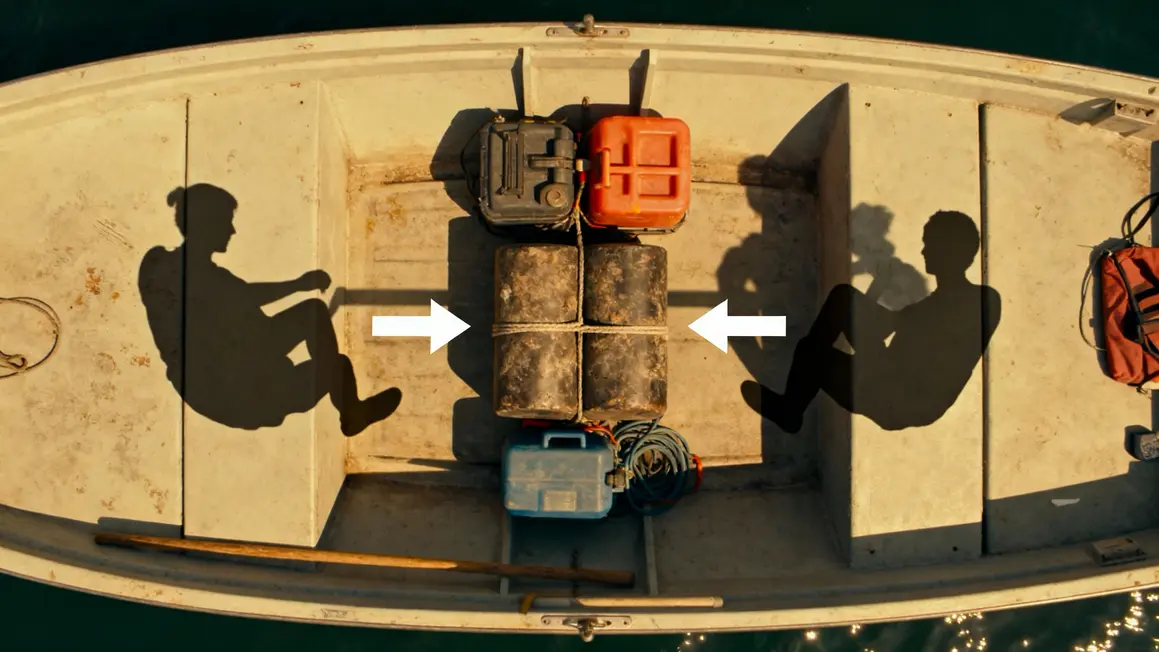
A well thought out balance offers real stability even on a flat bottom boat. Here are the key reflexes to adopt:
- Concentrates heavy equipment at the center and bottom of the boat for lowering the centre of gravity and protect the overall balance.
- Divide the human weight symmetrically between port and starboard, avoiding a rear overload or an unbalanced side.
- The least heavy bags or materials can be placed on the edges but always with attention to swinging.
- Anticipates every position from boarding, first installing heavy equipment and then passengers.
- Faced with an imbalance in navigation, make the teammates react quickly to restore the situation – prefers the low sitting position for all.
A rigorous management of these details makes navigation safer, limiting unwanted vessel movements.
Install technical devices to improve stability
Some technical solutions can make the difference:
| Equipment | Benefits | Limits |
|---|---|---|
| Liquid ballasts | Accurate centre of gravity adjustment; adaptability according to load | Additional weight; technical installation required |
| Stabilizers | Wave protection; modular installation | Not practical in congested areas; additional occupied position |
| Aluminium shell | Resistant and light | Possible drive if asymmetrical distribution |
| Fiberglass shell | Uniform distribution of weight; good rigidity | Fragility against shocks |
Combining several devices is common in clubs depending on the type of water body and practice. Getting closer to local feedback remains a valuable resource for adapting these choices.
Safe anchorage techniques for flat bottom boats
The anchorage plays a fundamental role when it comes to safe parking:
- Drainage, with two anchors in « V », offers effective maintenance. The angle between the anchors, ideally from 45 to 60 degrees, limits the lateral movements, very useful on the seabed not conducive to conventional anchoring.
- The embossing, with an anchor at the front and one at the rear, locks the position: this is the reference option for long parking or in areas with opposite currents. Check chains to avoid windings, especially in restricted spaces.
- Adapt anchor to the type of bottom: sand plough, grapple on rocks or mixed areas.
Regular monitoring of equipment (chains, bumpers, embankments, etc.) enhances the efficiency of the anchorage, as well as consulting local marine and weather reports before each exit.
Adapt your navigation to climatic conditions
Adapting its behaviour to weather hazards remains the best bulwark against capsizing. Some tips from the daily rhônalpine water:
- Position the vessel in front of the waves and hold a slight forward inclination to absorb the impact rather than undergo it.
- In case of strong wind, adjust the heel (side inclination) thanks to the displacement of loads and adopt a slower but controlled rate of rowing.
- Equipped with suitable deflectors to limit water entry.
- Systematically consults the weather forecast: the specialised Rhône-Alpes bulletins are adapted to the local ecosystem.
- Monitors the evolution of time on the water: clouds, wind intensity and surface state are indicators that must never be overlooked.
The expertise acquired through regular navigation on the water bodies of the region remains an irreplaceable complement to these technical advices.
To avoid the capsizing of a flat bottom vessel, it is essential to master the rowing technique: the fundamentals explained, which guarantees better stability and propulsion.
To maximize the stability of your flat bottom boat, it is essential to choose your equipment well by consulting reliable resources such as those on rowing : essential equipment to advance and secure your practice in Rhône-Alpes.
To maximize your stability and avoid the risk of capsizing, it is essential to control the fundamentals of therowing: position, equipment and technical bases to start well.
Safety protocols for capsizing
When a capsizing occurs, respect for a few reflexes preserves major consequences:
- Stay together with the returned boat, it offers support and visibility.
- Quickly check that everyone is wearing a lifejacket, and put it on if necessary.
- Harvest any useful floating object (rams, bags, security equipment).
- Do not try to straighten the boat alone: prefer group work formed or wait for help.
- In Rhône-Alpes specific training are proposed to learn the right gestures during scenarii capsizing. Looking to its club or regional federation makes it possible to benefit from this type of resources.
Checklist before each boat trip with a flat bottom
- Inspection of the hull (cracks, discharge caps, seals...)
- Verification of safety equipment: vests, lamp, emergency kit, communication system
- Presence and attachment of buoyancy elements (foams, watertight compartments, ballasts if present)
- Anchor condition and uniform load distribution on board
- Analysis of weather conditions and identification of nearby shelter areas
This simple routine makes it more serenity and allows you to focus on the pleasure of navigation.
Adopt adapted reflexes, equip in a thoughtful way and rely on local know-how are the keys to reducing the risk of capsizing in a flat-bottom boat. Have you ever put in place an effective way to strengthen the stability of your boat? Share your tips and feedback experiences, and let your loved ones discover this article to enhance security around you.
To go further, additional resources are available on the website of the French Federation of Aviron and from the bodies specialized in boating safety. Don't hesitate to propose other topics related to rowing or boating safety that deserve to be explored.
Your feedback and practical remarks are expected to enrich the life of clubs in Rhône-Alpes. Never underestimate the contribution of some well-transmitted gestures on the safety of all.
Article written by Marie F., a rower and coach who has been passionate in the club for more than 15 years.
Last updated : 14 June 2024
Updated on 21 March 2026