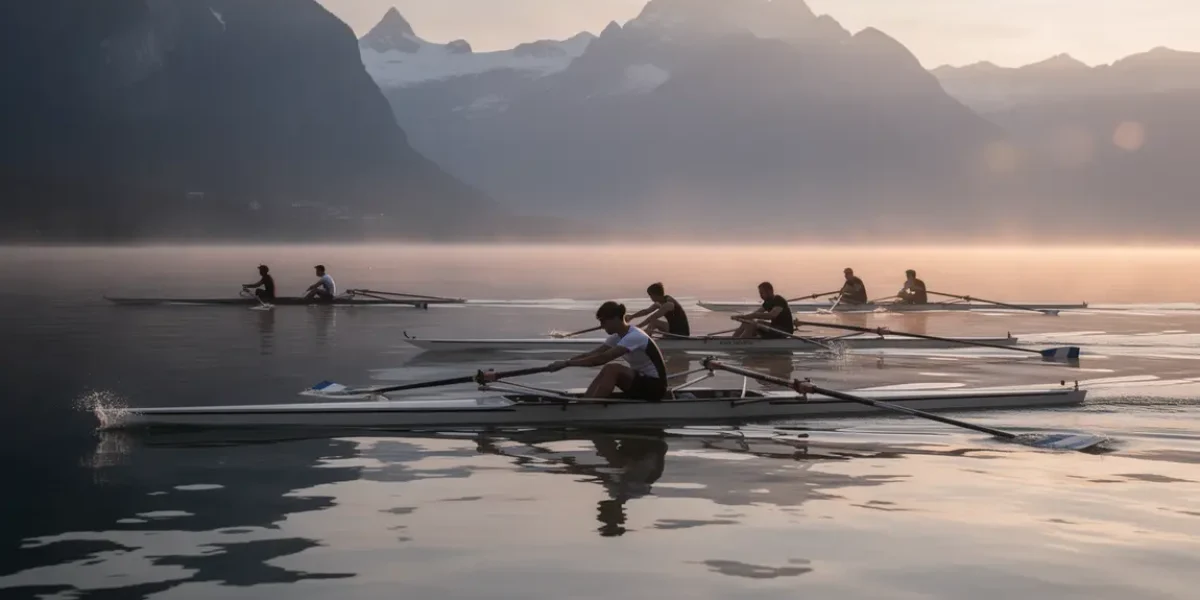
Looking to improve your rowing technique and improve your rowing performance? Find out in this article practical tips, feedback and concrete examples specific to the Rhône-Alpes region: technical phases to be mastered, posture, targeted exercises, fatigue management, nutrition, mental, team synchronization and local resources to practice. This guide builds on best practices observed in clubs and collected from committed coaches and rowers.
Contents
The basics of the rowing coup: how to master each phase
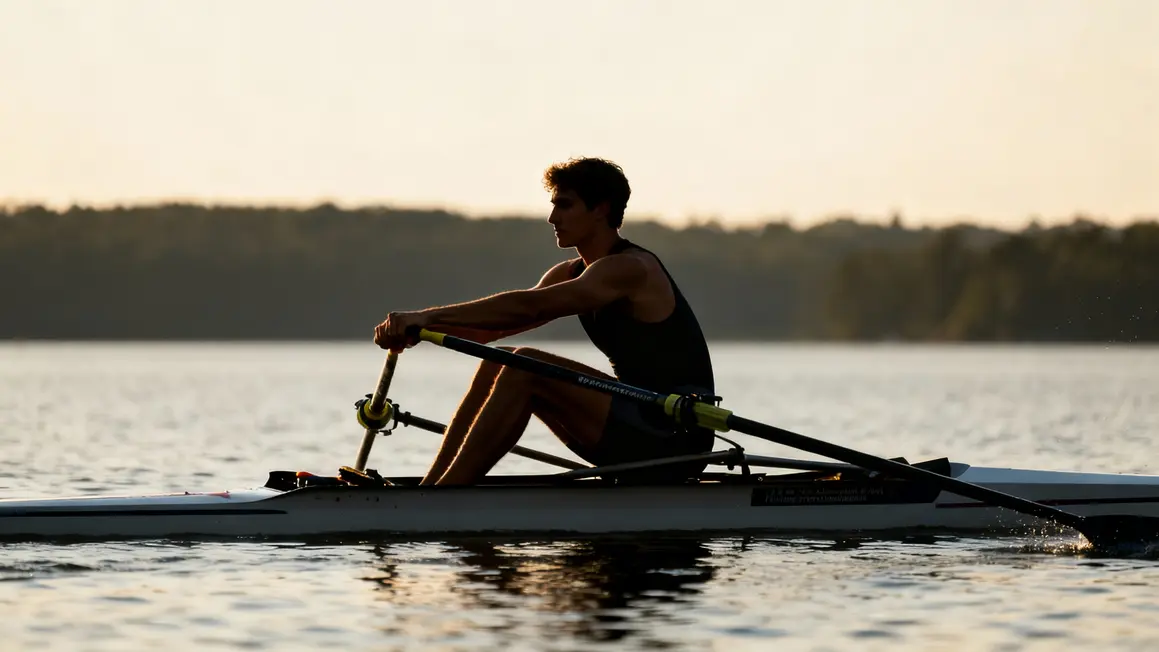
One stroke of aviron decomposes into several decisive steps: support, clear, recovery. Well chaining these phases makes it possible to optimize the force transmitted in each gesture and preserve its body. A rigorous execution is the key to a fluid, powerful and sustainable practice.
Support : focus first on the push of the legs, followed by the tipping of the trunk, then the arms. Be careful not to anticipate with the arms to avoid any loss of efficiency and limit unnecessary muscle fatigue. A coordinated movement of the whole body allows optimal transmission of power.
Clear : Make sure to remove the shovel from the water quickly, without splashing, to preserve the elk. Too late clearance may unbalance the boat and not exploit the full potential of the blow. Keeping handles at the right height facilitates regularity.
Recovery Prepare the next phase with a gradual return, arm and trunk, then slipping legs. Prefer fluidity to precipitation: a controlled recovery preserves balance, avoids saccades and keeps a steady pace.
- Isolate leg/tronc/arm movements on ergometer to work each sequence.
- Film yourself from time to time to target useful technical adjustments.
- Request an external look, coach or experienced peer, to refine each phase of the coup.
The importance of body posture and positioning
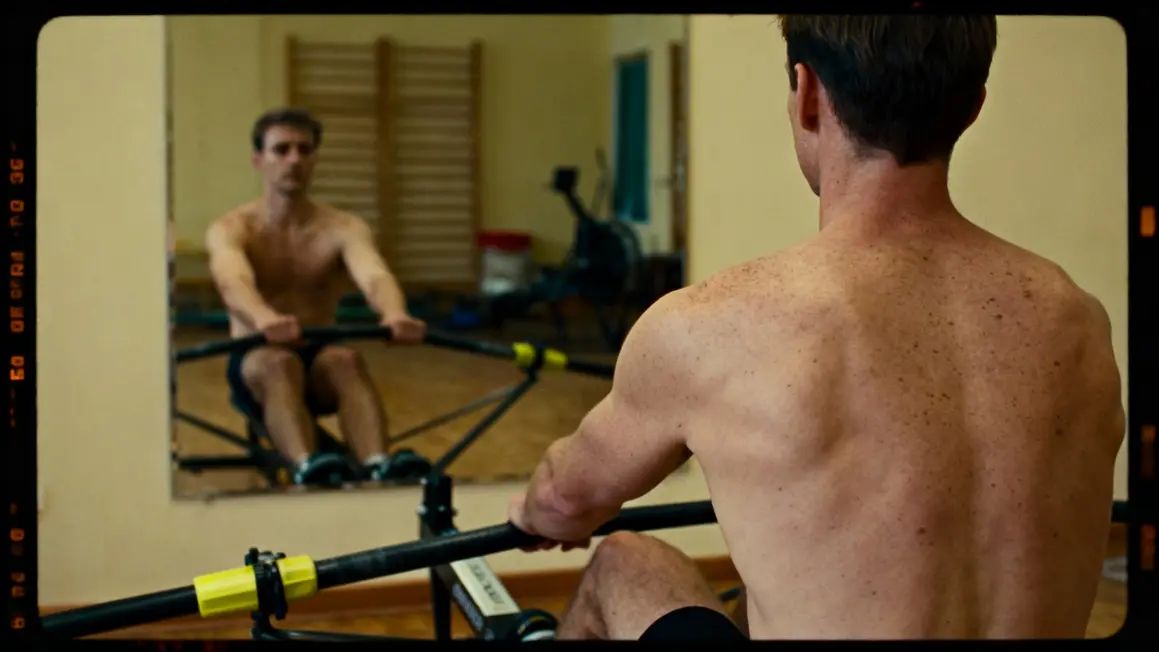
One Optimal alignment protects from injuries and improves force transfer and stability. Attention to posture must be present at each session.
- Neutral back, sheathed, not arched or arched, to limit lumbar fatigue.
- Shoulders released and low: Avoid any parasitic movement and preserve the opening of the chest cage to promote breathing, essential to exercise.
- Robust abdominal sheath to connect legs and arms pull.
- Using a mirror during indoor sessions: simple tool to check its alignment.
- Targeted pull-outs (hose, shoulders) to maintain flexibility and amplitude.
The role of hardware and its settings in performance
The adjustment of the material directly influences the quality of the daviron stroke. Adapted selection and precise adjustments are two essential axes.
Choose the boat according to your level and your goals: stability to start (yolette), boat finer for competition (skiff, double). Adapt the size and weight of the boat to your profile, as do local clubs when testing on large lakes or the Rhône.
The adjustment foot hold, often neglected, impacts developed power. Test different settings to find the position where the thrust remains fluid, without forcing the joints.
Adapt it row length : longer, more power but need technical mastery; shorter, easy to manoeuvre on agitated or learning water. Wide excavators create a powerful grip, the thinnest ones favour the pace.
The region's coaching field experience confirms: a personalized setting contributes as much to progress as a new exercise. Don't hesitate to exchange with your club mentors or elders to avoid classic mistakes (bad swimming lady height, inappropriate shovel).
Targeted exercises to optimize your rowing shot
Integrate various exercises according to your level strengthens your strengths and corrects weaknesses:
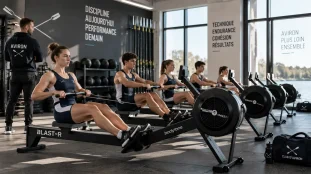
- Beginners : cycles of isolated movements on ergometer (legs alone, etc.) to integrate each phase. Focus the yollette on the water to learn coordination.
- Intermediate level : split between fast and slow pace. Reinforcement with laterals for gripping and visual marker sessions for anticipation of trajectories.
- Advances : timed series for endurance and lactic management, sprint starts, progressive accelerations, sheathing work associated with targeted muscle exercises.
Balance between exercises « in situ » and general physical preparation avoids premature shortness of breath and accelerates technical progress.
Adapt the technique according to the type of practice or competition
Each water body, each test, imposes adjustments, especially in the Rhône-Alpes with the diversity of environments (Rhône, alpine lakes, sea, urban basins).
| Type of practice | Key technical points | Specific adaptations |
|---|---|---|
| River oar | Regularity, coordination | Steady trajectory, good chain management |
| Quiet water | Maximum slide | Fine synchronization, fluidity, rhythm management |
| Wing at sea | Balance, adaptability | Initiate waves, adjust amplitude and rate |
| Leisure | Endurance, comfort | Regular cadence, shorter backstage |
| Competition | Power, intensity | Strict synchronization, maximum effort management |
Physical preparation: an asset for each rower
For a regular and efficient row, combine:
- Cardio (3 sessions per week): long sessions with moderate intensity, short split on rowing, cycling or running.
- Muscle strengthening (2-3/sem.): squats, pulls, sheathing, functional exercises, back and arms work to support hold.
- Mobility (2/sem.) : dynamic stretching, hip-shoulder work, end of session or dedicated session.
| Type | Frequency | Duration | Examples |
|---|---|---|---|
| Cardio | 3/week | 30-45 min | Endurance, split |
| Strengthening | 2-3/week | 45 min | Squats, sheathing, drawing |
| Mobility | 2/week | 10-15 min | Rotations, stretching |
Nutrition and hydration: their impact on your performance
Choosing your contributions is also about making progress and getting better. Priority:
- Complex carbides in main meals, quick to recover
- Lean proteins within 2 hours post-training
- Good fats (olive oil, nuts)
- Hydration before, during and after the effort, adapted to duration and weather
Test in training what you plan to use in competition to adjust to your real needs. A balanced meal taken 2-3 hours before exit, a carbohydrate snack at 30 min, and a thoughtful recovery are key steps to stay effective.
Manage fatigue and maintain regularity
Consistency in training and progression requires listening to oneself. Rampers and coaches agree on three principles:
- Various intensive sessions and active recovery sessions (example: waterfront walks, light technical work).
- Plan off-water breaks for the mind.
- Dot the ambitions and adjust the cycles according to the form of the moment.
The Recovery Physical (sleep, nutrition, health) combines with a healthy management of goals to keep envy and limit fatigue. Taking a step back with other activities (hiking, drawing, gardening, etc.) often proves beneficial to regain motivation.
Developing the growing mentality
The psychological dimension often separates two rowers with equal physical capacity. The ability to concentrate, the management of stress (with routines, breathing exercises), as well as self-motivation (remembering goals, relying on references, sharing a team success) are axes worked in the Rhône-Alpes, whether through visualisation techniques or in team exchanges.
Experience feedback reports that a progression-oriented mentality and the ability to stay together as a team in the face of unforeseen challenges bring much more than any isolated routine in terms of sustainable performance.
Mastering the art of barring a wheel: essential techniques and equipment is essential to ensure smooth navigation and optimize the performance of your team in Rhône-Alpes.
For a safe practice, discover how to prevent a flat bottom boat from turning around: reliable techniques for flying practitioners and avoid imbalances during your workouts.
To master the fundamentals and improve your technique, explore these essential tips on rowing: position, equipment and technical bases to start well.
Team coordination and synchronization
Collective efficiency is built by:
- Clear communication (guidelines, signals, feedback after session).
- Work by pairs, then in groups, on the backstage or rhythm.
- Specific exercises: work two at a time while others balance, synchronization challenge, slow rowing.
- Use video to analyze and adjust coordination details.
Developing the sensations of the boat and sharing feelings after the row makes synchronization easier. It is often by exchanging that effective automatisms are born.
Maximize performance through technical analysis
The adoption of digital tools is now shaping training. The clubs of Rhône-Alpes experiment:
- Rate sensors and power to follow the regularity and effort provided.
- Video (with slowing down, overlays, back angle) to observe its defects and progress on the precise gesture.
- Mobile training tracking applications to visualize its evolution and adjust its plans.
- Ergometers connected, to simulate races or build custom sessions even outside the water.
The club shared experience indicates that regular analysis (sensors, video, session returns) motivates, targets improvement directions, and accelerates progress. This data-oriented approach complements traditional rowing practice by adapting the work to the needs of each rower.
Local resources to advance in Rhône-Alpes
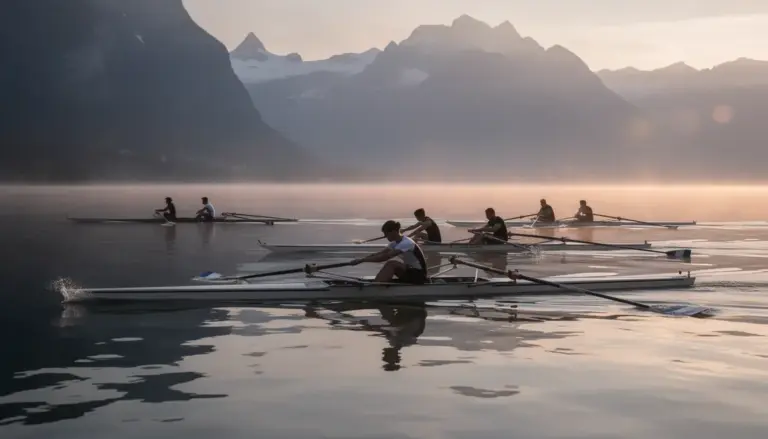
The Rhône-Alpes region offers a dense network of rowing clubs welcoming all levels. Take advantage of the diversity of water bodies – Rhone, alpine lakes, urban water bodies – to vary the sensations and progress. Many clubs offer internships, refresher cycles and events (regates, interclubs) to progress in a secure and user-friendly environment. This local dynamic, combined with the material resources made available, feeds the progress over the long term.
Modernized nautical bases, experienced leadership and regional events are all levers to consolidate your achievements and broaden your horizons. In addition, you can consult the federal (French Federation of Aviron) or regional resources to follow the news and useful training.
Would you like to go further or share your feedback? Don't hesitate to comment with your experience, advice or suggest a club to discover in the region! If this article has been helpful, share it with other rowers or practitioners from Rhône-Alpes. And you, what tools or tricks have made the difference in your progress? Tell us your suggestions in the comments.
For further information, please refer to the official press releases of the French Federation of Aviron or to the specialized press (Sport and Life, L
Progress in rowing is based as much on technique as on regular interaction with peers. It is up to everyone to choose their own path, between collective effort, individualised preparation and local life. See you soon on the plans of Rhône-Alpes.
Updated on 21 March 2026